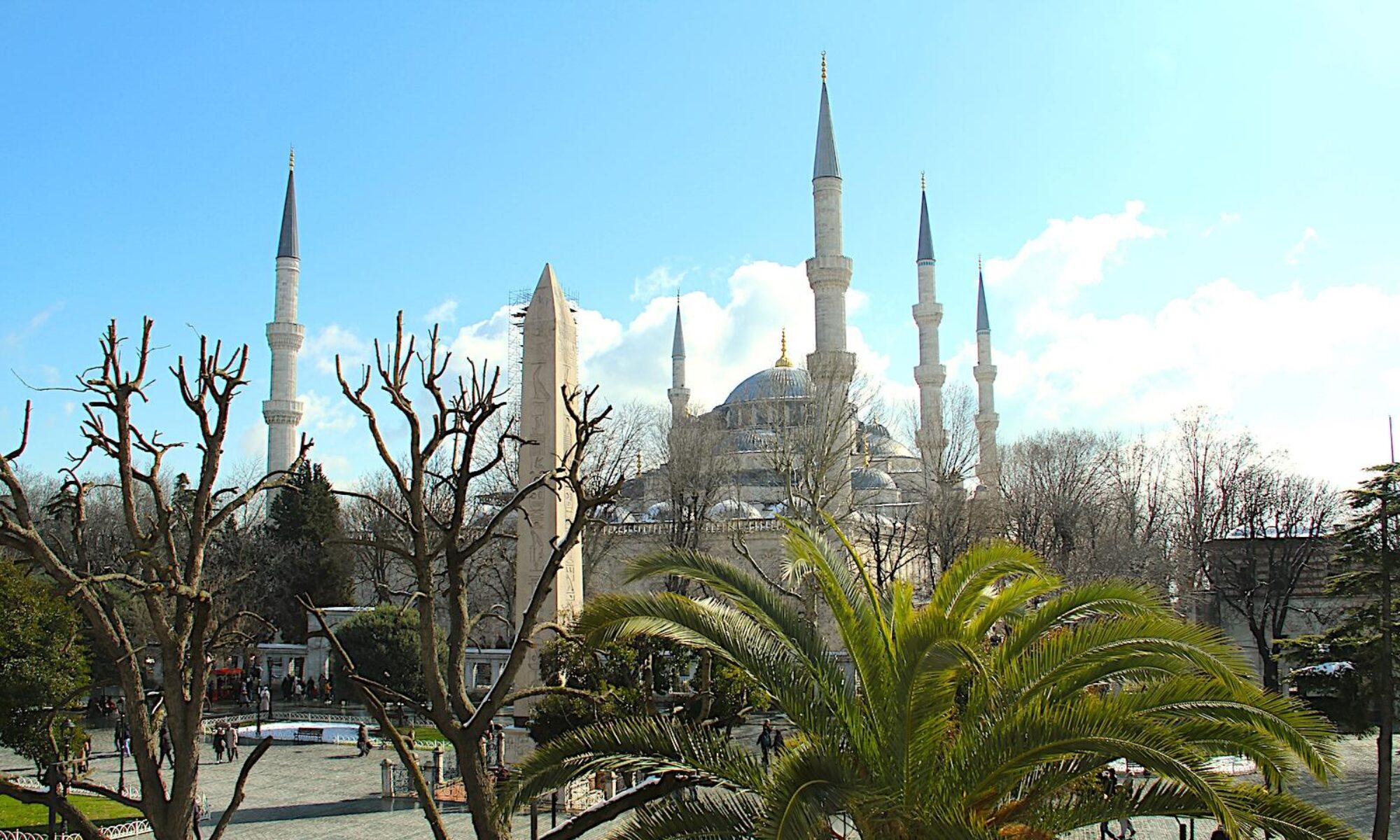
Bus travel from Istanbul sits at the heart of Türkiye’s transportation network, with the city acting as the country’s largest hub and the most important gateway for long-distance coaches connecting Europe, the Balkans, and Anatolia. Modern Turkish buses operate extensive nationwide and international networks, offering high levels of comfort, frequent departures, generous luggage allowances, and excellent value for money.
From Istanbul, travellers can reach almost every city in Türkiye by coach, from İzmir and Çeşme on the Aegean coast to Cappadocia, the Black Sea region and Eastern Anatolia, as well as major European cities such as Sofia, Thessaloniki and Bucharest. For many residents and visitors alike, long-distance bus travel remains a trusted and practical alternative to flying.
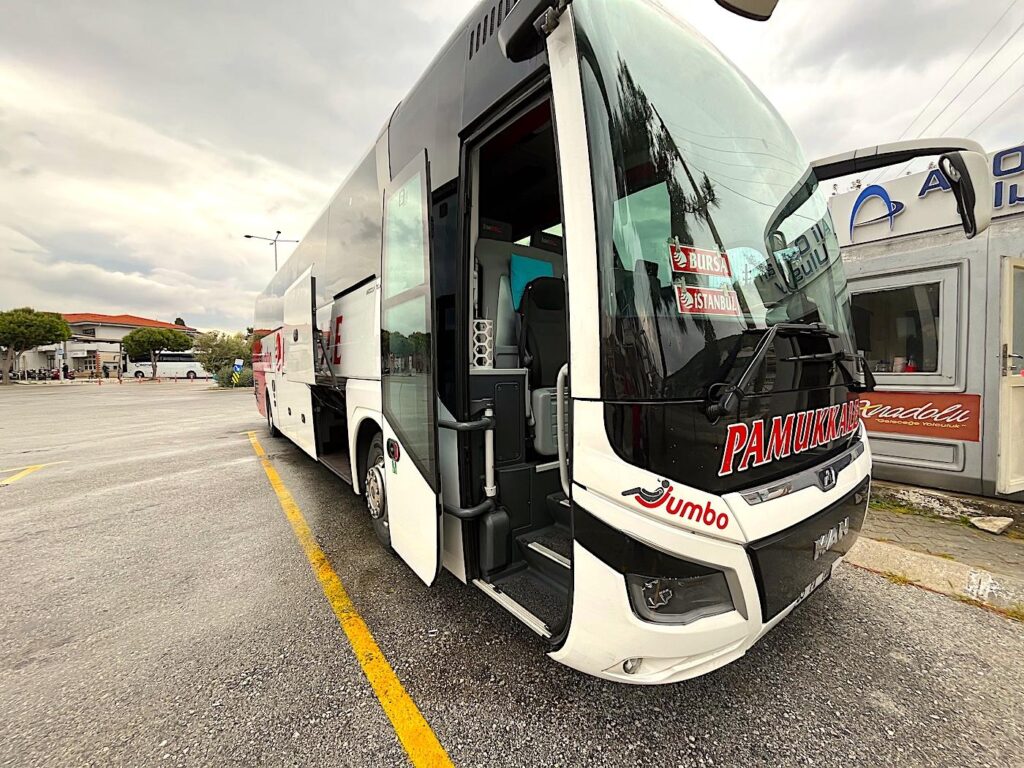
This guide explains how coach travel works in Istanbul, where the main bus terminals are located on both the European and Asian sides, which destinations are served domestically and internationally, and what typical journey times look like. It is designed to help independent travellers plan confidently and efficiently.
Bus Travel from Istanbul – Table of Contents
How Coach & Bus Travel from Istanbul Works
Long-distance coach travel in Türkiye is highly organised and professionally operated. Tickets are most easily booked online using comparison platforms such as Busbud Türkiye, which aggregate schedules and prices from dozens of Turkish and international operators. This allows travellers to compare departure times, seat availability, journey duration and operator quality in one place, while booking securely in English and storing tickets digitally on a mobile phone.
When booking, it is essential to check which terminal your bus departs from. Istanbul has multiple major bus terminals and departure points, and travelling to the wrong terminal can easily result in a missed departure. Your booking confirmation normally displays the terminal name, operator booth and boarding time.
Luggage Allowances
Luggage allowances on Turkish national coaches are generous (typically 30kg + 7kg, occasionally more) compared to airlines. Most operators allow one or two large suitcases to be stored under the bus, along with a small cabin bag for valuables. Bags are tagged by staff and checked on arrival. Passports, electronics, medication and important documents should always remain in hand luggage.
Seating
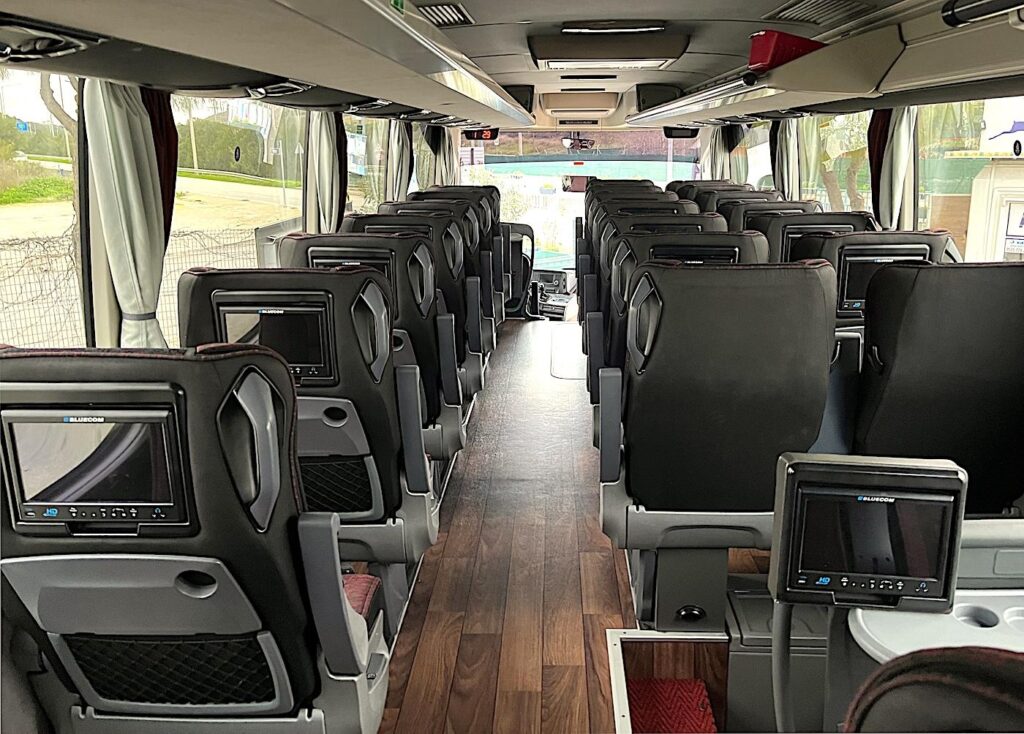
Long-distance coaches operating from İstanbul typically offer a higher standard of onboard comfort. Seats are numbered and allocated in advance, typically with wide reclining seats, good legroom, air conditioning, and power or USB charging ports available across modern fleets.
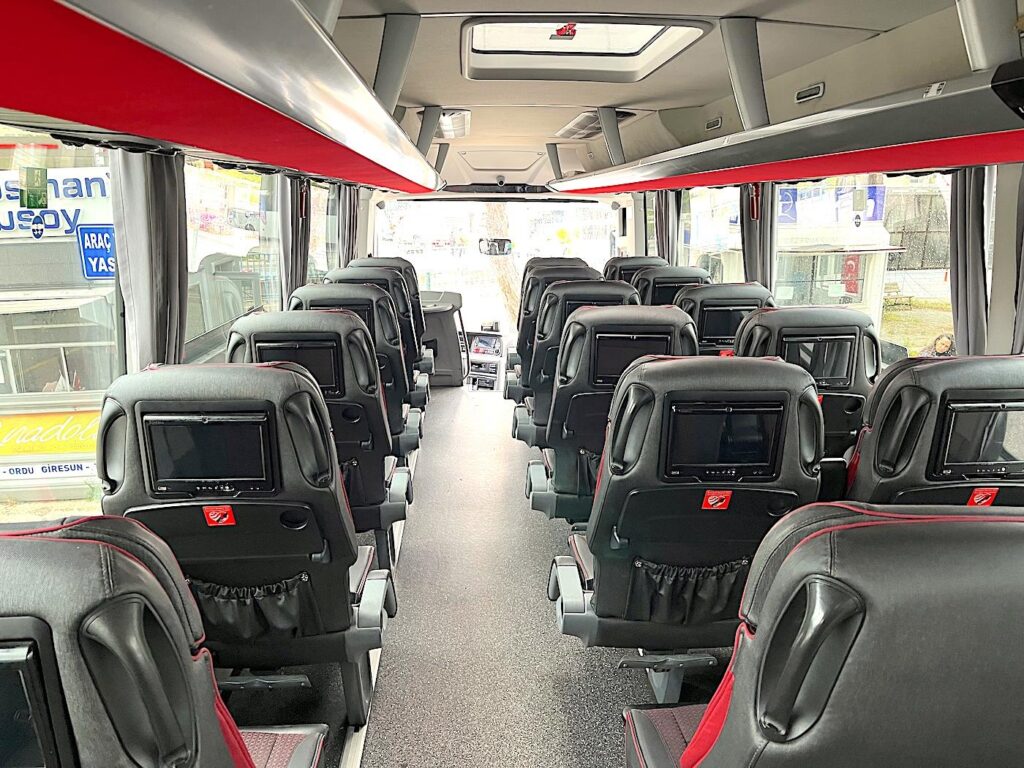
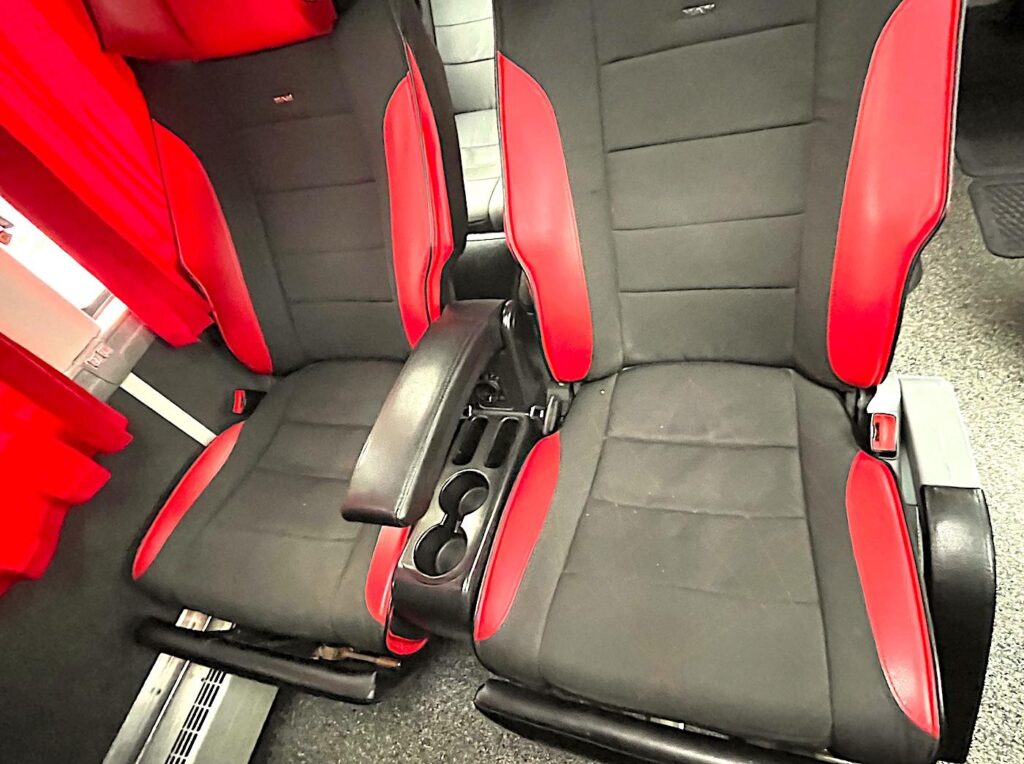
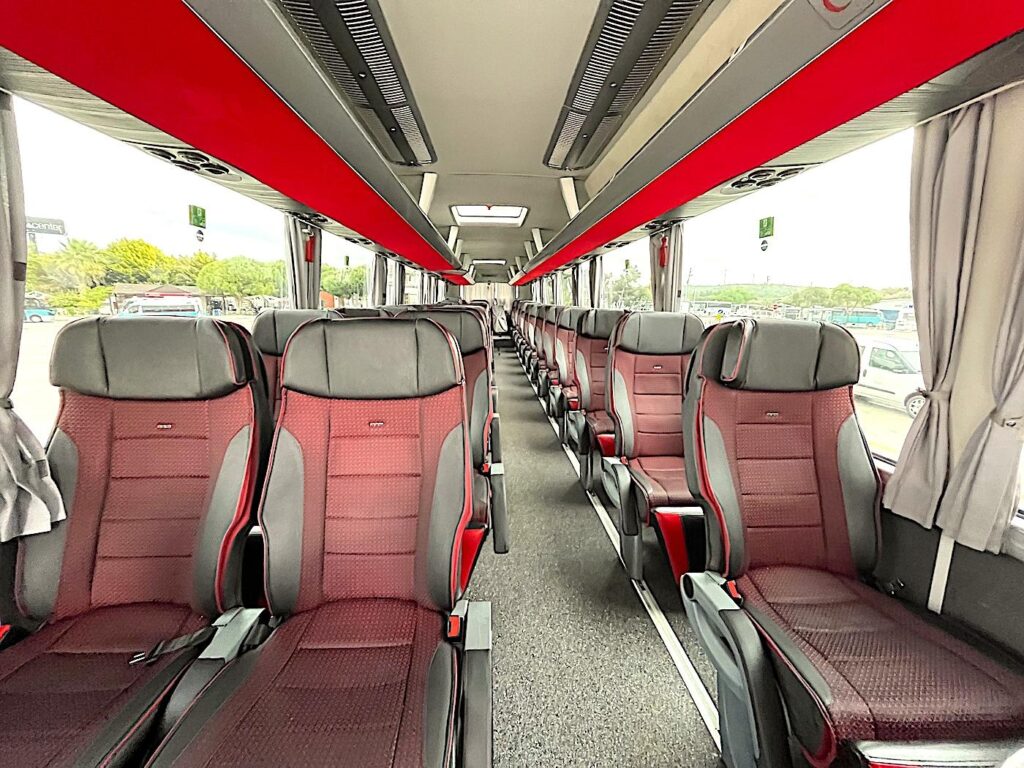
Most national long-distance coaches operate in a 1+2 seating configuration, meaning one seat on one side of the aisle and two on the other, which generally provides a more generous sense of personal space. By contrast, coaches used on shorter regional routes often operate in a 2+2 configuration, resulting in slightly narrower seating.
Onboard Food & Drink Services
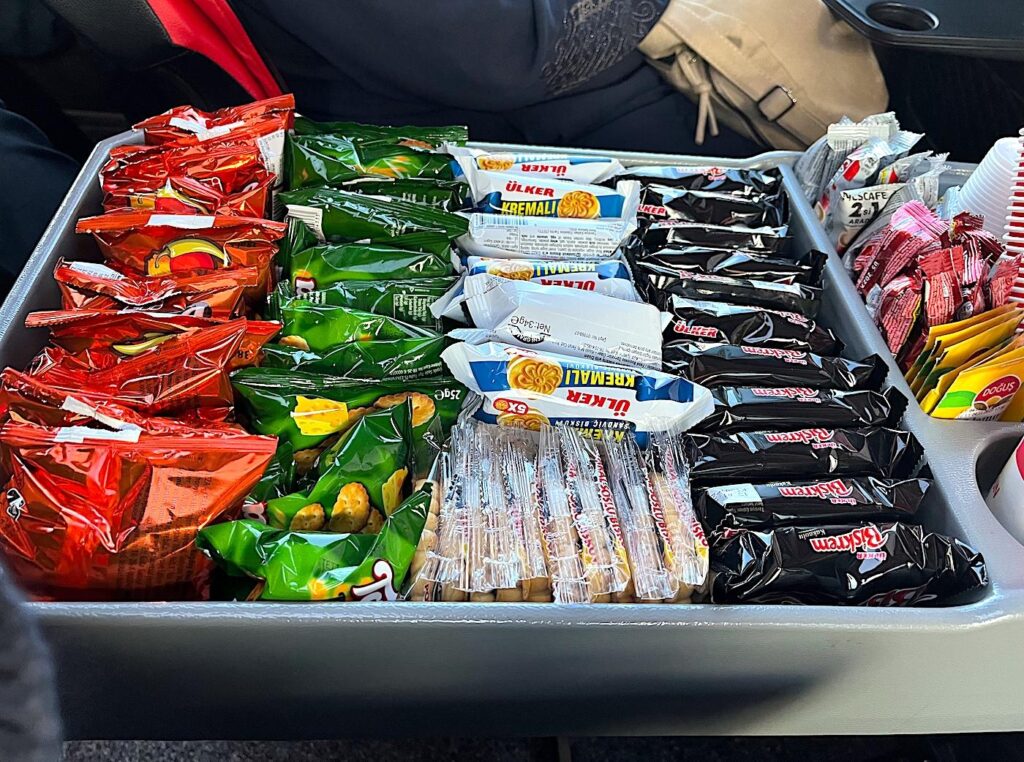
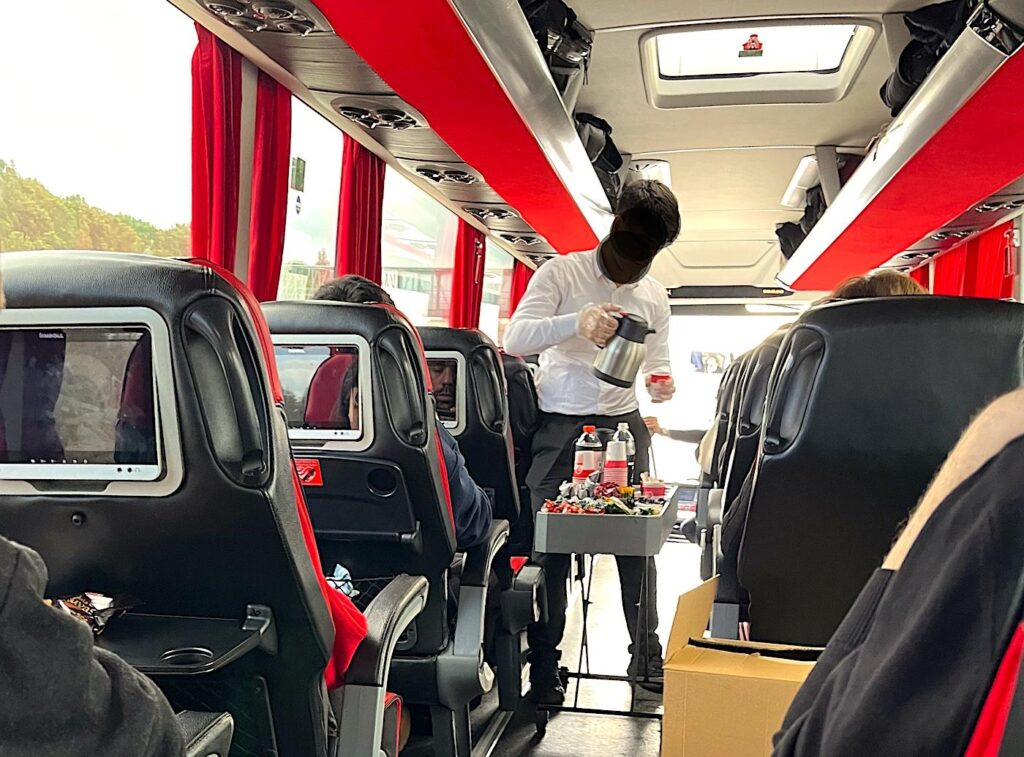
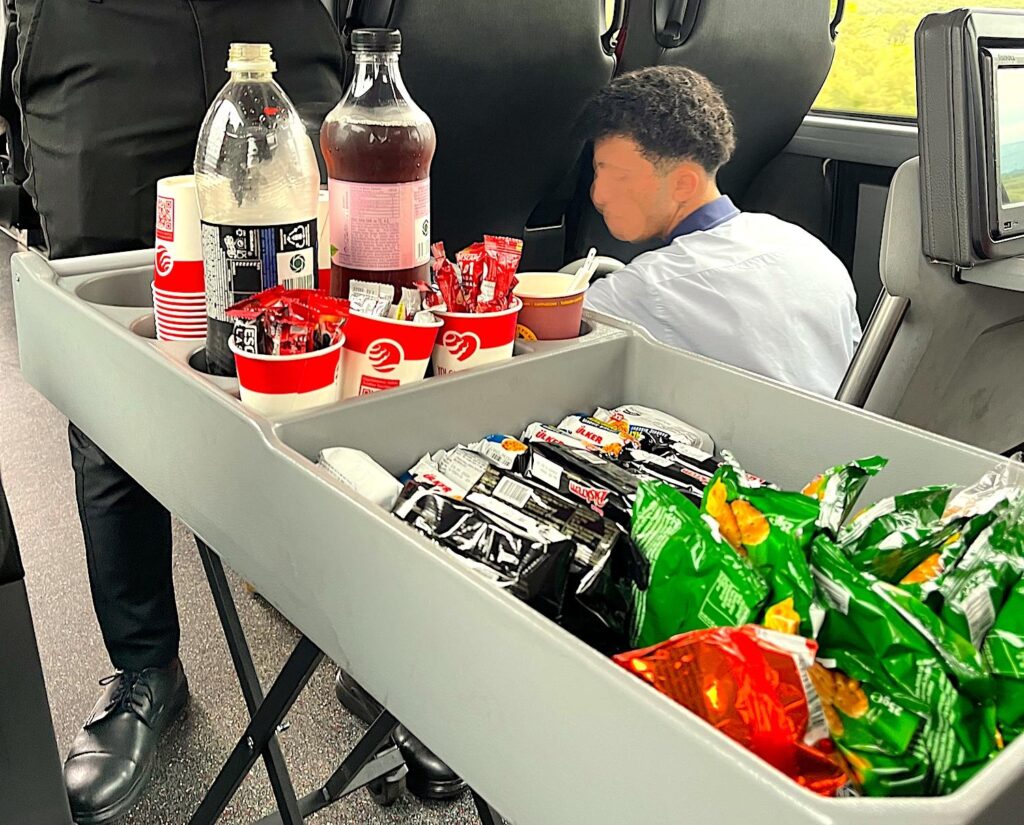
Most companies offer complimentary tea, coffee, and small snacks. The onboard food and drink service is usually provided several times during a journey between major stops. Snacks typically include packaged sweet and savoury biscuits, small cakes, crackers, or chocolates individually. There is no hot or substantial meal service, but tea and coffee are commonly served; coffee is usually instant, prepared with hot water from a sachet. A limited range of soft drinks is normally available, such as cola and water. Service is generally quite liberal, and passengers may request/take more than one item, subject to availability.
Food & Beverage Facilities at Coach Stations and En Route Stops
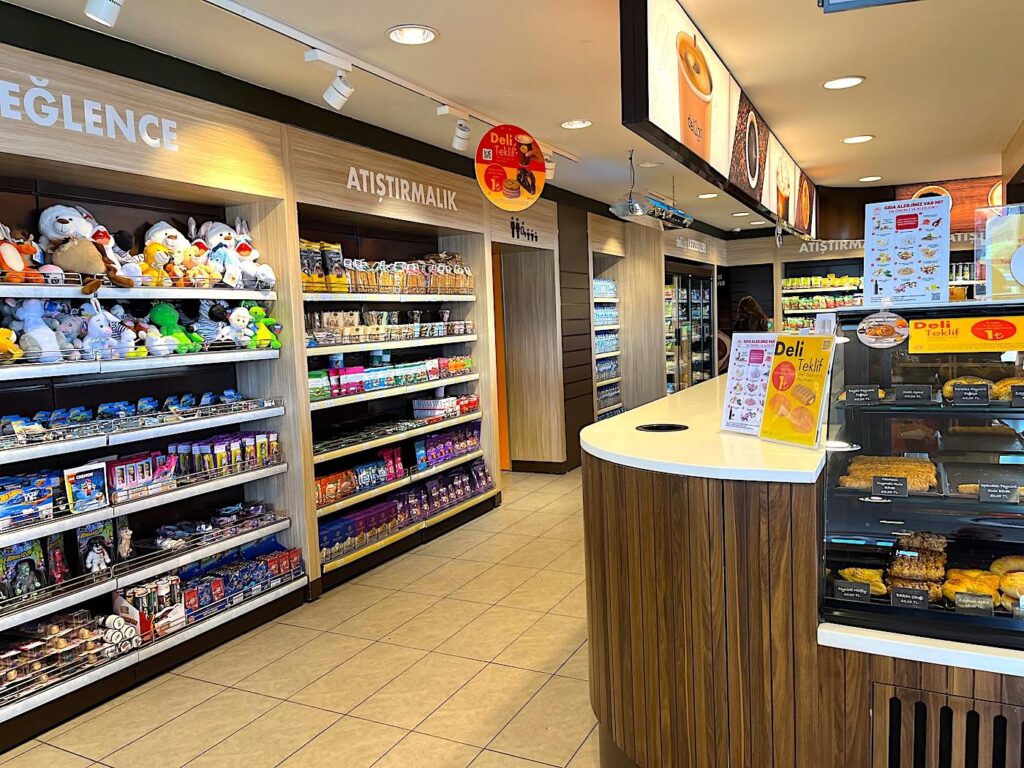
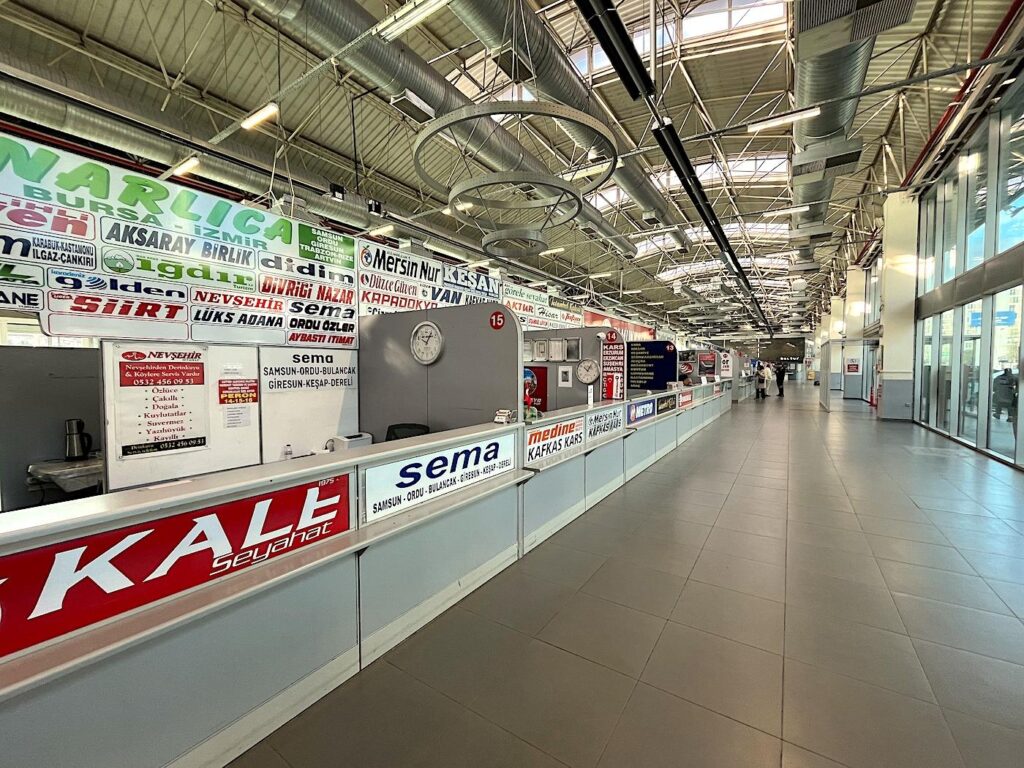
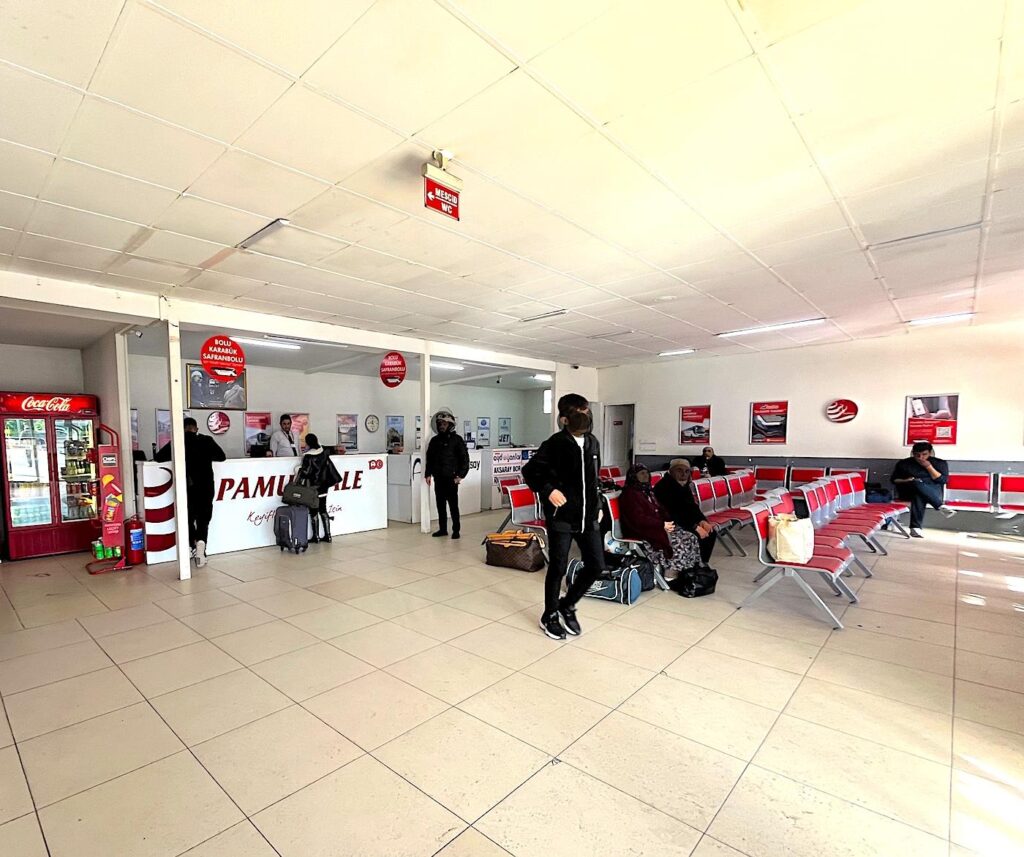
For long-distance coaches operating from İstanbul and other Turkish stations, food and beverage options are widely available at both the main departure terminals and at scheduled service stops along the route. Facilities vary enormously depending on the location and the operator’s chosen rest stop. Major departure terminals, particularly large intercity bus stations, typically offer extensive dining options, ranging from fast-food outlets and cafés to traditional Turkish lokantas and bakeries.
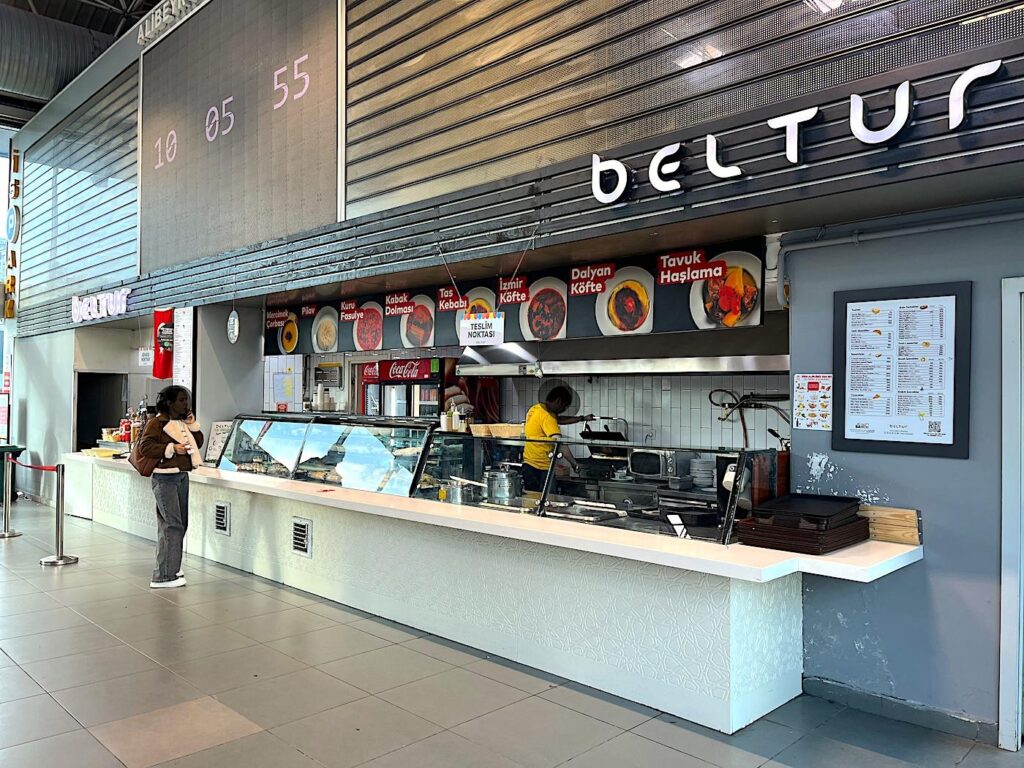
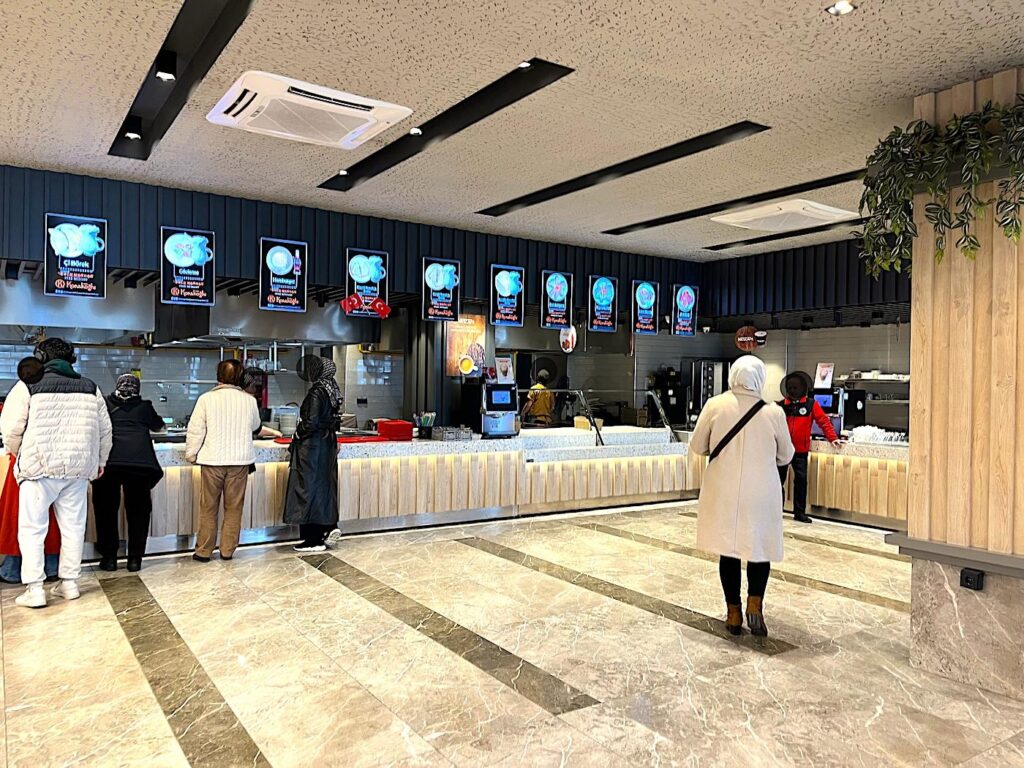
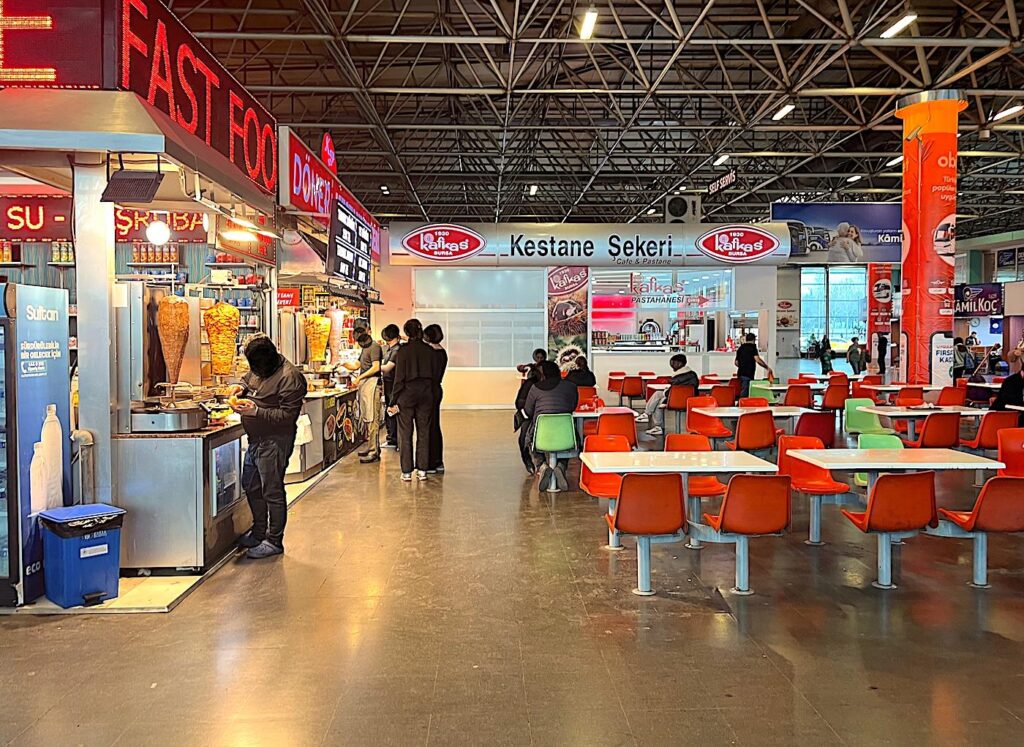
En route, coaches usually stop at dedicated highway service complexes. Some of these are modest roadside facilities, while others are large, bustling food courts offering kebabs, buffet-style home cooking, gözleme, soups, pastries, and packaged snacks. Small kiosks and vending machines are common, and food is readily available. Prices are typically reasonable by Turkish standards, especially compared with airport pricing.
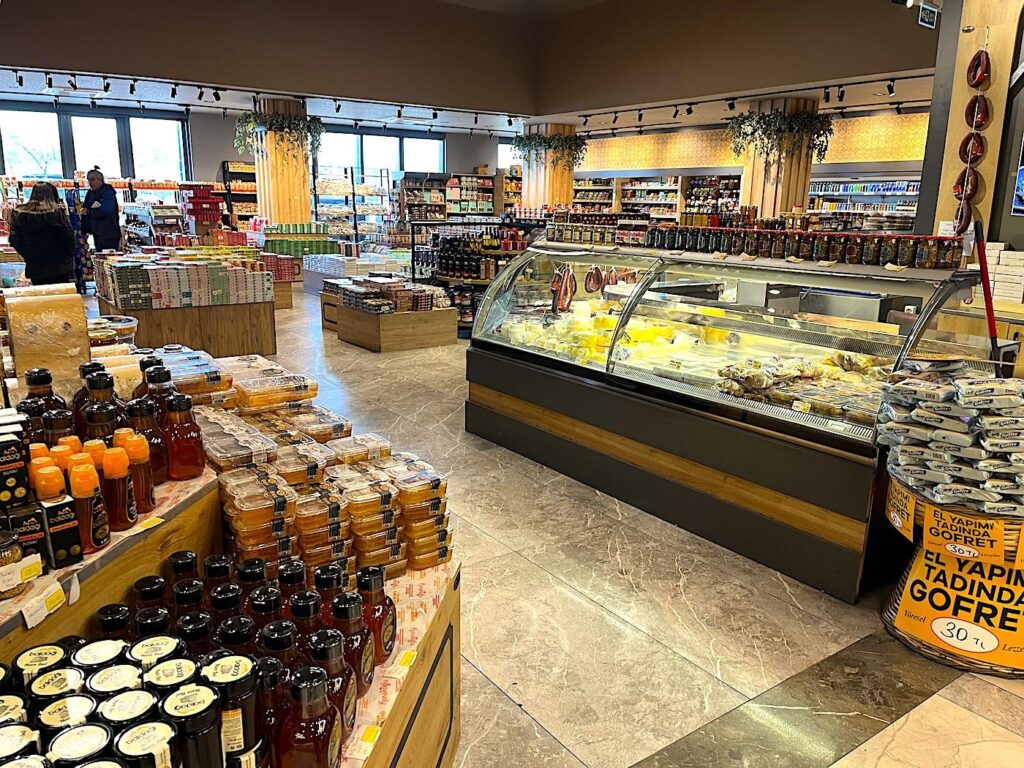
Some larger service stations also feature delicatessen-style supermarkets selling regional products, such as honey, candied chestnuts, jams, local cheeses, olives, and confectionery, which can make attractive gifts. Alcohol is generally very rarely found at departure stations and highway service areas. These stops can offer a wide range of items; however, passengers should be mindful that stopovers are time-limited, and coaches will depart promptly.
Toilets
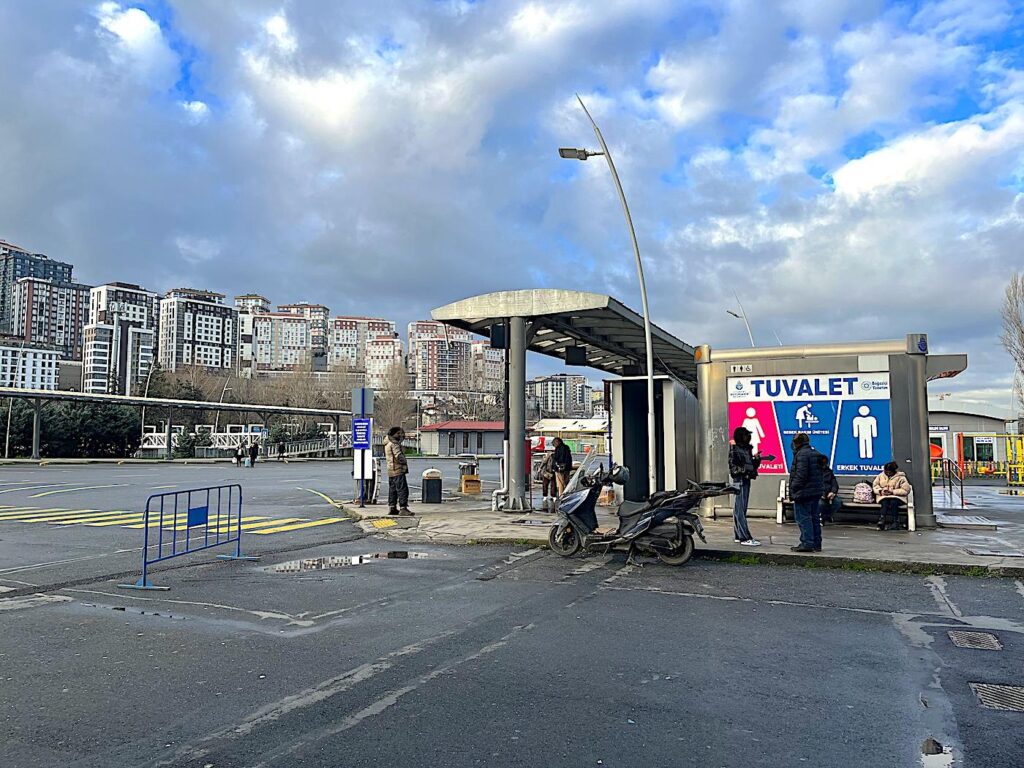
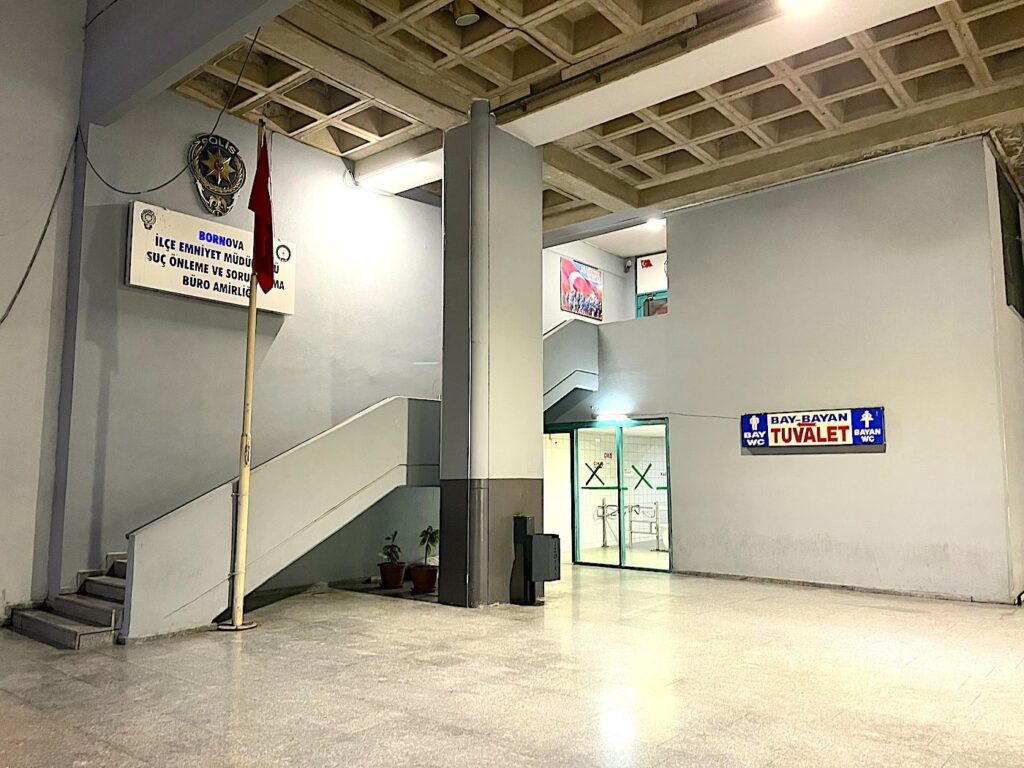
Most coaches do not have onboard toilets. Instead, they stop every few hours at large highway service areas equipped with clean restrooms, restaurants and shops. Stops typically last between 10 and 30 minutes, depending on the journey length. Passengers should always confirm the stop duration with the driver, as buses depart promptly. Toilets at service station stops, and some departure stations (where the bus company is the sole operator) are usually free; however, at major terminals, there is often a toilet entry fee, paid in cash, in the Turkish Lira equivalent of €0.20- €0.35. It is therefore highly recommended that you carry small Turkish Lira notes for the journey. At Istanbul terminals, you may need an İstanbulKart to access the toilets.
Wi-Fi & Media Services
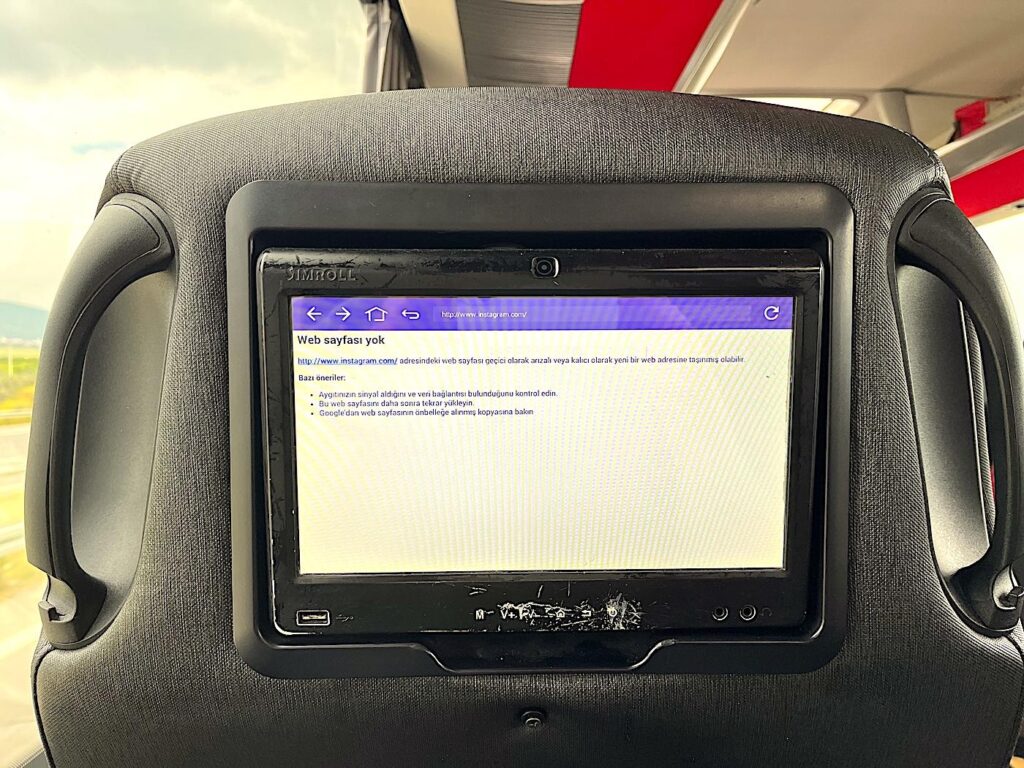
Although many coaches advertise onboard screens and Wi-Fi, passengers should not rely on these services as their primary source of entertainment or connectivity. In practice, seat-back screens often do not work or offer very limited content, and onboard Wi-Fi can be unreliable, broken, slow, or require a complicated registration process that makes it impractical to use. Travellers who need internet access are strongly advised to have a local SIM card or roaming data, as these generally work consistently along major road networks.
Where coaches are equipped with operable seatback entertainment screens, films are typically shown in their original language with Turkish subtitles. Audio headsets are usually not provided onboard, so if you wish to use this service, be sure to bring your own headphones with a standard (3.5mm) audio jack.
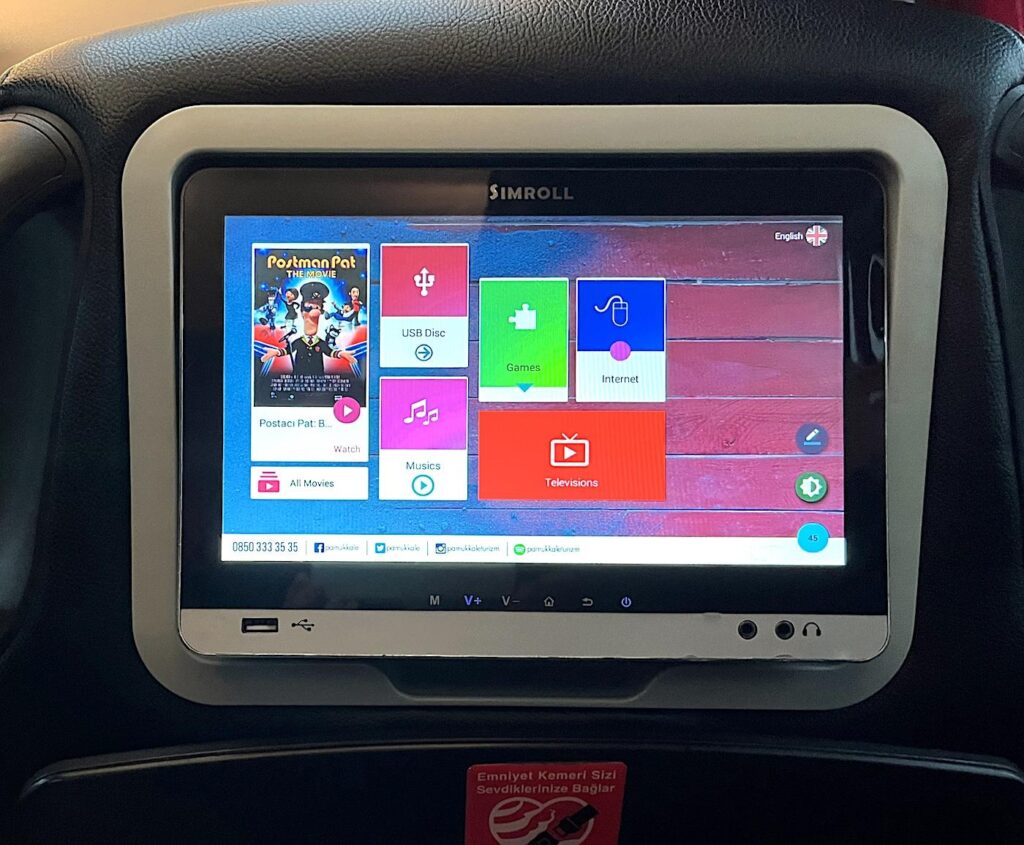
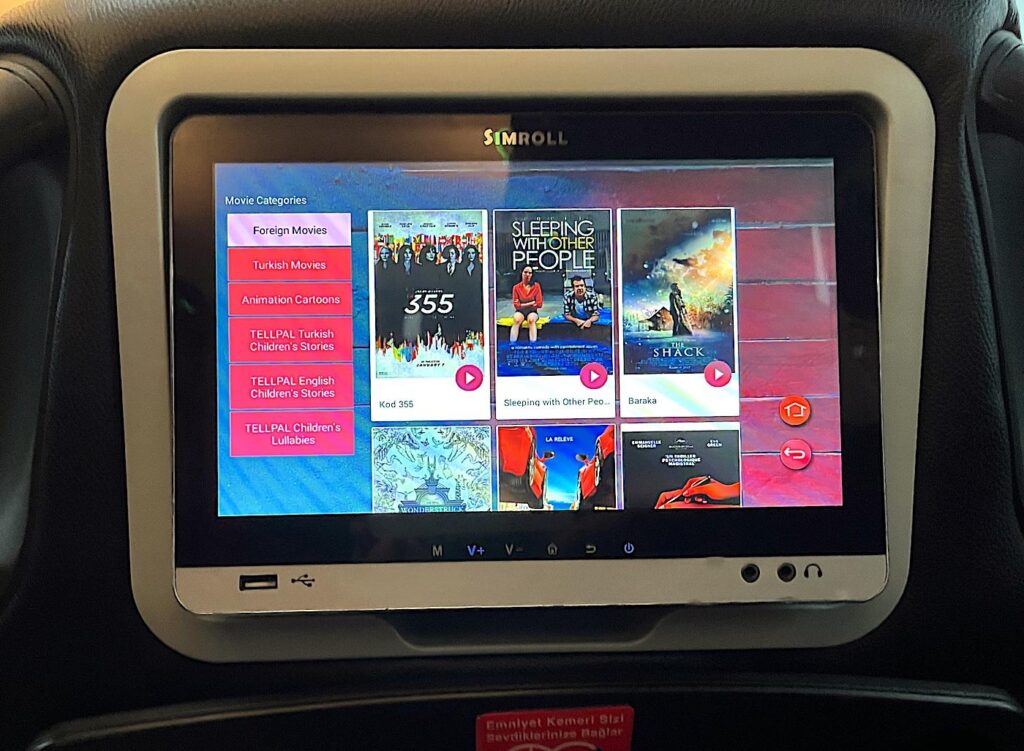
To be safe, it is also sensible to download podcasts, music, films or series in advance onto a phone or tablet. Most long-distance coaches do provide power outlets, either USB ports or standard plug sockets. When boarding, these may not be active until the vehicle systems are fully switched on. For this reason, keep charging cables and adapters in your hand luggage rather than in stored baggage, which may not be accessible during the journey.
Boarder Passport Checks
International routes cross into Europe primarily via Greece or Bulgaria. Common border crossings include Kapıkule, Hamzabeyli and Dereköy toward Bulgaria, and İpsala or Pazarkule toward Greece. Border processing times vary by season and traffic levels, and passengers normally remain on the bus during passport checks.
Reliability
Overall reliability is high, with good highway infrastructure and experienced operators. Delays can occasionally occur due to heavy Istanbul traffic, winter weather or border queues on international routes. Travellers should allow reasonable buffer time for onward connections.
Main Bus Terminals in Istanbul – European & Asian Side
Istanbul operates several large intercity bus terminals rather than a single central station. Choosing the correct terminal reduces travel time and unnecessary cross-city transfers.
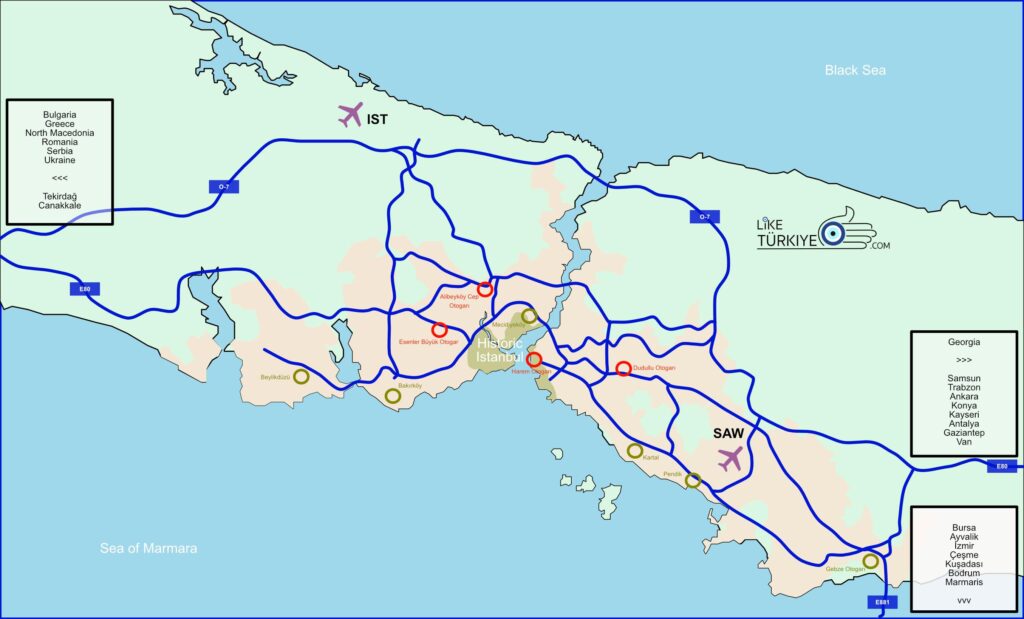
On the European side, Esenler Büyük Otogar is the largest and most comprehensive intercity terminal in Türkiye. It serves almost every domestic route and most international departures into Europe and the Balkans, with extensive metro connectivity and full passenger facilities. The terminal is large and busy, particularly during holiday periods.
Also on the European side, Alibeyköy Cep Otogarı has emerged as a modern alternative hub, particularly for western and Aegean routes such as İzmir, Çeşme and coastal destinations. It is easier to navigate and often faster for departures heading toward western highways.
Main Bus Terminals – European Side of Istanbul
| Terminal Name | District | Primary Route Coverage | Public Transport Access | Google Maps Link |
|---|---|---|---|---|
| Esenler Büyük Otogar | Esenler | Nationwide routes, Balkans & Europe international services | Metro M1A (Otogar Station), city buses, taxi | Map Link |
| Alibeyköy Cep Otogarı | Eyüpsultan | Aegean routes (İzmir, Çeşme, Aydın), western Türkiye | Tram, Metro lines, city buses, taxi | Map Link |
Some operators also offer smaller pickup and drop-off points (usually included in the ticket price) in districts such as Mecidiyeköy, Beylikdüzü, and Bakırköy, allowing passengers to avoid travelling to major terminals, depending on route availability. However, for travelers with limited Turkish language skills, or those concerned about precise scheduling, these pickup points can sometimes be unpredictable, as timings may change and communication with the operator is occasionally required to confirm the exact vehicle and meeting point.
For this reason, smaller pickup services tend to work better as drop-off points rather than boarding points. Upon arrival in Istanbul, the connecting service vehicles are usually clearly marked and easy to identify at the main bus terminals, making them a convenient way to reach your final destination without having to navigate public transport.
| Terminal Name | District | Primary Route Coverage | Public Transport Access | Google Maps Link |
|---|---|---|---|---|
| Mecidiyeköy Pickup Point | Şişli | Selected operator pickups, western and central routes | Metro M2/M7, Metrobüs, city buses | Map Link |
| Bakırköy Pickup Point | Bakırköy | Selected domestic routes | Metro, Marmaray, bus connections | Various |
| Beylikdüzü Pickup Point | Beylikdüzü | Western suburban departures and regional services | Metrobüs, city buses | Various |
Main Bus Terminals – Asian Side of Istanbul
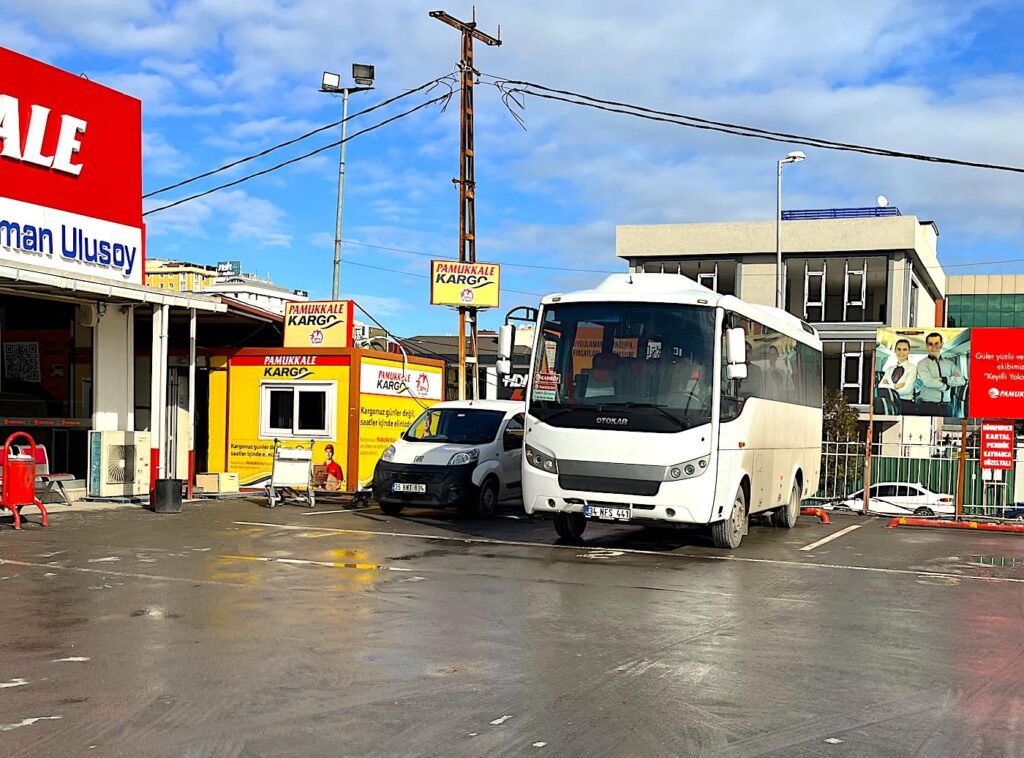
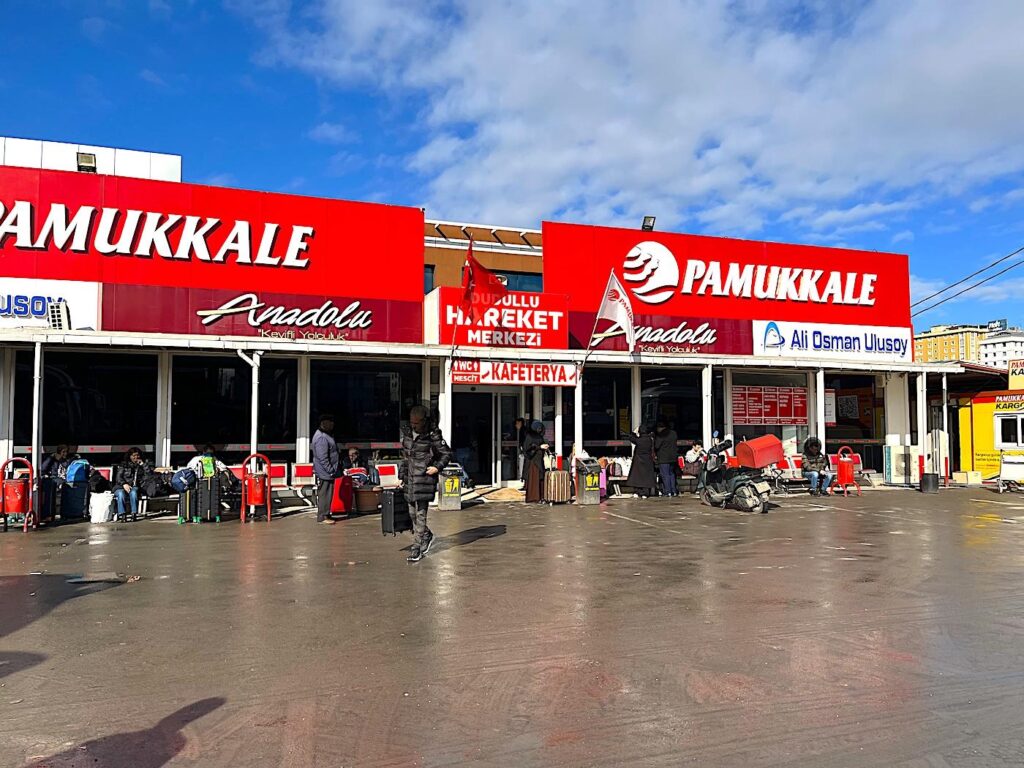
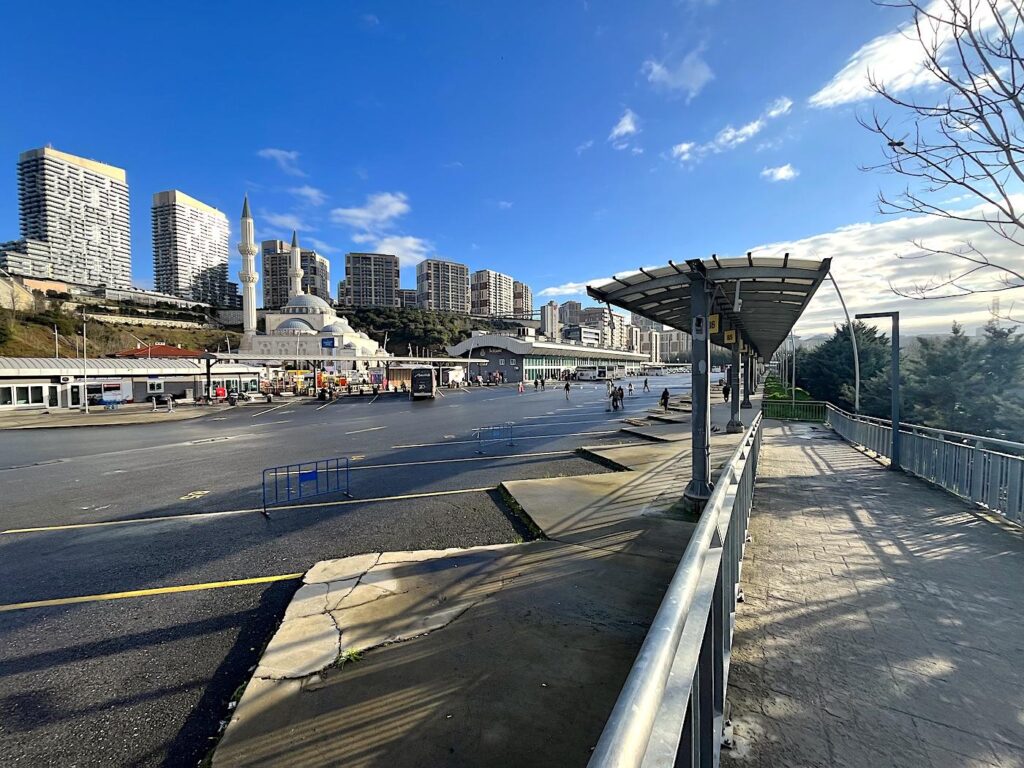
On the Asian side, Dudullu Otogarı has become the primary intercity terminal for routes into Anatolia, Central and Eastern Türkiye, with direct metro access and modern infrastructure. Harem Otogar, near Üsküdar ferry connections, continues to serve selected routes and remains convenient for passengers crossing from the European side by boat. Certain companies also operate private terminals in Kartal and Pendik, particularly useful for travelers staying near Sabiha Gökçen Airport.
| Terminal Name | District | Primary Route Coverage | Public Transport Access | Google Maps Link |
|---|---|---|---|---|
| Dudullu Otogarı | Ümraniye | Central Anatolia, Eastern Türkiye, Black Sea routes | Metro M5/M8, city buses, taxi | Map Link1 |
| Harem Otogarı | Üsküdar | Selected Anatolian routes, ferry-connected access | Ferry, Metro, city buses, taxi | Map Link |
| Kartal Operator Terminals | Kartal | Southern and eastern domestic routes | Metro M4, Marmaray, city buses | Various |
| Pendik Operator Terminals | Pendik | Long-distance Anatolian routes, Sabiha Gökçen access | Marmaray, metro, airport connections | Various |
In general, European-side terminals are best suited for European international routes and western Türkiye, while Asian-side terminals are often more efficient for long journeys into Anatolia. Many western routes, especially those toward İzmir and the Aegean, depart from the European side, then pick up additional passengers on the Asian side before continuing south.
Where You Can Travel from Istanbul by Coach?
From Istanbul, coaches connect directly to nearly every major region of Türkiye as well as several international destinations.
Aegean Region – İzmir, Çeşme, Bodrum, Kuşadası
| Destination | Distance (approx.) | Typical Duration | Price – One Way* |
|---|---|---|---|
| İzmir | ~480 km | 7–9 hours | €20–30 |
| Çeşme | ~560 km | 8–10 hours | €25–35 |
| Bodrum | ~700 km | 10–12 hours | €30–45 |
| Kuşadası | ~550 km | 8–10 hours | €25–35 |
| Ayvalık | ~390 km | 6–7 hours | €20–30 |
These routes are among the most frequent in the country, operating day and night with high seasonal demand.
Mediterranean Region – Antalya, Fethiye, Kaş, Alanya
| Destination | Distance (approx.) | Typical Duration | Price – One Way* |
|---|---|---|---|
| Antalya | ~700 km | 10–12 hours | €30–45 |
| Fethiye | ~800 km | 12–14 hours | €35–50 |
| Kaş | ~850 km | 13–15 hours | €40–55 |
| Alanya | ~820 km | 12–14 hours | €35–50 |
| Mersin | ~940 km | 13–16 hours | €35–50 |
Overnight services are common and popular on these longer coastal routes.
Central Anatolia – Ankara, Cappadocia, Konya, Eskişehir
| Destination | Distance (approx.) | Typical Duration | Price – One Way* |
|---|---|---|---|
| Ankara | ~450 km | 5–6 hours | €15–25 |
| Eskişehir | ~330 km | 4–5 hours | €15–25 |
| Konya | ~710 km | 9–11 hours | €25–35 |
| Nevşehir (Cappadocia) | ~730 km | 10–12 hours | €30–40 |
| Kayseri | ~770 km | 11–13 hours | €30–40 |
These corridors benefit from very frequent departures throughout the day.
Black Sea Region – Samsun, Ordu, Trabzon
| Destination | Distance (approx.) | Typical Duration | Price – One Way* |
|---|---|---|---|
| Samsun | ~735 km | 11–13 hours | €30–40 |
| Ordu | ~870 km | 13–15 hours | €35–45 |
| Trabzon | ~1,060 km | 15–18 hours | €40–55 |
Mountain terrain and winter weather can affect travel times on these routes.
Eastern & Southeastern Turkey – Gaziantep, Diyarbakır, Van
| Destination | Distance (approx.) | Typical Duration | Price – One Way* |
|---|---|---|---|
| Gaziantep | ~1,150 km | 15–18 hours | €40–55 |
| Diyarbakır | ~1,430 km | 20–24 hours | €50–65 |
| Van | ~1,650 km | 24–30 hours | €60–80 |
Most services operate as direct through-buses with multiple intermediate stops.
International Routes – Europe & Balkans
| Destination | Distance (approx.) | Typical Duration | Price – One Way* |
|---|---|---|---|
| Sofia (Bulgaria) | ~550 km | 8–10 hours | €30–45 |
| Thessaloniki (Greece) | ~600 km | 8–10 hours | €35–50 |
| Bucharest (Romania) | ~640 km | 10–12 hours | €40–60 |
| Skopje (N. Macedonia) | ~850 km | 12–14 hours | €45–65 |
| Belgrade (Serbia) | ~950 km | 14–16 hours | €50–70 |
| Sarpi (Georgia Border) | ~1,300 km | 20–24 hours | €60–85 |
| Kyiv (Ukraine) | ~1,500 km | 26–30 hours | €80–120 |
Direct international services operate reliably to Sofia, Thessaloniki and Bucharest. Longer routes may involve a transfer depending on operator and season.
Major Coach Companies Operating in Türkiye
Türkiye has one of the most developed long-distance coach networks in Europe, with a mix of large national operators and strong regional companies. Most fleets operate modern coaches with reclining seats, air conditioning, onboard refreshments, and generous luggage policies. Service quality is generally high, although comfort standards, onboard services, and route coverage vary by company. Below are some of the most widely used operators for domestic and international travel from Istanbul.
Kamil Koç (FlixBus Group)
Kamil Koç (FlixBus Group) Website Link (Turkish)
Kamil Koç, founded in 1926, is one of Türkiye’s oldest and most respected coach companies and is now part of the FlixBus international group. It operates a very large nationwide network connecting Istanbul with all major regions of the country, including the Aegean, Mediterranean, Central Anatolia, Black Sea and Eastern Türkiye.
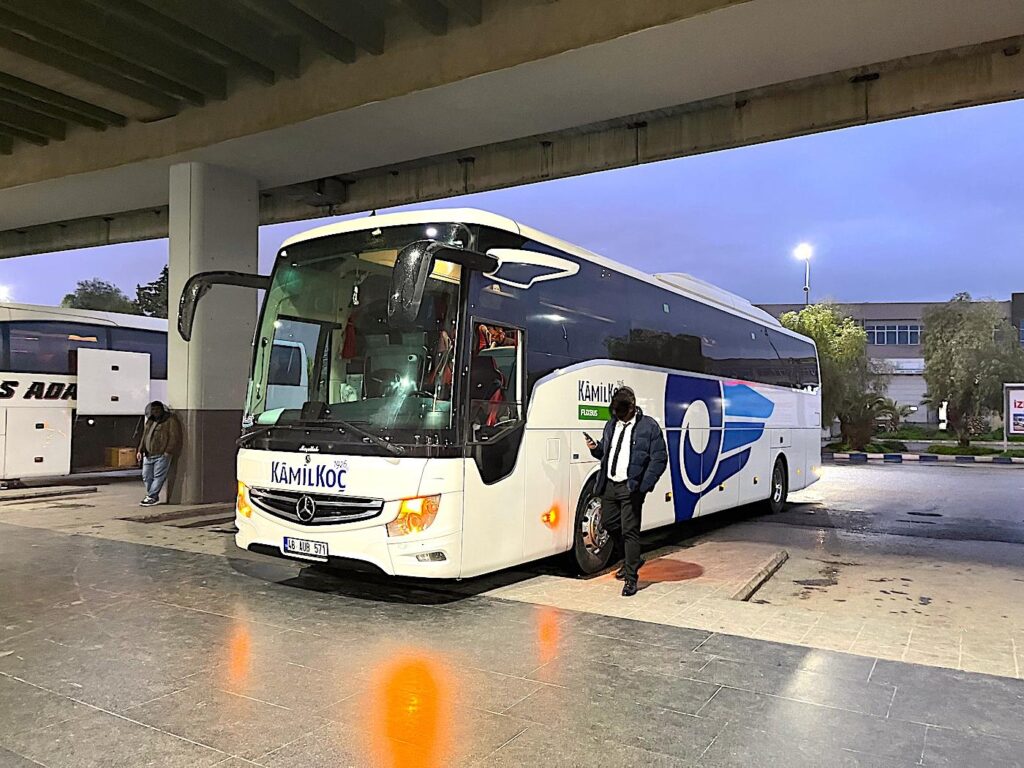
The company is particularly strong on high-frequency corridors such as Istanbul–Ankara, Istanbul–İzmir and Istanbul–Antalya, while also maintaining long-distance services to eastern cities. Integration with FlixBus provides access to international connections and online booking systems familiar to European travellers. Fleet quality is consistently modern and well-maintained.
Pamukkale Turizm
Pamukkale Website Link (Turkish)
Pamukkale Turizm has a strong reputation for service quality and comfort. It is especially dominant in the western regions of Türkiye, including İzmir, Denizli, Aydın, Muğla and surrounding Aegean destinations.
The company focuses on modern fleets, consistent onboard service and punctuality. Travellers heading toward the Aegean coast often favour Pamukkale for reliability and comfort.
Metro Turizm
Metro Turizm Website Link (English)
Metro Turizm is one of the largest domestic operators by volume and serves an extensive network covering nearly every province in Türkiye. It operates very frequent departures on popular routes and maintains strong coverage in Eastern and Southeastern Anatolia.
Metro is often chosen for its extensive route network rather than premium comfort, though newer vehicles continue to raise overall standards. It is particularly useful when travelling to smaller regional cities where fewer operators serve the route.
Varan Turizm
Varan Turizm Website Link (Turkish)
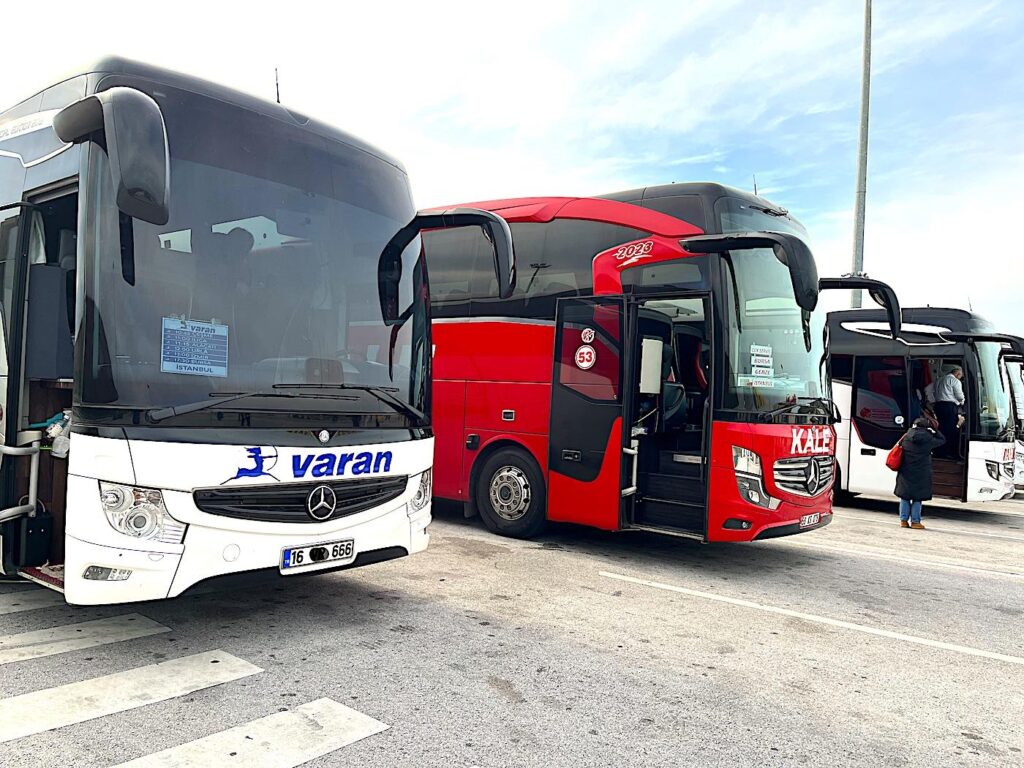
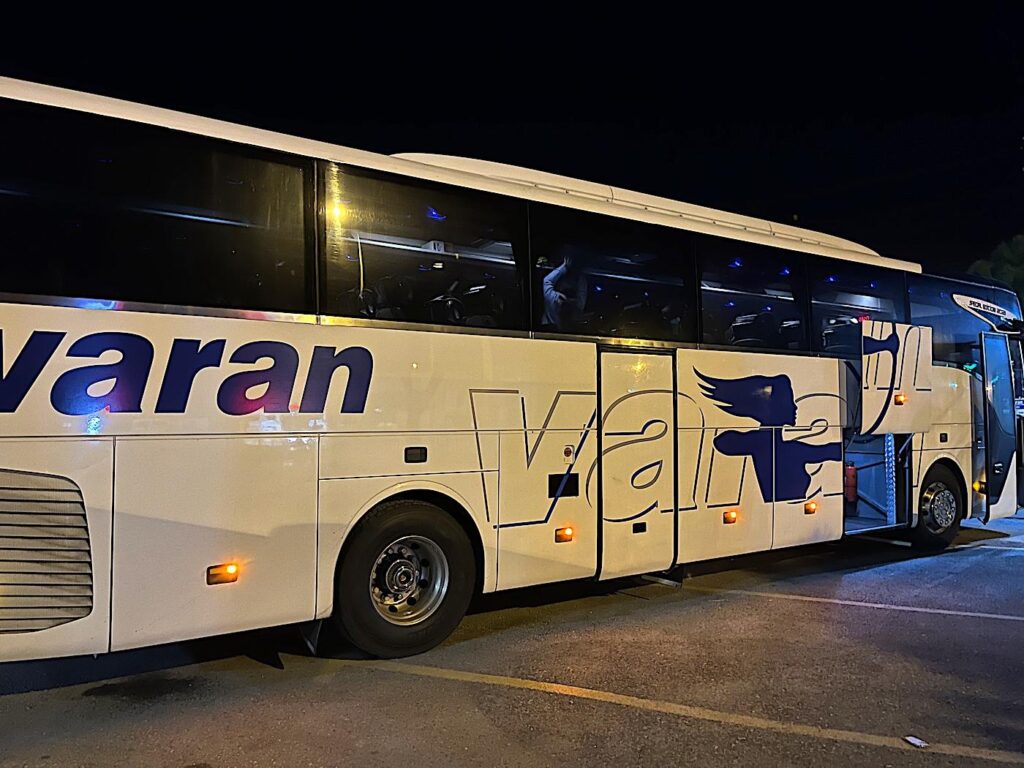
Varan positions itself slightly more toward the premium end of the market, with a strong focus on comfort, onboard service and customer experience. It operates key trunk routes between major cities, including Istanbul, Ankara, and İzmir. Fleet size is smaller than some mass operators, but service consistency is high.
Kale Seyahat
Kale Seyahat Website Link (Turkish)
Kale Seyahat is a long-established Turkish intercity coach company founded in 1975, with roots in Thrace (Trakya) and a strong operating base in western Türkiye. Over time, the company expanded from regional services around Istanbul, Vize, Saray and Çerkezköy into a wide domestic network linking Bursa, Yalova, Eskişehir, Kütahya, Ankara, İzmir, Aydın, Nazilli, Çanakkale and Denizli, among many other destinations. Today, Kale Seyahat positions itself as a connector between Thrace, the Aegean, Central Anatolia, the Mediterranean and the western Black Sea, operating regular scheduled services rather than niche or seasonal routes.
Anadolu Ulaşım
Anadolu Ulaşım Website Link (Turkish)
Anadolu Ulaşım is well established on western and southwestern routes, particularly serving İzmir, Çanakkale, Ayvalık and surrounding coastal areas. It is commonly used for Aegean regional travel and offers competitive pricing alongside reliable scheduling.
International Coach Operators from Istanbul
Istanbul is served by a diverse group of international coach operators connecting the city directly with major destinations across the Balkans, Eastern Europe and the Black Sea region. From Istanbul, passengers can travel by coach to cities such as Sofia, Plovdiv, Varna, Burgas, Thessaloniki, Kavala, Xanthi, Alexandroupoli, Skopje, Bucharest and Kyiv, with multiple daily departures on high-demand routes and overnight services on longer corridors. Some operators specialise in dense regional networks within Bulgaria and northern Greece, while others operate longer transnational routes linking Türkiye with Romania, North Macedonia, Ukraine and beyond.
The operators listed below represent a mix of large international networks and specialised regional carriers. Companies such as FlixBus provide broad European connectivity and digital booking infrastructure, while carriers like Alpar Turizm, Arda Tur, Metro Tour Bulgaria, Huntur, Simionidis Tours, Jadran Turizm and Lüks Muradoğlu Turizm focus on specific cross-border corridors and high-frequency regional routes. Together, they offer travellers a wide range of scheduling options, price points and routing strategies, allowing passengers to choose between fast direct services, multi-stop regional routes and long-distance international journeys depending on their destination and travel priorities.
FlixBus
FlixBus Website Link (English)
FlixBus is one of the largest international coach networks in Europe and a top option for cross-border bus travel from Istanbul. Its services frequently operate on key corridors including Istanbul–Sofia (Bulgaria), Istanbul–Thessaloniki (Greece), Istanbul–Bucharest (Romania) and, in many seasons, longer journeys such as Istanbul–Belgrade (Serbia) and Istanbul–Kyiv (Ukraine). These routes vary by season but reflect FlixBus’s broad network integration.
FlixBus’s strength lies in its global digital infrastructure, multilingual booking platforms, mobile ticketing, onboard Wi-Fi and power outlets on many coaches. Travellers appreciate the clarity of route planning and the ability to connect onward into Europe using partner routes within the FlixBus network, making it ideal for those journeying beyond Türkiye.
Alpar Turizm
Alpar Turizm Website Link (English)
Alpar Turizm is an established Turkish coach operator founded in 1972 that runs long-distance and international bus services from Istanbul across the Balkans. Its network includes direct routes from Istanbul to cities in Bulgaria (Sofia, Plovdiv, Haskovo), Greece (Thessaloniki, Kavala, Xanthi, Alexandroupoli), North Macedonia (Skopje) and Albania (Tirana), among other destinations in the region such as Komotini and Constanța. Services typically depart from major Istanbul terminals, including Esenler Otogar.
Alpar Turizm’s coaches are designed for long routes, offering standard reclining seats, luggage storage and air conditioning. While route frequency can vary seasonally, Istanbul–Sofia, Istanbul–Thessaloniki, Istanbul–Plovdiv, Istanbul–Skopje and Istanbul–Tirana appear regularly on ticket booking platforms, illustrating the breadth of its international reach. These services make Alpar Turizm one of the most versatile Balkan-oriented carriers out of Istanbul, connecting Türkiye with several neighbouring countries without the need to change vehicles.
Arda Tur
Arda Tur Website Link (English)
Arda Tur is a Bulgarian coach operator based in Haskovo, Bulgaria, that runs international bus services connecting Istanbul with multiple destinations in Bulgaria and Greece. The company operates regular direct departures from Istanbul’s main intercity terminal (usually Esenler Otogar) to cities such as Sofia and Thessaloniki, with scheduled journey times of around 8–10 hours depending on the destination. Arda Tur’s network offers direct routes between Istanbul and Thessaloniki Railway Station, as well as Istanbul–Sofia services without requiring a bus change en route.
In addition to these core routes, Arda Tur’s broader Balkan network connects to other regional destinations, including Xanthi, Kavala and Komotini in northern Greece. While Arda Tur primarily serves Balkan cities directly rather than extending regularly into central or Western Europe on its own, it maintains partnerships and route integrations that allow through-ticketing and combined services beyond its direct lines.
Metro Tour Bulgaria EOOD
Metro Tour Bulgaria Website Link (English)
Metro Tour Bulgaria is a licensed Bulgarian international passenger transport company and the official partner of the Turkish operator Metro Turizm Seyahat. The company originally launched with a single Sofia–Istanbul route and has since expanded into one of the most frequent cross-border coach networks between Bulgaria and Türkiye. It operates modern coaches that comply with European passenger transport standards and provides onboard steward service with complimentary hot and cold drinks throughout the journey. Ticket sales are supported through physical offices across Bulgaria as well as an online reservation system, allowing passengers to book easily in advance.
According to the published timetable, Metro Tour Bulgaria operates multiple daily departures between Istanbul (Bayrampaşa/Esenler) and major Bulgarian cities, including Sofia, Plovdiv, Varna, Burgas, Haskovo, Dobrich, Ruse, Razgrad, Silistra, Shumen, and Sunny Beach. Sofia alone has up to five daily departures in each direction, while Plovdiv and Haskovo typically have four to five daily services, and coastal cities such as Varna and Burgas operate two to three daily departures. In total, this represents well over 30 scheduled cross-border services per day across the network, making Metro Tour Bulgaria one of the most intensive Bulgaria–Türkiye operators in the region. The schedule also includes services linking Bulgarian cities with Bursa and intermediate Turkish pickup points.
Huntur
Huntur Ulaşım Turizm Seyahat Ltd. Şti. is a Turkish international coach company based at Büyük İstanbul Otogarı (Esenler / Bayrampaşa) in Istanbul. The company operates long-distance bus services, focusing on cross-border travel between Türkiye and the Balkans, serving passengers who regularly travel between Istanbul and neighbouring countries. Huntur is known for offering practical, affordable journeys with straightforward scheduling and direct departures from Istanbul’s main intercity terminal.
Huntur’s main routes connect Istanbul with key Bulgarian cities, including Sofia, Plovdiv, Stara Zagora, Veliko Tarnovo and Ruse, as well as selected services from Bursa. These routes are popular with both international travellers and regional passengers, offering consistent cross-border connectivity year-round. Coaches operate on established international corridors and offer standard long-distance comfort.
Simionidis Tours
Simeonidis Tours Website Link (English)
Simeonidis Tours is a Greece-based international coach operator with long-standing experience in cross-border passenger transport throughout the Balkans. The company operates daily scheduled services between Istanbul and Thessaloniki, supported by a modern fleet and a large operational network that spans multiple European countries. Simeonidis Tours emphasises reliability, comfort and consistent scheduling, making it a popular choice for travellers moving between Türkiye and northern Greece. The company maintains offices in Thessaloniki and operates across several international corridors, including Greece–Turkey, Greece–Macedonia, Greece–Serbia, Greece–Romania, Greece–Czech Republic and Greece–Bulgaria.
On the Istanbul–Thessaloniki route, buses depart daily and serve several intermediate boarding and drop-off points in northern Greece and Thrace. From Istanbul, the coach travels west toward the Greek border and continues through Alexandroupoli, Komotini, Xanthi, and Kavala before reaching the final destination, Thessaloniki. This stepped routing allows passengers to board or disembark at multiple regional cities rather than only at the end points, making the service flexible for travellers heading to coastal or regional destinations as well as Thessaloniki itself. The route structure and intermediate stops are published by the operator and form part of its regular international schedule.
Jadran Turizm
Jadran Website Link – No Link Found (See bus consolidators such as Busbud)
Jadran Turizm is a regional coach operator that provides international long-distance services between Istanbul and Skopje, North Macedonia, as well as connections into other Balkan destinations. The company specialises in cross-border travel linking Türkiye with the wider Balkan region, with scheduled departures from Istanbul Esenler Otogar and arrivals in Skopje’s central bus terminal.
Lüks Muradoğlu Turizm – Bus travel from Istanbul to Kyiv, Ukraine
Lüks Muradoğlu Turizm Website (Turkish/Ukrainian)
Lüks Muradoğlu Turizm is a Turkish coach operator based in Istanbul that runs long-distance and international bus services, including direct routes from Istanbul to Kyiv (Ukraine) and connections through Eastern European cities. The company’s main departure point for international services is Esenler Otogar on the European side of Istanbul, and it maintains an operational presence with a branch in Kyiv near the central bus terminal.
The Istanbul–Kyiv route is a true long-distance service, typically taking around 26–28 hours, with scheduled departures several times a week. The route passes through Romania, including Bucharest and multiple Ukrainian towns on the way to Kyiv, and coaches provide regular comfort stops along the way.
Selecting the Right Coach Operator
When selecting a bus company, travellers should consider route coverage, departure frequency, fleet quality, travel duration and seasonal demand. On heavily trafficked routes, multiple operators compete aggressively, allowing passengers to choose based on comfort and timing preferences. On remote or long-distance routes, availability may be more limited and booking in advance is recommended. Booking platforms such as Busbud make it easy to compare operators and help identify the best option for each journey.
Practical Tips for Bus Travel from Istanbul
When travelling by long-distance coach from Istanbul, one of the most important practical considerations is confirming the correct departure terminal or pickup point well in advance. Istanbul has multiple intercity terminals on both the European and Asian sides, and some operators also use smaller pickup points that may vary by route and day. Arriving early is advisable, and identify which bay your coach will depart from, or how it will be indicated, particularly for international services, as boarding procedures, luggage tagging, and passport checks can take longer than expected.
Most Turkish and international coaches allow generous luggage allowances, usually at least one large suitcase stored beneath the bus and a smaller bag kept with you on board. Passengers should keep passports, valuables and medications in their hand luggage, as access to stored luggage is limited during the journey.
Coaches generally do not have onboard toilets; instead, they stop regularly at highway service areas for rest breaks, meals and restroom access. These stops are usually brief, so it is important to return to the bus promptly. Learning (which can often be found on the carrier’s website) and noting the exact stop schedule in advance is useful for understanding how long you have between stops and at each stop. On routes terminating in Istanbul, once entering the city’s outskirts, there is usually little or no opportunity to stop for a bathroom break, and in heavy traffic, the journey time can be extended, so it is advisable to make full use of the penultimate stop before Istanbul.
For international journeys, border crossings can add unpredictable delays. Passengers should ensure their travel documents are valid for all countries on the route and allow extra time when planning onward connections. Overnight services are common on longer routes and can be a comfortable way to travel while saving on accommodation, but bringing a light blanket, neck support, eye mask, or earplugs can improve comfort.
Booking in advance, especially during weekends, holidays and summer months, helps secure better seat availability and pricing. Note, though, that some carriers reduce prices in the final days when seat availability is still high, so it can sometimes be worthwhile to wait if it is not high season and you have flexibility.
When Coach Travel Makes Sense Compared to Trains or Flights
Coach travel often makes the most sense when travelling to destinations that are not directly served by rail or air, or where train journeys require multiple changes. Many regional cities and coastal destinations in Türkiye and the Balkans are simply easier to reach by bus, with direct services that remove the need for transfers. Coaches are also particularly well suited to international travel within southeastern Europe, where rail infrastructure can be limited or fragmented and flight options are either infrequent or disproportionately expensive.
For many travellers, buses are also a more straightforward alternative to flying. Some people dislike flying altogether, while others prefer to avoid the complexity of airports: security screening, gate changes and baggage restrictions. Coach journeys typically begin in central locations, offer generous luggage allowances, and involve minimal formalities once you arrive at the terminal. You are usually on the bus shortly after boarding, without multiple layers of security or transfers to the aircraft. On buses, passengers can generally bring their own food and drinks, and intercity services often include complimentary refreshments, unlike domestic flights within Türkiye, which usually don’t.
Coach travel can also make sense from a pricing and availability perspective. In low season, there is often little difference between bus and flight prices; however, while flight tickets, especially domestic flights in Türkiye, can multiply by 4 or 5 during peak seasons and sell out quickly, coach fares tend to be far more stable. Even during busy holiday periods, bus prices usually increase only modestly, often by around 15–20%, although popular departures can still sell out. This predictability makes coaches attractive to travellers booking at short notice or travelling during high-demand periods.
On certain routes, coaches can also offer better connection timing, particularly overnight services. If you are comfortable sleeping on a bus, an overnight journey can save both time and accommodation costs, allowing you to arrive early the next morning ready to continue your trip.
While trains offer speed and comfort on select domestic routes such as Istanbul–Ankara or Istanbul–Eskişehir, their coverage remains limited compared to the nationwide and international bus network. For travellers prioritising flexibility, predictable pricing, fewer formalities and direct access to a wide range of destinations, long-distance coaches remain one of the most practical and effective ways to travel from Istanbul.
Connecting Your Journey Beyond Coaches
For travellers combining long-distance coach travel with flights, Istanbul is served by two major international airports: Istanbul Airport (IST) on the European side and Sabiha Gökçen Airport (SAW) on the Asian side. Both airports offer extensive domestic and international flight networks and can be easily reached by metro, airport buses, taxis, and transfer services. Many passengers arriving by coach choose to continue their journey by air, while others use Istanbul as a transit hub before travelling onward within Türkiye or Europe. If your trip requires additional flexibility, car hire in Istanbul can also be a practical option for reaching rural destinations, coastal areas, or locations not well served by public transport.
Istanbul is equally well connected by sea and rail. Regular ferry services link the European and Asian sides of the city and provide scenic connections to nearby coastal towns and islands, making ferries a popular choice for both commuters and visitors. Türkiye’s growing intercity rail network also connects Istanbul with major cities such as Ankara, Konya and Eskişehir via high-speed train services, and international rail connections continue to develop. Travellers planning multi-modal journeys may find it useful to combine coaches with ferries, trains or flights, depending on timing, budget and destination — detailed guides for each transport option are available across the site.