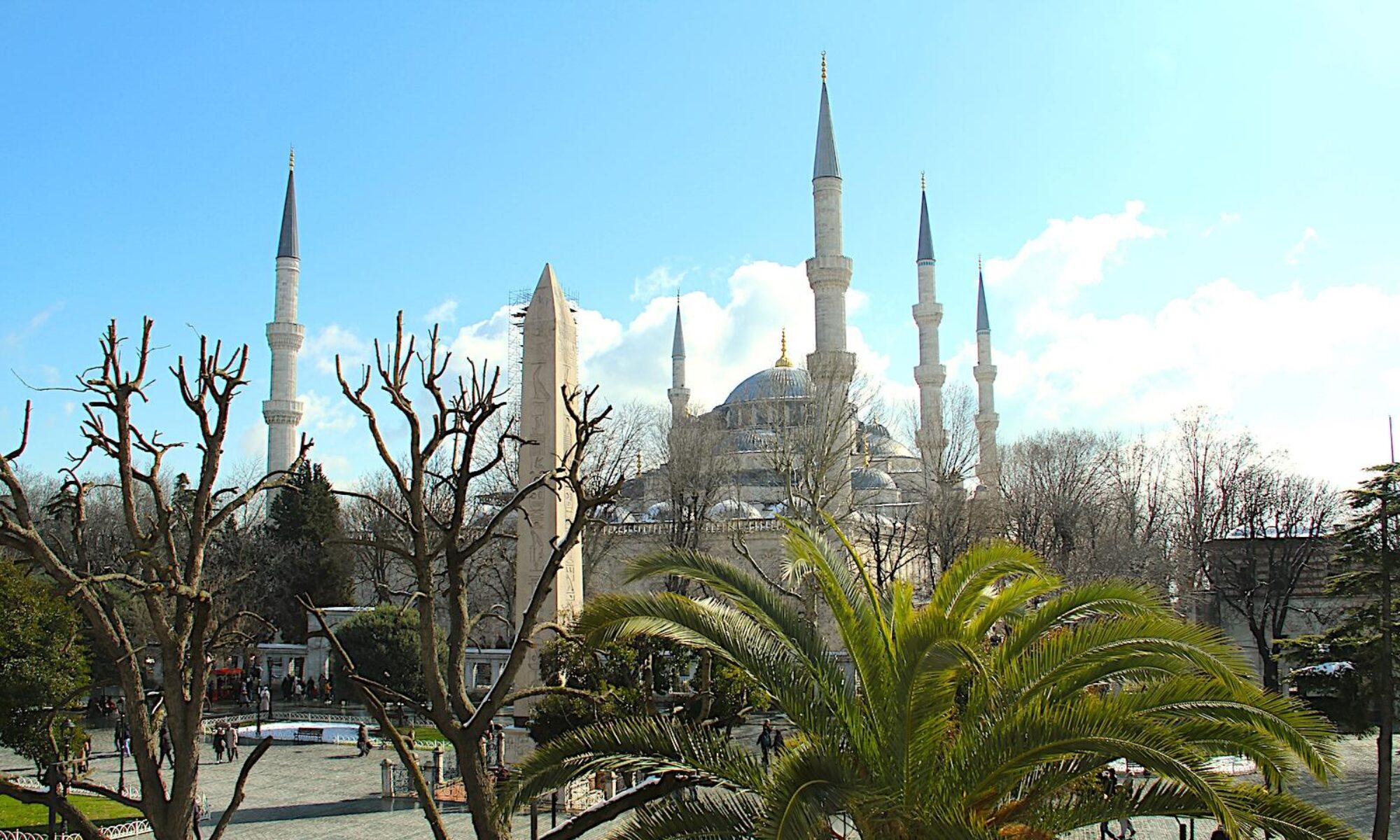
The Istanbul Biennial is Türkiye’s leading international contemporary art exhibition, bringing together artists, curators, and creative thinkers from around the world for a city-wide celebration of visual culture. Founded in 1987 and theoretically held every two years, the Biennial is organised by the Istanbul Foundation for Culture and Arts (İKSV), one of Türkiye’s most important cultural institutions. Presented across multiple historic and urban venues, the event transforms Istanbul itself into an open, walkable museum, free to enter, open to all, and designed to spark dialogue between art, the city, and its people.
The Istanbul Biennial – Table of Contents
Istanbul Biennial Timing & Themes
Although the Istanbul Biennial is designed as a biennial (held every two years), in practice, several editions have been separated by three-year intervals. This has happened primarily due to external circumstances rather than by design. For example, the 17th Istanbul Biennial, initially planned for 2021, was postponed to 2022 due to the global pandemic and the resulting disruptions to international travel, production schedules, and installation logistics.
| Edition | Dates | Theme | Curator |
|---|---|---|---|
| 14th | 5 Sep – 1 Nov 2015 | “SALTWATER: A Theory of Thought Form | Carolyn Christov‑Bakargiev |
| 15th | 16 Sep – 12 Nov 2017 | “A Good Neighbour” | Elmgreen & Dragset |
| 16th | 14 Sep – 10 Nov 2019 | “The Seventh Continent” | Nicolas Bourriaud |
| 17th | 17 Sep – 20 Nov 2022 | Untitled | Ute Meta Bauer, Amar Kanwar & David Teh |
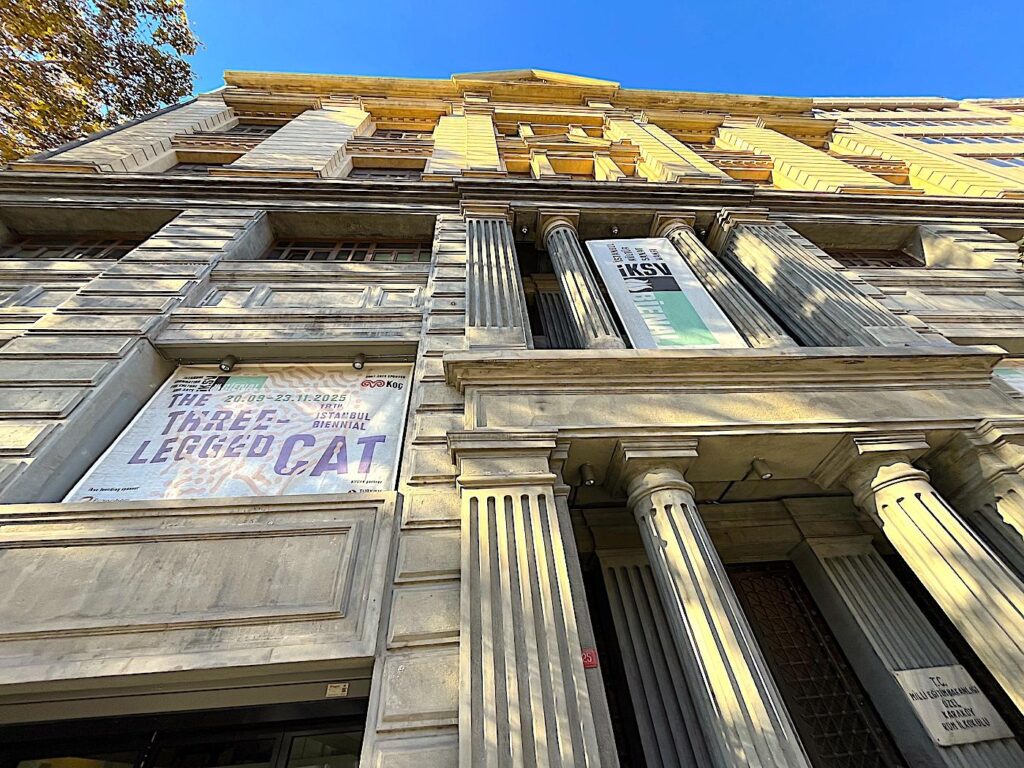
| 18th | 20 Sep – 23 Nov 2025 | “The Three-Legged Cat” | Christine Tohmé |
Recent editions include the 16th Istanbul Biennial (2019), titled “The Seventh Continent,” which explored themes of human impact, ecological collapse, and the plastic “continent” drifting in the Pacific. The 17th Istanbul Biennial adopted a constellation model, a network of interlinked exhibitions and research projects spread across more than 50 venues, emphasising collective knowledge, environmental listening, and new ways of telling shared stories.
The move from 2022 to 2025 for the 18th edition reflects a strategic shift rather than a simple delay: İKSV and curator Christine Tohmé deliberately expanded the Biennial into a three-year cycle (2025–2027) to allow deeper engagement with local contexts, slower and more sustainable production, and longer-term collaborations with artists, communities, and researchers. As a result, the 18th edition marks the beginning of a multi-year, phased Biennial that embraces a slower, more durational approach to contemporary art.
Istanbul Biennial Location & Access
Most Biennial venues are freely accessible and located within central neighbourhoods such as Beyoğlu, Karaköy, and Fındıklı. In 2025, seven of the eight venues were in proximity to Galataport. Visitors can reach them easily on foot, by tram (T1 line), funicular (F1 Karaköy–Beyoğlu), metro (M2), or by ferry to Karaköy or Kabataş, followed by a short walk. Opening hours typically run from 10:00 to 18:00, Tuesday to Sunday (closed Mondays), although some venues extend to 20:00 during peak weeks. The Biennial venues usually stay open on Republic Day (29 October), but occasionally close during special venue-specific restoration or installation adjustments.
Istanbul Biennial 2025, 2026 + 2027 – The Three-Legged Cat
The 18th Istanbul Biennial takes its title, The Three-Legged Cat, from the city’s familiar feline companion: resourceful, alert, and always negotiating the thresholds between safety and danger. A cat moves with both playfulness and caution, slipping through alleyways, scavenging what is overlooked, and preserving a streak of wildness despite centuries of domestication. The three-legged cat, altered by injury yet still capable of grace, becomes a metaphor for survival, adaptation, and the fragile balance required to navigate a world marked by upheaval and uncertainty. Its uneven gait echoes crisis and loss, but its persistence, lifting its eyes to the horizon, learning new forms of movement, offers a way to imagine transformation and resilience.
Resting on three legs from 2025 through 2027, the 18th Istanbul Biennial stretches itself across multiple years to mirror this feline rhythm. Its first leg, which ran from September 20 to November 23, 2025, features an exhibition showcasing over 40 artists alongside performances, screenings, and talks centred on self-preservation and futurity. The second leg, in 2026, will establish an academy and collaborate with local initiatives on public programmes. In 2027, the biennial leans on its third leg to rest, gathering what has been learned into a final round of exhibitions and workshops that complete this durational, multi-year journey.
Istanbul Biennial 2025 Venues
Galata Greek School
Location: Kemankeş Karamustafapaşa Mah., Kemeraltı Avenue 25, Karaköy
Located in Karaköy, the Galata Greek School provides a richly historical setting for the 2025 Istanbul Biennial. Initially built in 1885 in an eclectic neoclassical style and funded by philanthropist Eleni Zarifis, the school opened fully in 1910 and served generations of students from the Greek community until its closure in 1988. After brief educational use in the early 2000s, the building transitioned into a cultural hub, hosting several previous Design and Art Biennials. Its extensive restoration between 2019 and 2023 returned the structure to architectural prominence. Today, its high ceilings, restored interiors, and layered history provide a resonant backdrop for contemporary works exploring time, memory, identity and transformation.
The 18th Biennial brings together a diverse group of artists whose practices bridge history, futurity and the politics of embodiment. Nolan Oswald Dennis presents system-focused interventions examining the material and metaphysical conditions of decolonisation. Kongkee’s “Dragon’s Delusion” series reimagines Qin Shi Huang in a retro-futuristic universe, accompanied by new lenticular and video works that meditate on time, nostalgia and technological acceleration.
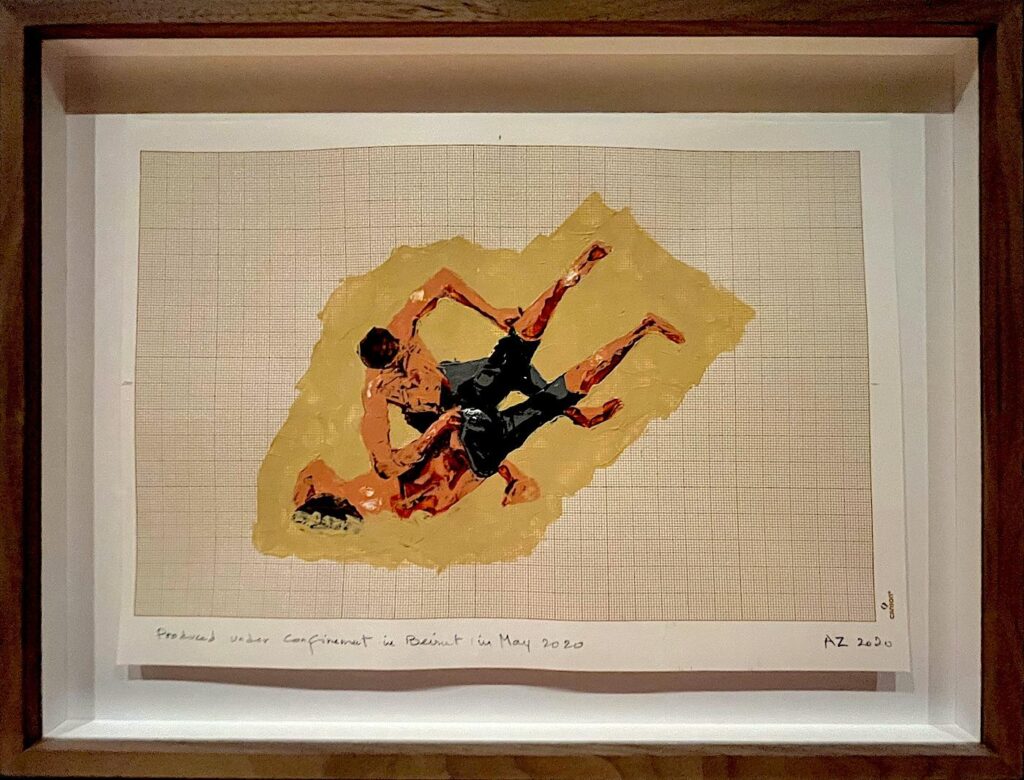
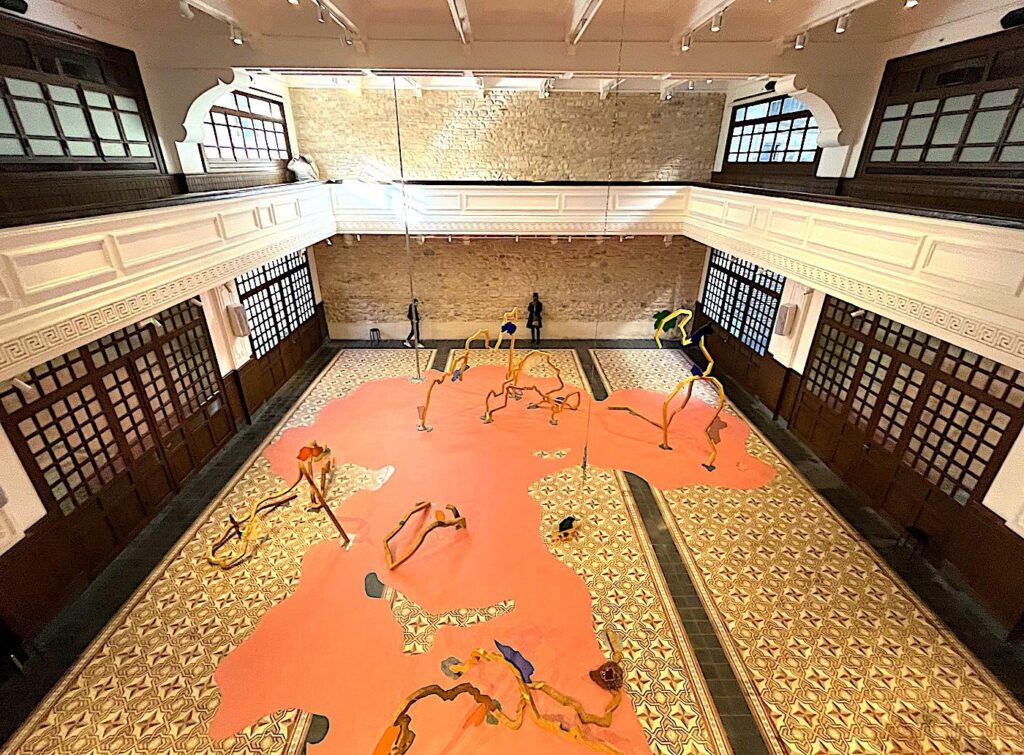
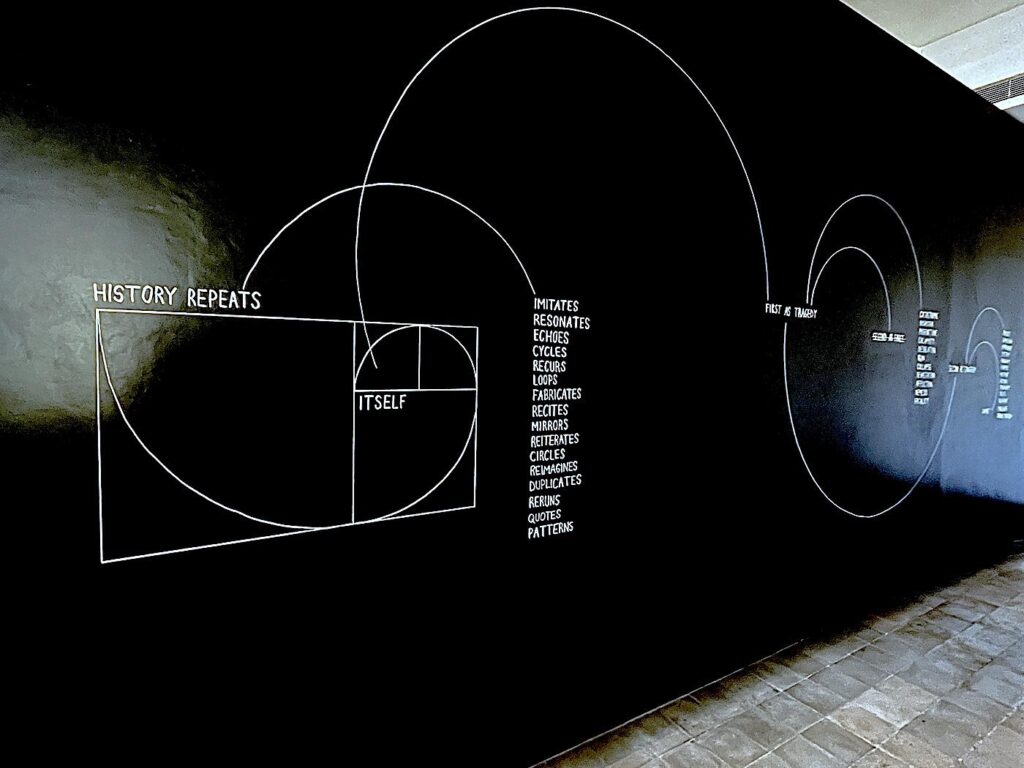
Lungiswa Gqunta’s “Assemble the Disappearing” constructs a razor-wire-laced landscape inspired by Amílcar Cabral, probing land, resistance and the lingering scars of colonial violence. Akram Zaatari contributes two series, “Olive Green” and “Crimson Red”, intimate studies of male wrestling and homosocial touch, created during pandemic isolation and charged with themes of tension, ritual and corporeal memory. Together, these works activate the school’s renewed spaces with inquiries into power, history, and the shifting conditions of human experience.
Zihni Han
Location: Kemankeş Karamustafapaşa Mah., Tophane İskele Avenue 12, Karaköy
Initially established in 1930 as the headquarters of a shipping agency and rebuilt in 1973, Zihni Han is a modest five-storey commercial block situated in Tophane, historically one of Istanbul’s key maritime gateways connecting the city to the Levant. Recently refurbished for the 18th Istanbul Biennial, its clean lines, functional spaces, and proximity to the harbour form an evocative backdrop for works exploring memory, transformation, and the shifting relations between people, objects, and territory.
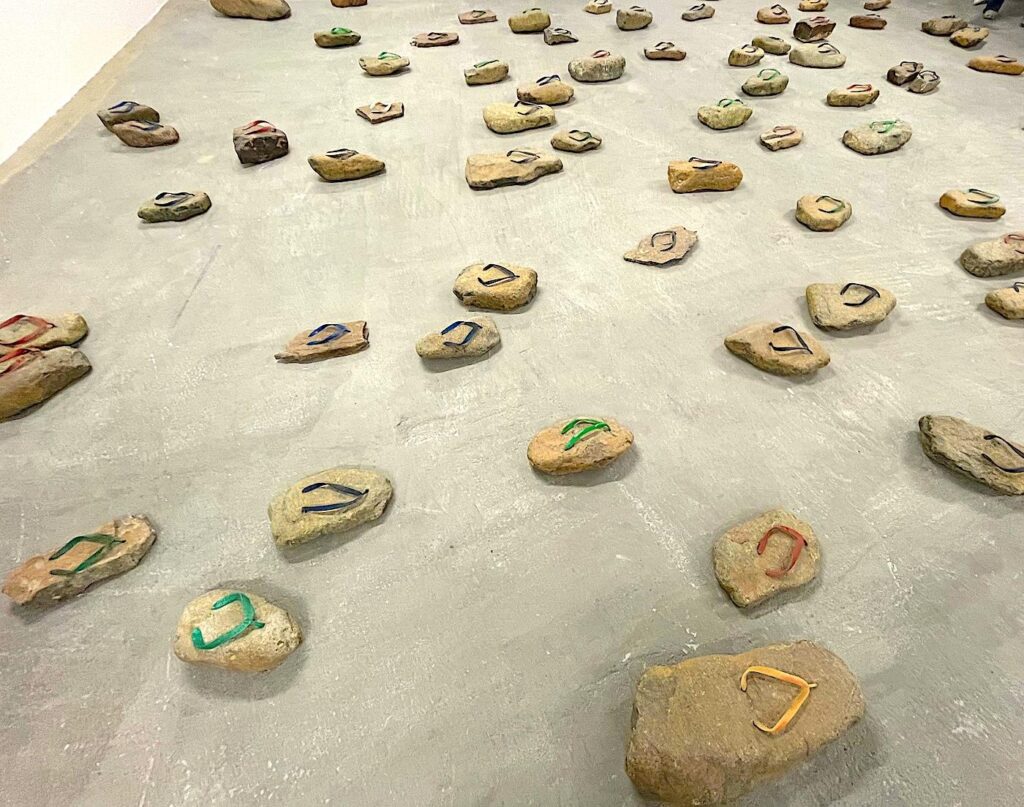
The 2025 exhibition at Zihni Han features a diverse constellation of artists whose practices interrogate land, labour, play and the poetics of material culture. Abdullah Al Saadi presents “Stone Slippers” (2013), a sculptural meditation on Gulf traditions and the bodily relationship to land, recasting everyday sandals in stone to evoke ancestral modes of grounding amid rapid modernisation. Ian Davis contributes eight meticulously detailed paintings depicting industrial sites and disaster-laden landscapes, where human order meets the looming threat of environmental destruction.
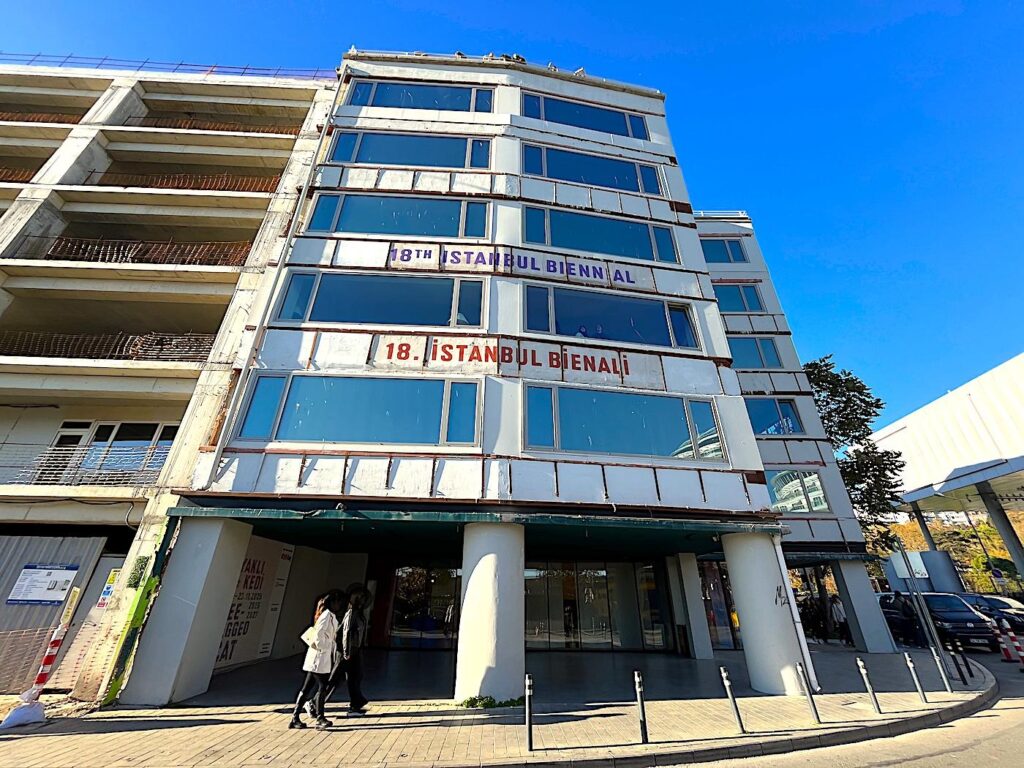
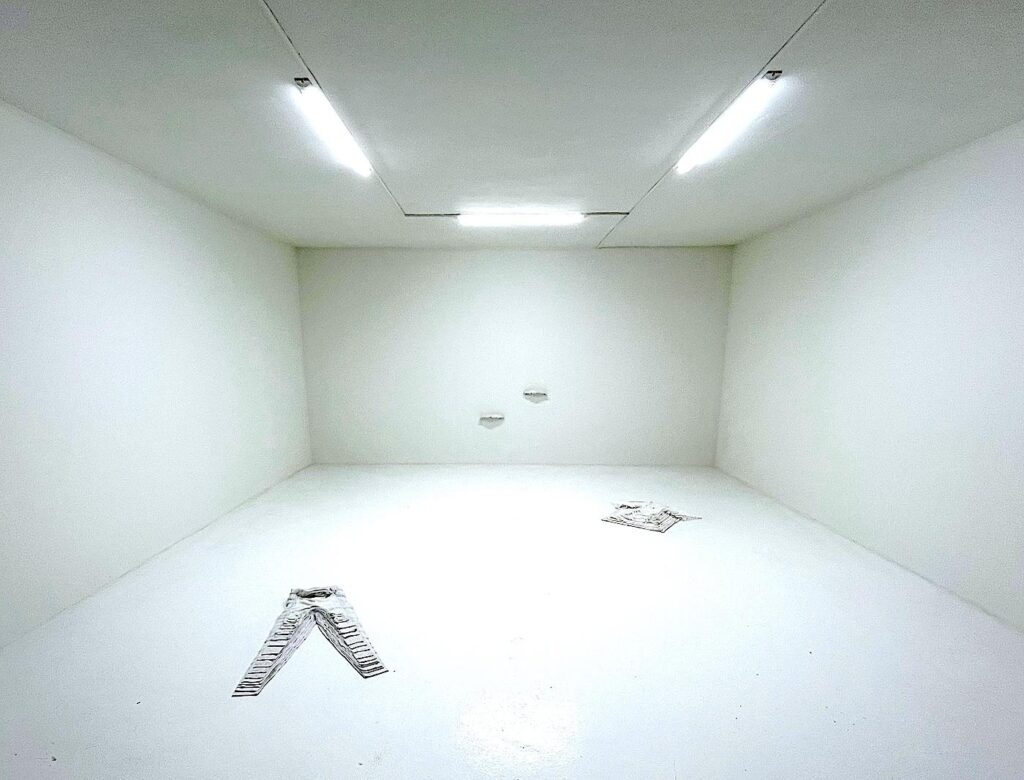
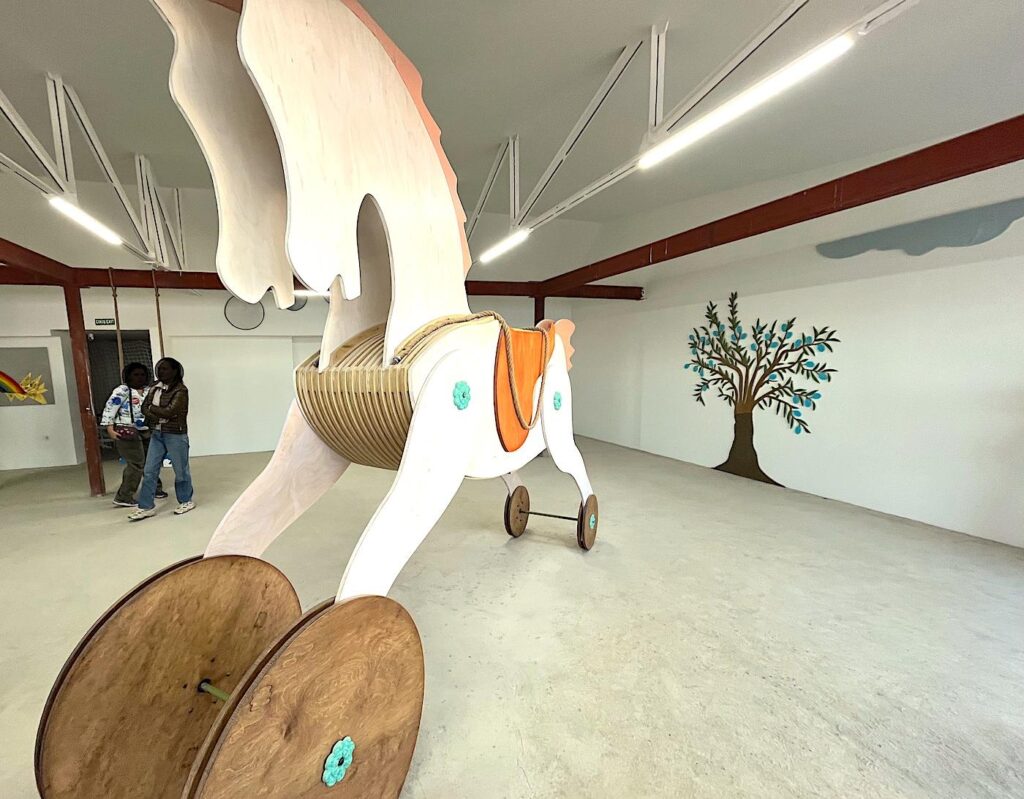
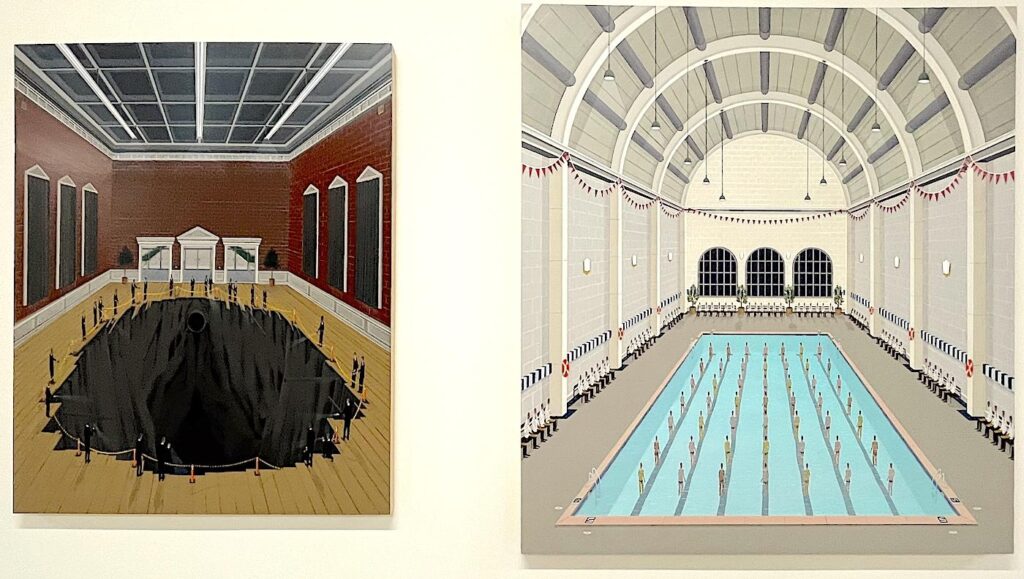
Marwan Rechmaoui installs a new, expansive iteration of “Chasing the Sun” (2023–2025), transforming the building into a playful yet unsettling world of toys, childhood games and symbolic hierarchies that mirror societal competition and conflict. Stéphanie Saadé’s “Pyramid” (2022) series layers clothing from infant to adult sizes into vertical textile monuments, materialising the passage of time through intimate, bodily traces. Together, their works animate Zihni Han with explorations of growth, vulnerability and the systems that shape collective experience.
Muradiye Han
Location: Kemankeş Karamustafapaşa Mah., Galata Şarap İskelesi Street 10, Karaköy
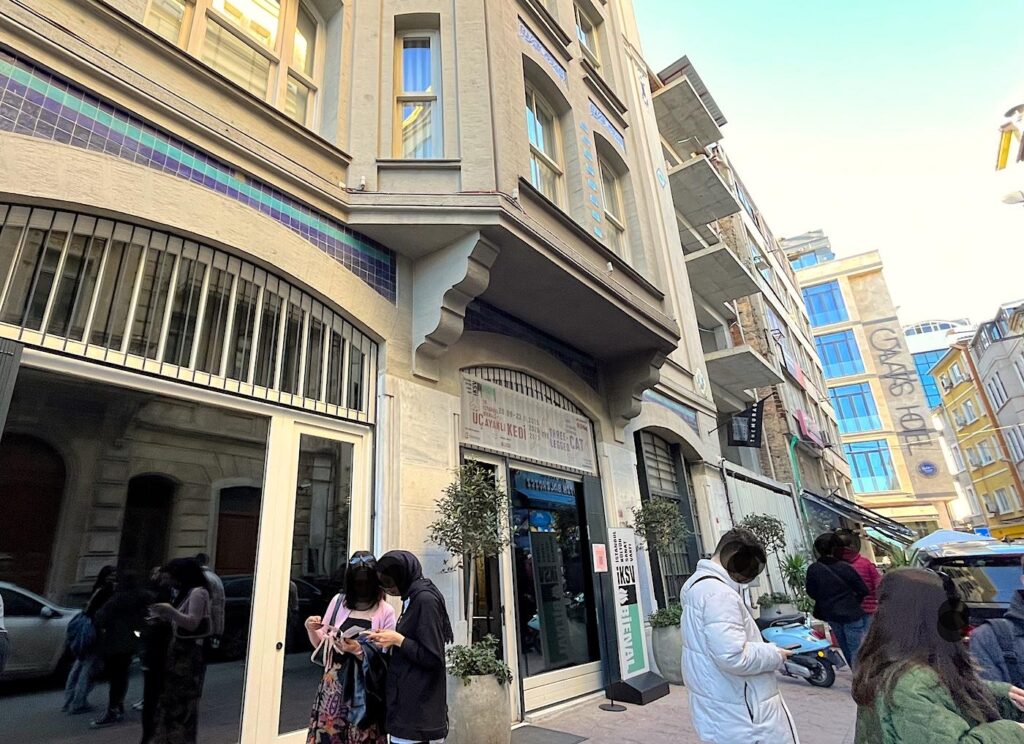
Muradiye Han, designed initially as a trading house by architect M. Vedad Tek, stands as an example of the First National Architecture Movement, blending classical Ottoman motifs with European academic design principles. Completed in 1914 and initially known as Sabit Bey Han, the six-storey structure played a central role in Karaköy’s commercial life. Following World War I and during the occupation of Istanbul, it was repurposed by French military forces and acquired the name Muradiye Guardhouse. A comprehensive restoration was made in 2021. For the 18th Istanbul Biennial, its newly restored ground floor was opened to the public, reconnecting the historic urban landmark with contemporary cultural life.
At Muradiye Han, Berlin-based Venezuelan artist Ana Alenso presented “What the Mine Gives, the Mine Takes” (2020), an immersive installation that examines the environmental and social consequences of gold extraction in the Amazonian regions of Venezuela. Stemming from research conducted with scientists, former military personnel, Indigenous communities and activists, the work confronts the toxic legacy of large-scale mining that intensified during Venezuela’s 2014–2016 oil crisis.
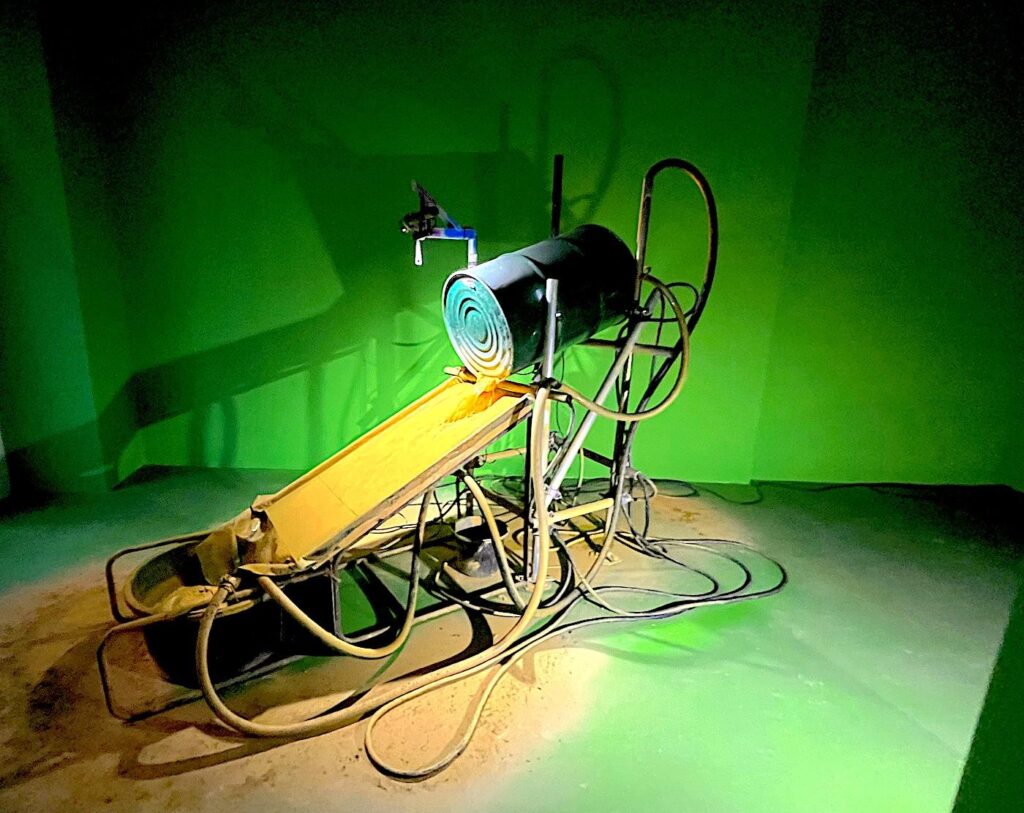
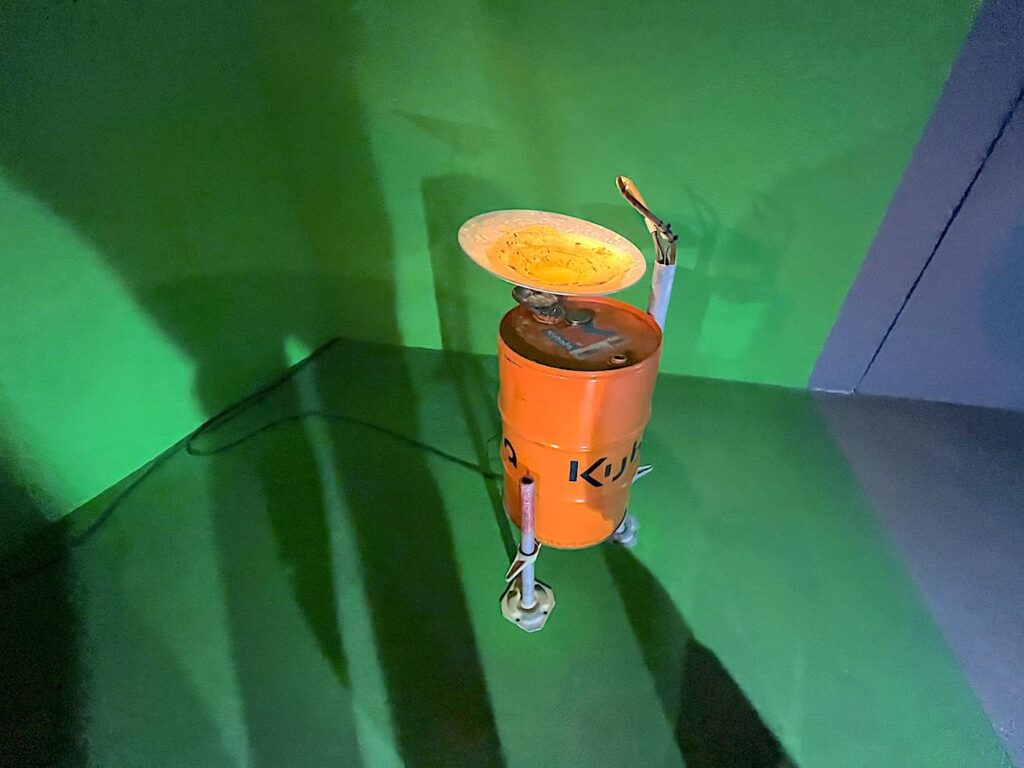
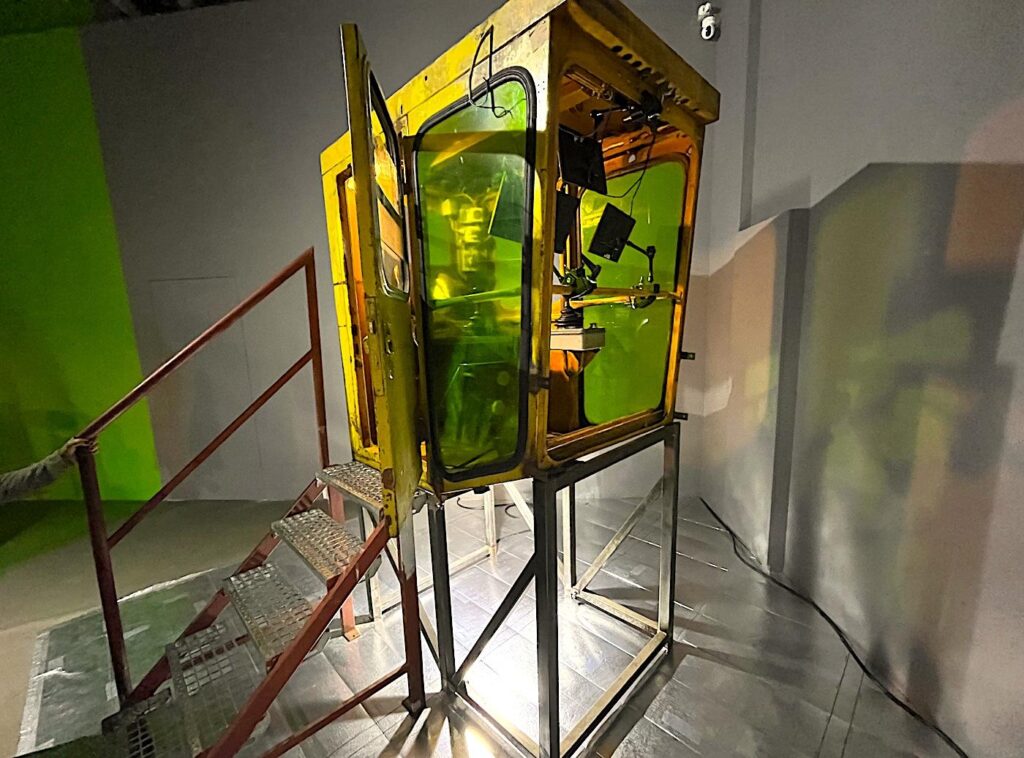
The installation features a prototype mining apparatus alongside improvised machinery inspired by bootleg devices used in illegal mining operations, scraps, hoses, buckets, exhaust pipes, radiation tubing and organic materials animated into rustling, kinetic sculptural forms. Together, these elements evoke the precarious labour, pollution and systemic inequalities underlying extractivist economies, revealing the karmic cost embedded in the very idiom that gives the work its title.
Galeri 77
Location: Kemankeş Karamustafapaşa Mah., Galata Şarap İskelesi Street 7, Karaköy
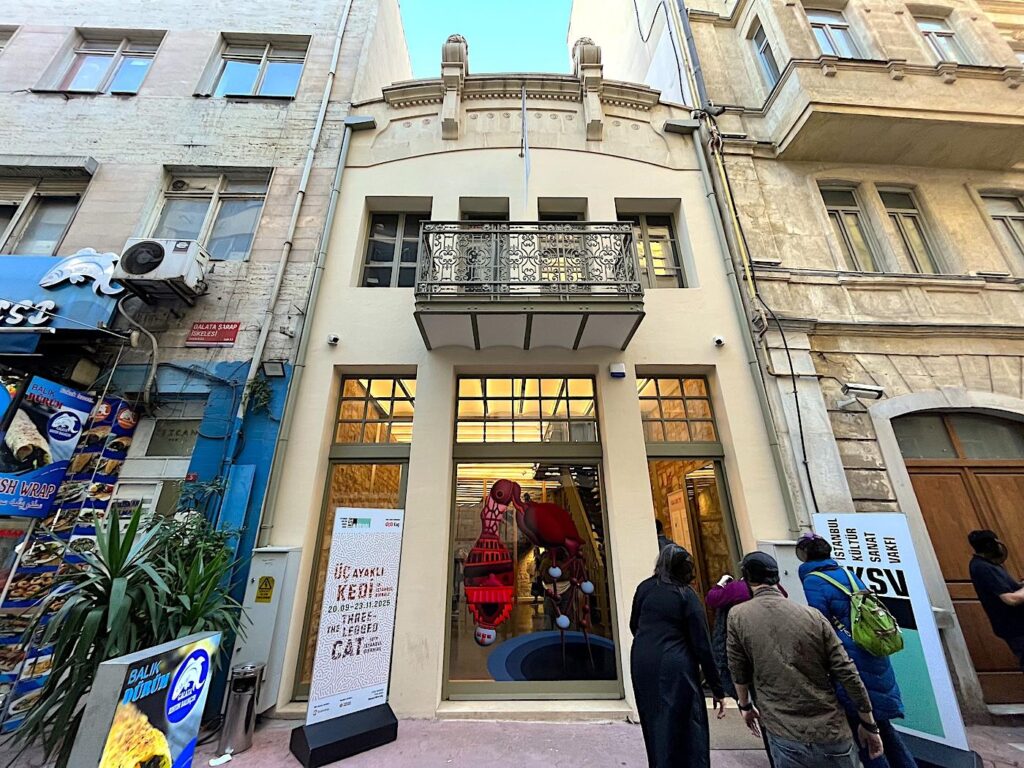
Built in 1895 as a wine storehouse belonging to Istanbul’s Greek community, this four-storey building in Karaköy stands directly opposite Muradiye Han and recalls the area’s long-standing role in the Aegean wine trade. In the early Republican era, it became a storage facility, and it sits on a street that once led directly to Galata’s historic wine dock, still known today as Galata Şarap İskelesi Sokak. Following recent renovations, the building now houses Galeri 77, a contemporary art gallery founded in 2012. For the 18th Istanbul Biennial, the entire gallery’s multi-level interior has been activated as exhibition space, linking its architectural memory of trade, storage, and movement to new artistic explorations of environment, language, and interspecies relations.
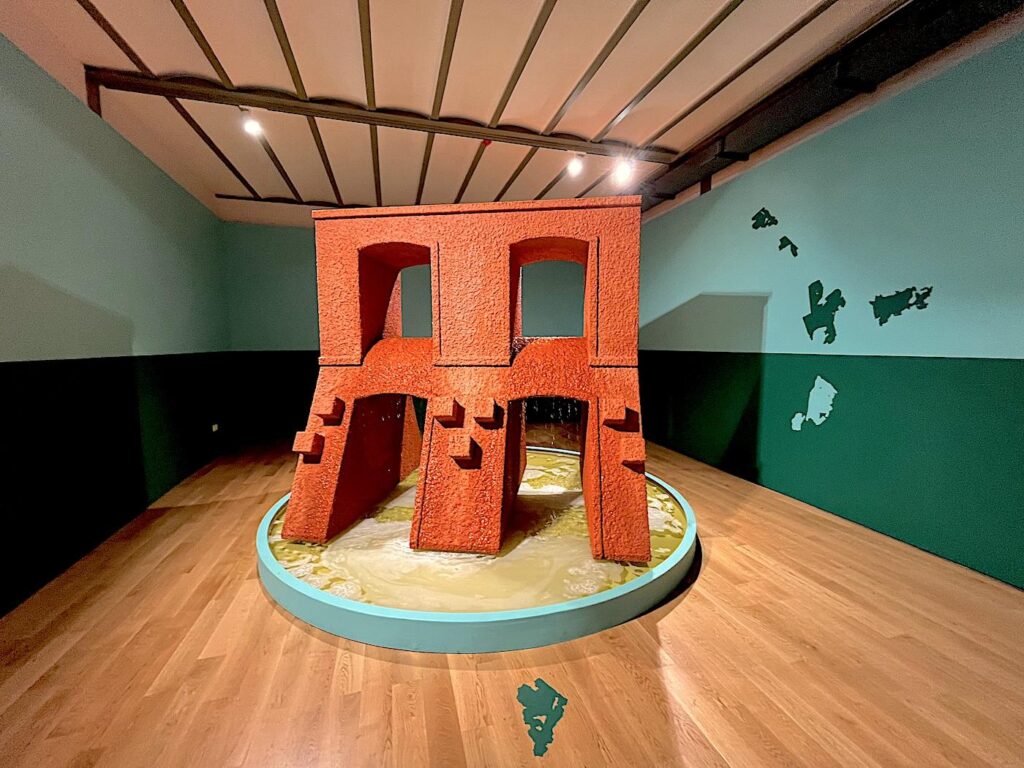
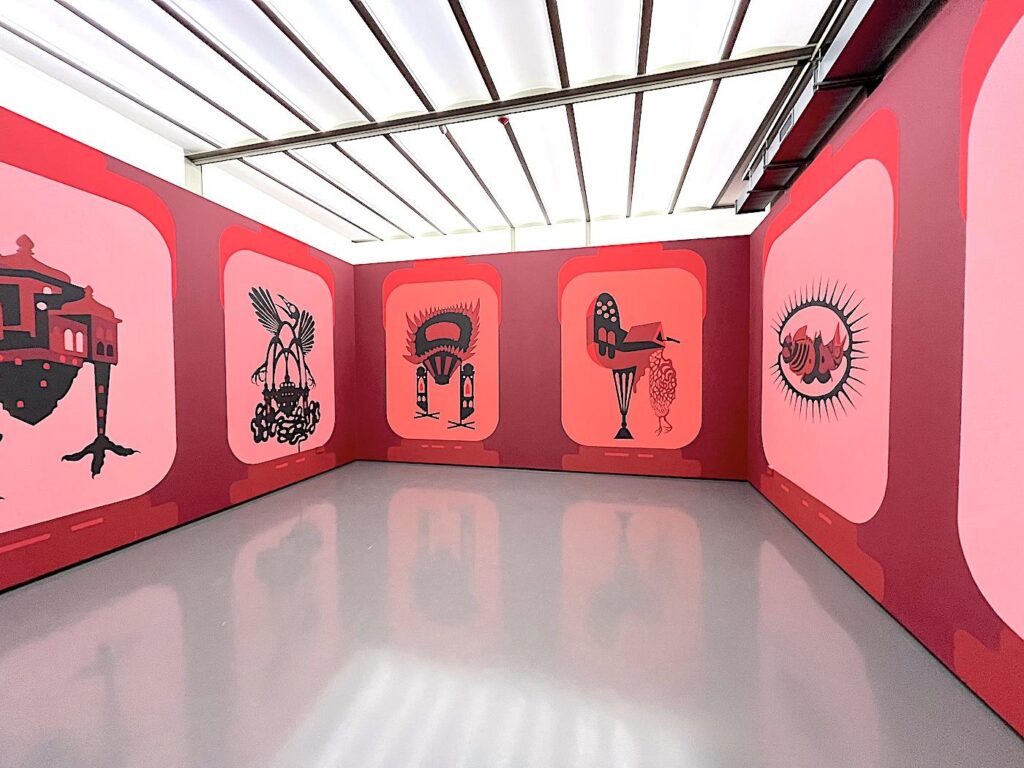
At Galeri 77, Ola Hassanain presents “A Whispering Dam” (2024), a sculptural and sonic installation centred on a towering form inspired by Sudan’s Sennar Dam. Whispered ruqya incantations emanate from within, while photographs of her grandmother’s cracked, clay-based home evoke ecological fragility and resistance to colonial temporality. Mona Marzouk’s “The Cannibal Paradox” unfolds across two rooms, using 3D-printed sculpture, mural painting, and a façade-length semi-transparent window graphic to explore the violent and intimate entanglements between humans and birds, drawing on avian intelligence to question domestication and domination.
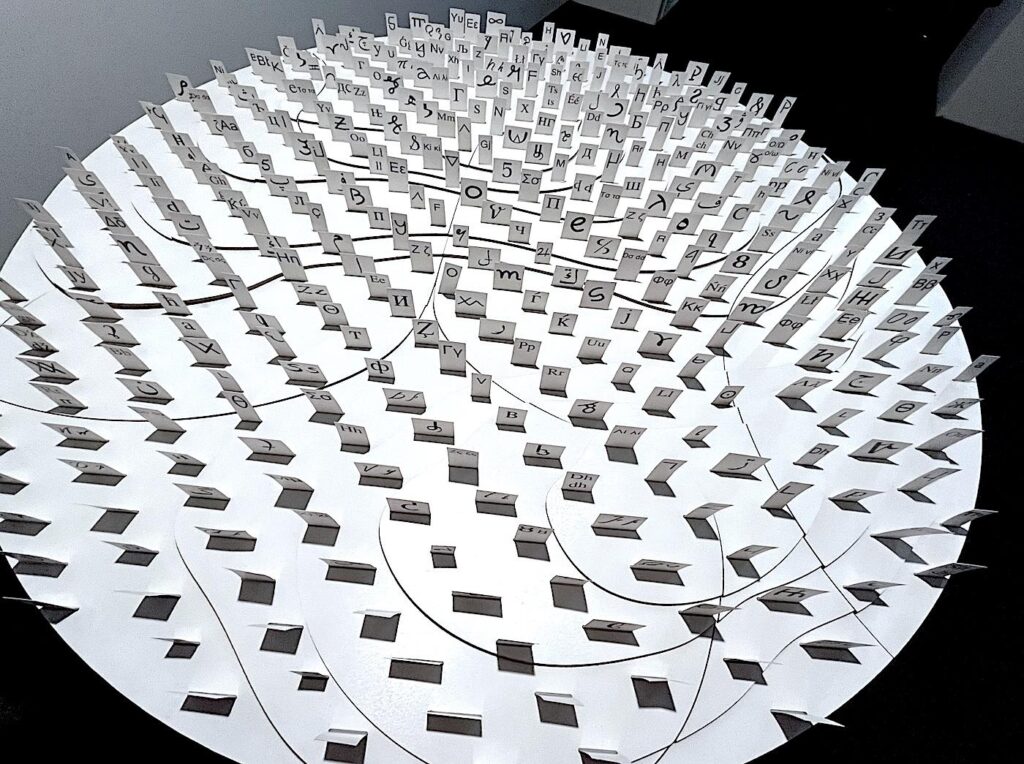
Dilek Winchester’s “410 Letters: On Reading and Writing (Albanian)” (2025) traces forgotten and experimental alphabets, from Greek, Cyrillic, and Arabic scripts to Elbasan, Todhri, Istanbul, and Bashkimi forms, rendering isolated letterforms as sculptural presences within a filmic landscape, accompanied by a sound composition. Together, the artists engage the building with themes of language, ecology, ancestry and the porous boundaries between species, territory and memory.
Cone Factory
Location: Kemankeş Karamustafapaşa Mah., Murakıp Street 12, Karaköy
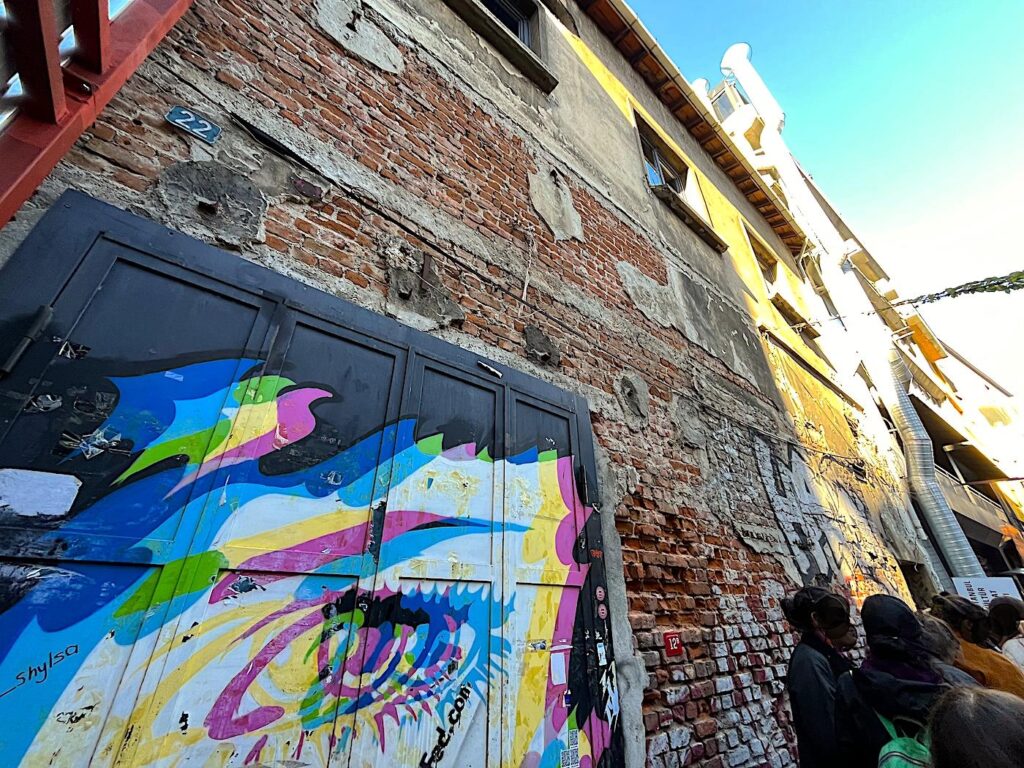
Hidden within the backstreets of Karaköy, this former ice-cream cone factory is a raw, atmospheric structure entered through a weathered brick façade marked by graffiti and framed by heavy iron doors. Its cavernous two-storey hall once housed the machinery of cone production. In recent years, it has been reclaimed as a flexible cultural space, hosting artisanal souqs, exhibitions, and even serving as a music studio and spontaneous concert venue for a local band. Set within a neighbourhood undergoing rapid gentrification and commercial saturation, the building now stands as a site for experimental artistic practice and communal gathering.
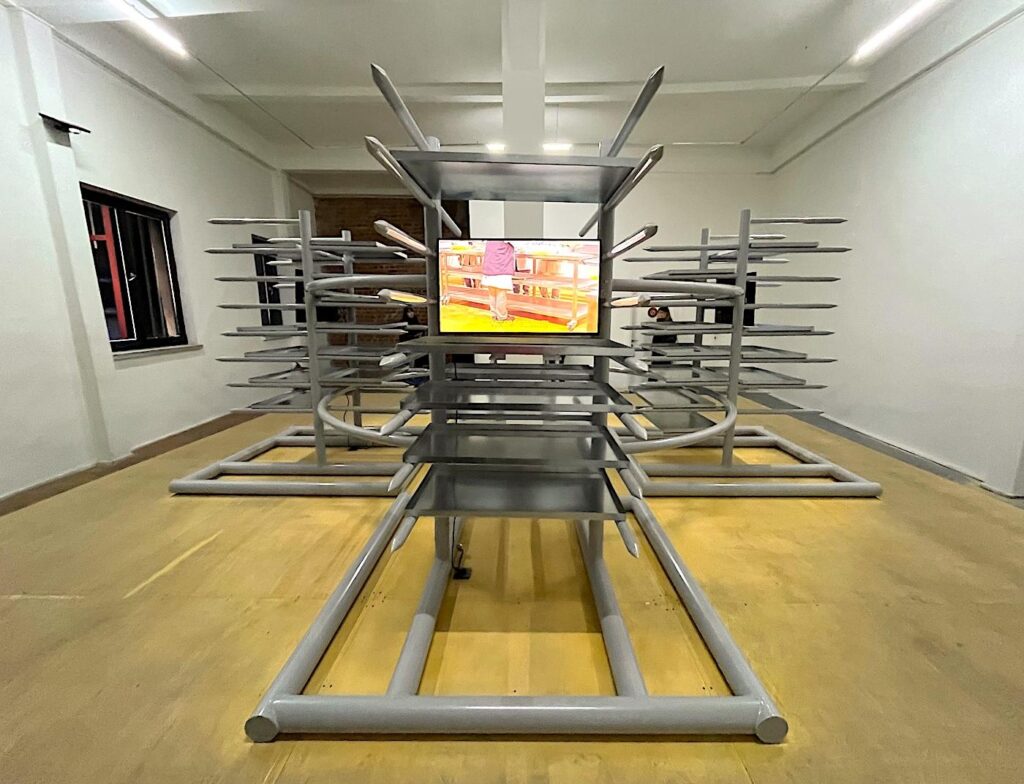
Doruntina Kastrati presents “A Horn That Swallows Songs” (2025), an immersive two-room installation exploring the invisible labour of women working in Istanbul’s Turkish Delight factories. Low-frequency vibrations pulse through the floors, echoing the strain of repetitive shifts. At the same time, a polished metal structure with embedded video screens reveals documentary footage and worker testimonies, exposing the tension between lived experience and managerial control.
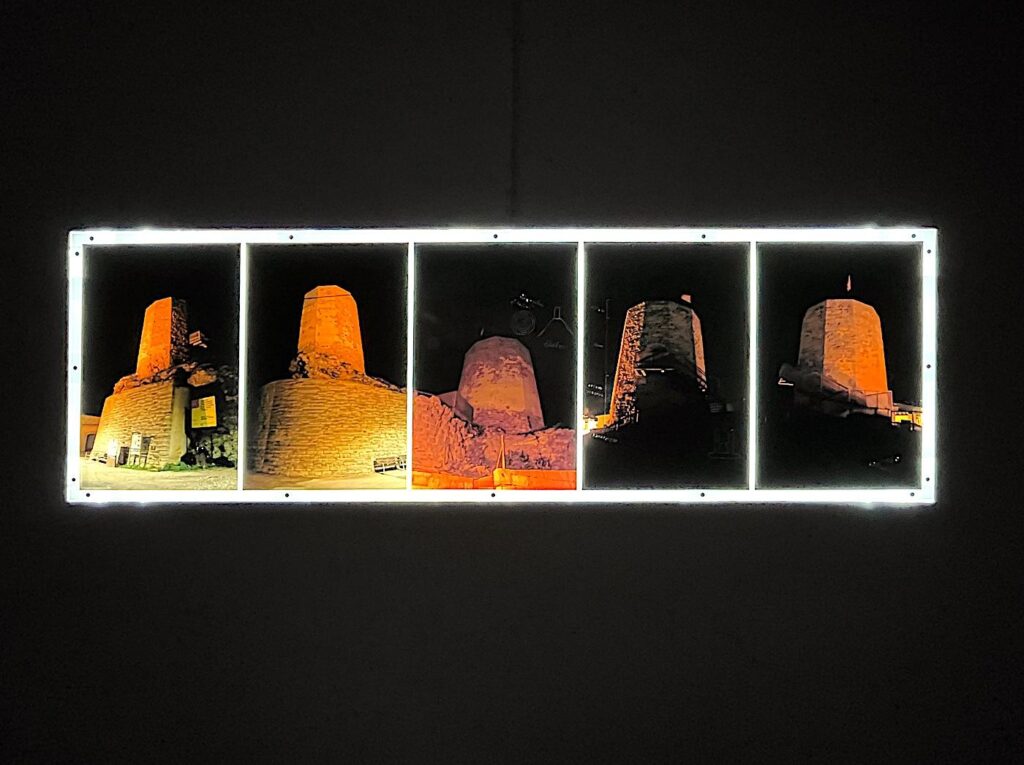
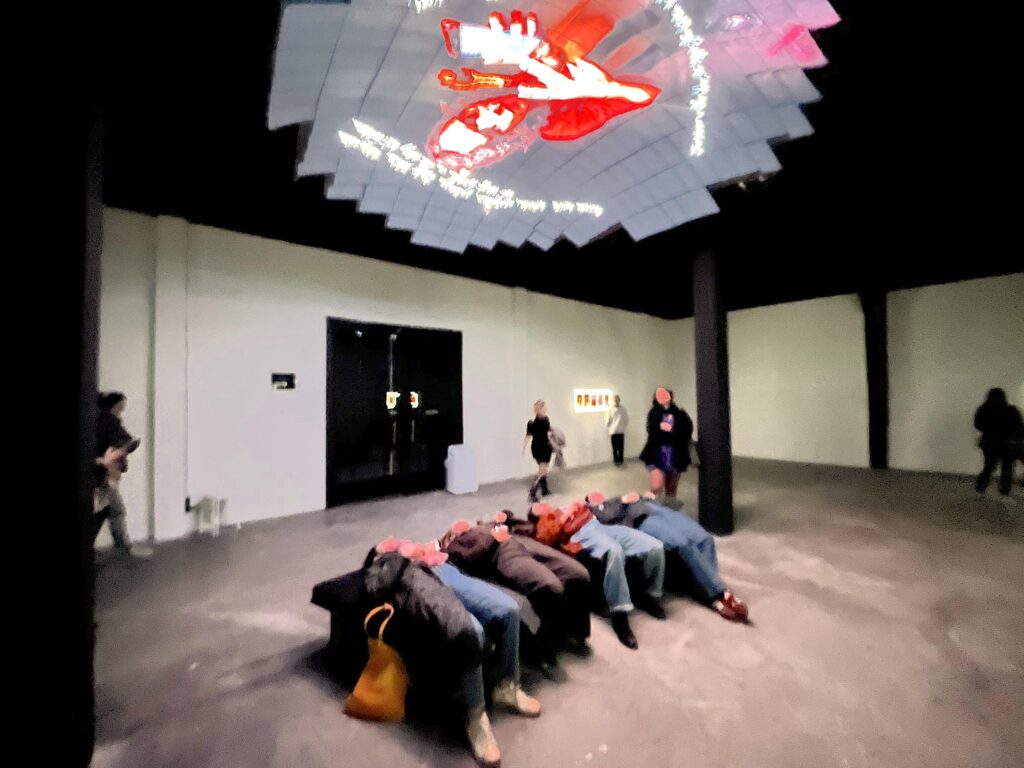
Claudia Pagès Rabal’s “Five Defence Towers” (2025) is a meditation on militarised architecture and fragmented temporalities. Centred on a 34-minute 360-degree film projected onto a ceiling-mounted LED vault, the work intertwines choreography, multilingual narration and images of Catalan defence towers to reflect on histories of conquest, nationalism and contemporary border structures. Together, the installations transform the former factory into a resonant exploration of power, labour, movement and the architectures that shape human experience.
Meclis-i Mebusan 35
Location: Pürtelaş Hasan Efendi Mah., Meclis-i Mebusan Avenue 35, Fındıklı, Beyoğlu
Built in 1983 and owned by the Borusan Group, Meclis-i Mebusan 35 has long served as a site of experimentation and urban inquiry. From 2013 to 2019, it hosted Studio-X Istanbul, part of a global network of research laboratories dedicated to imagining future cities, making the building a focal point for discussions on architecture, politics and urban transformation. It also functioned as a venue for the Istanbul Design Biennial in 2016 and 2018. For the 18th Istanbul Biennial, its ground floor was revitalised once again, activating the space as a platform where contemporary art engages directly with questions of form, memory, identity and civic history.
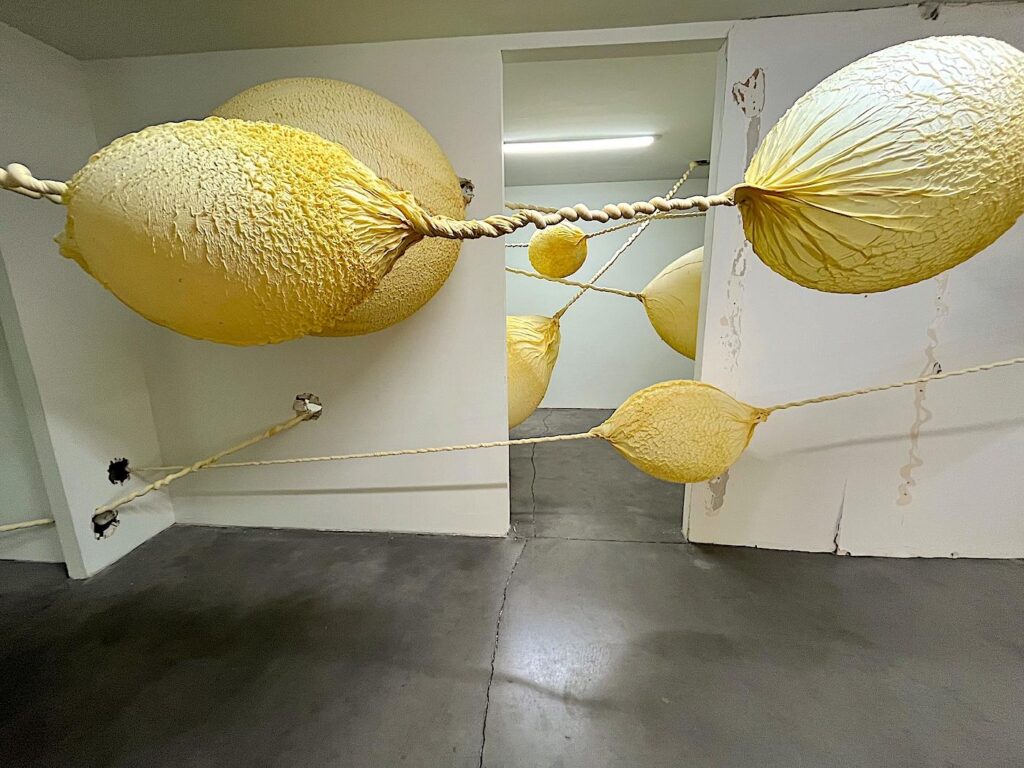
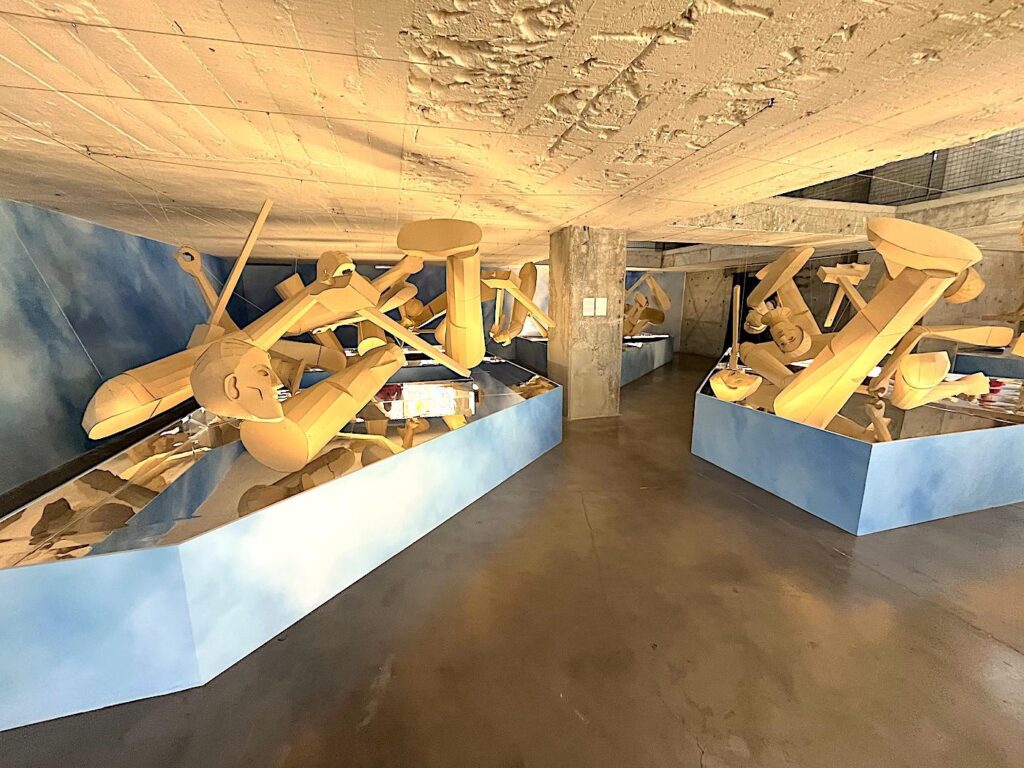
In this setting, Eva Fàbregas presents “Exudates” (2025), a biomorphic installation of latex forms that seep, sag and protrude through architectural openings, mimicking organic processes of secretion and healing while unsettling the boundary between building and body. Pilar Quinteros’ “Working Class” (2025) disassembles the vandalised monument İşçiby Muzaffer Ertoran, scattering its cardboard-cast limbs throughout the space and pairing them with a hybrid documentary–mockumentary that reflects on ruin, public memory and the fragility of civic monuments.
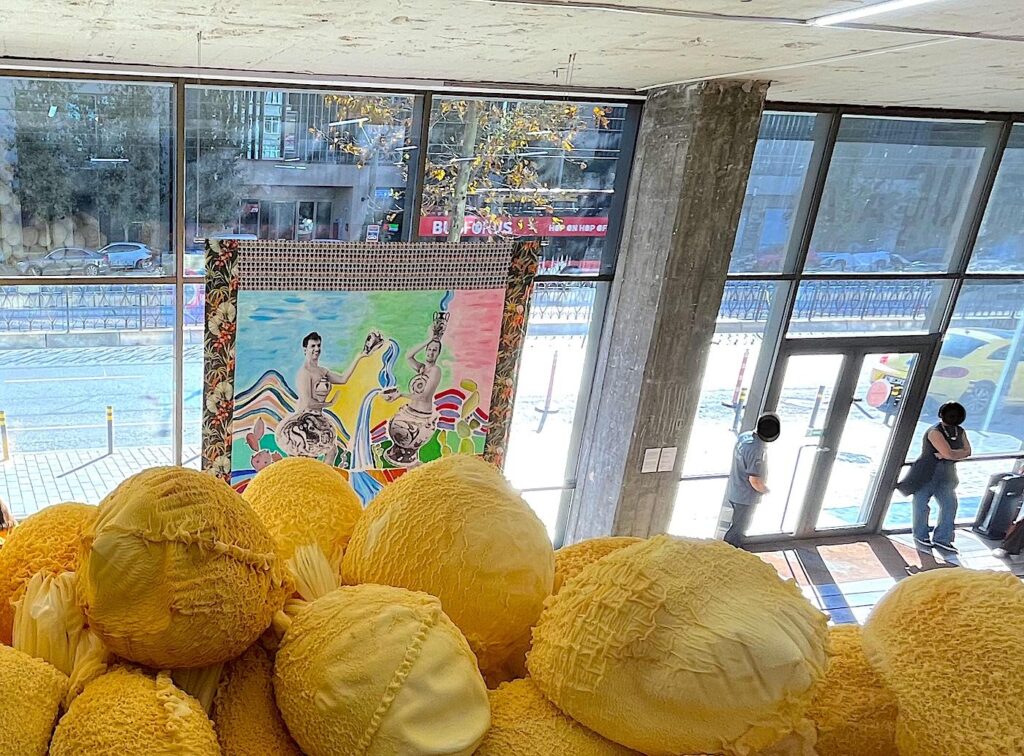
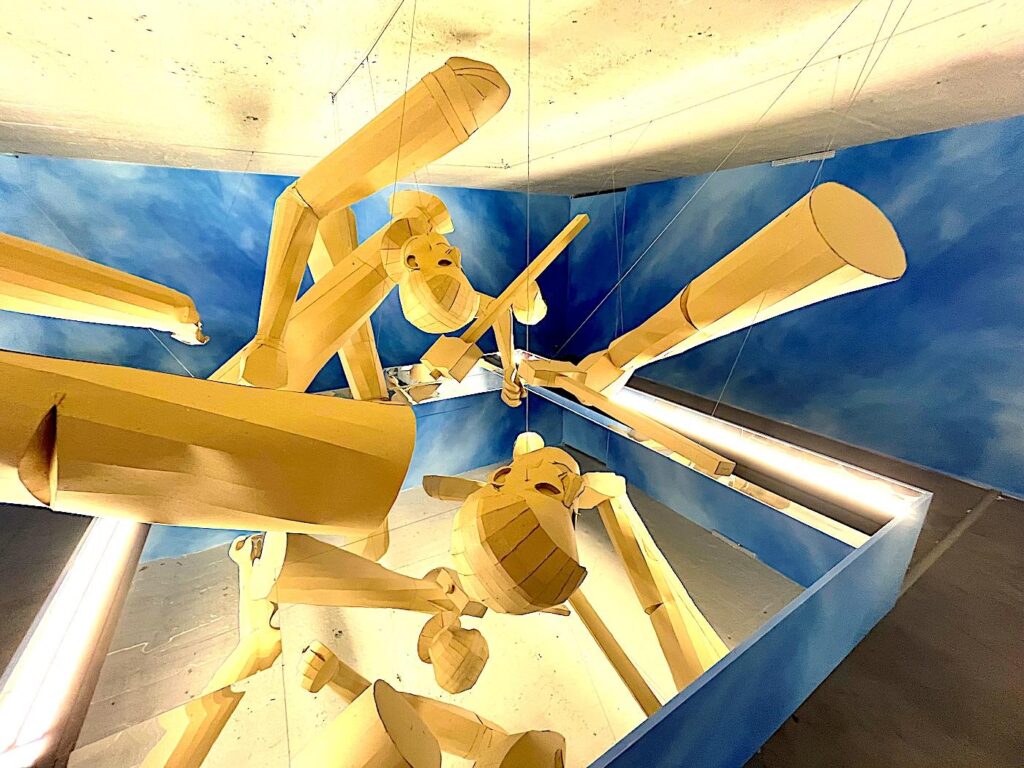
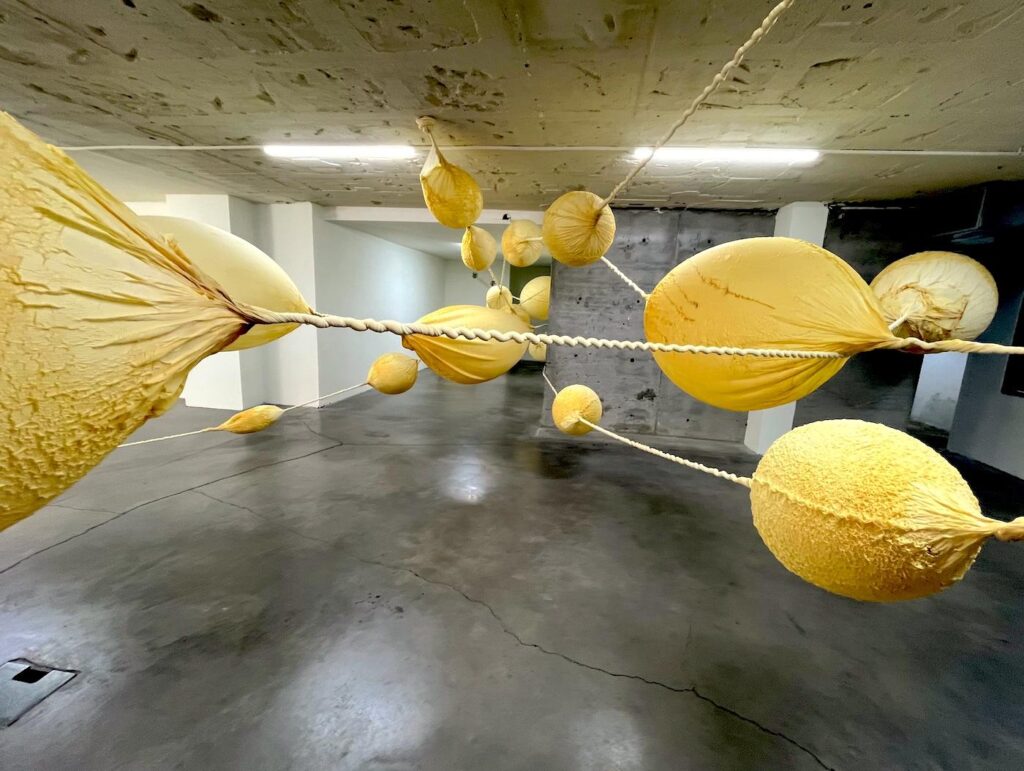
The artist duo VASKOS contributed “Pouring Without End” and “Spilled in Good Faith”, vivid textile works that reconfigure amphora imagery and classical motifs to critique and play with notions of Greekness, tourism, national identity and self-representation. Together, these artists transform Meclis-i Mebusan 35 into an environment where material decay, embodied form and cultural symbolism are reconsidered through dynamic contemporary practice.
Garden of the Former French Orphanage
Location: Tomtom Mah., Boğazkesen Avenue 65, Beyoğlu
Granted to the Daughters of Charity of Saint Vincent de Paul by Sultan Abdülaziz in 1869, this four-storey estate was built on the condition that it serve as an orphanage. That same year, the Saint-Joseph French Orphanage opened alongside the neighbouring Saint Eugène elementary school, both of which remained active until 1937. Following decades of deterioration and unresolved ownership disputes, the building has largely stood unused. Its surrounding garden, once known for its bostan, wells, terraces and flowing water, has recently been reopened to the public by the Beyoğlu District Municipality as “Tophane Mekân,” restoring access to one of the area’s historic green spaces.
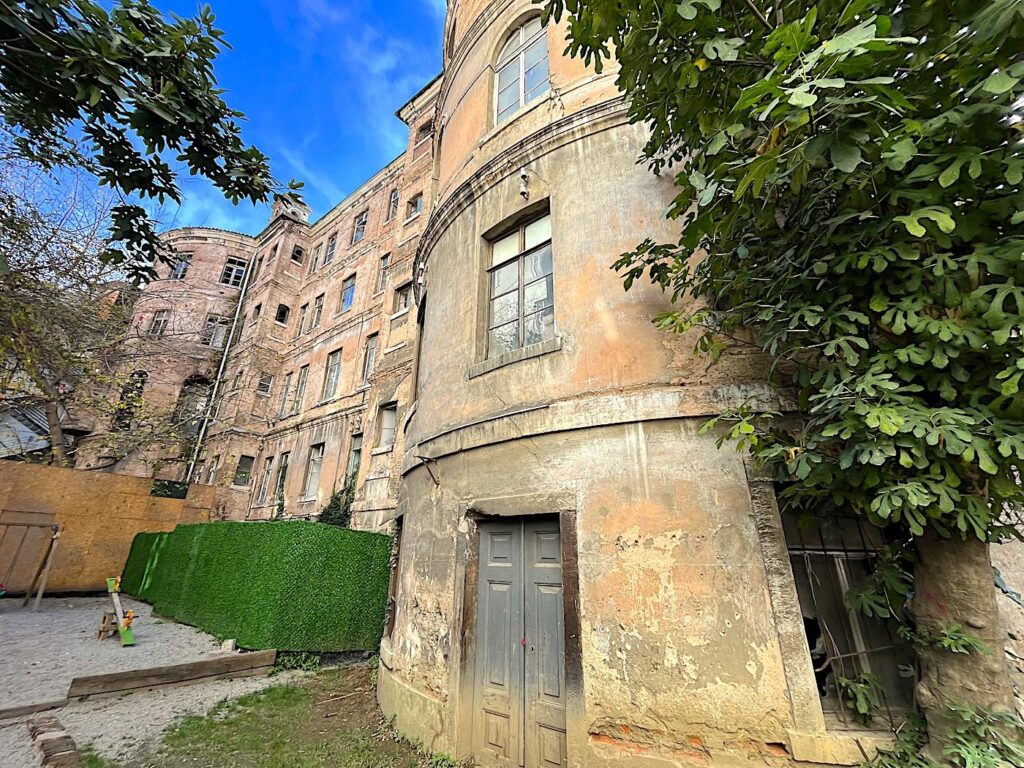
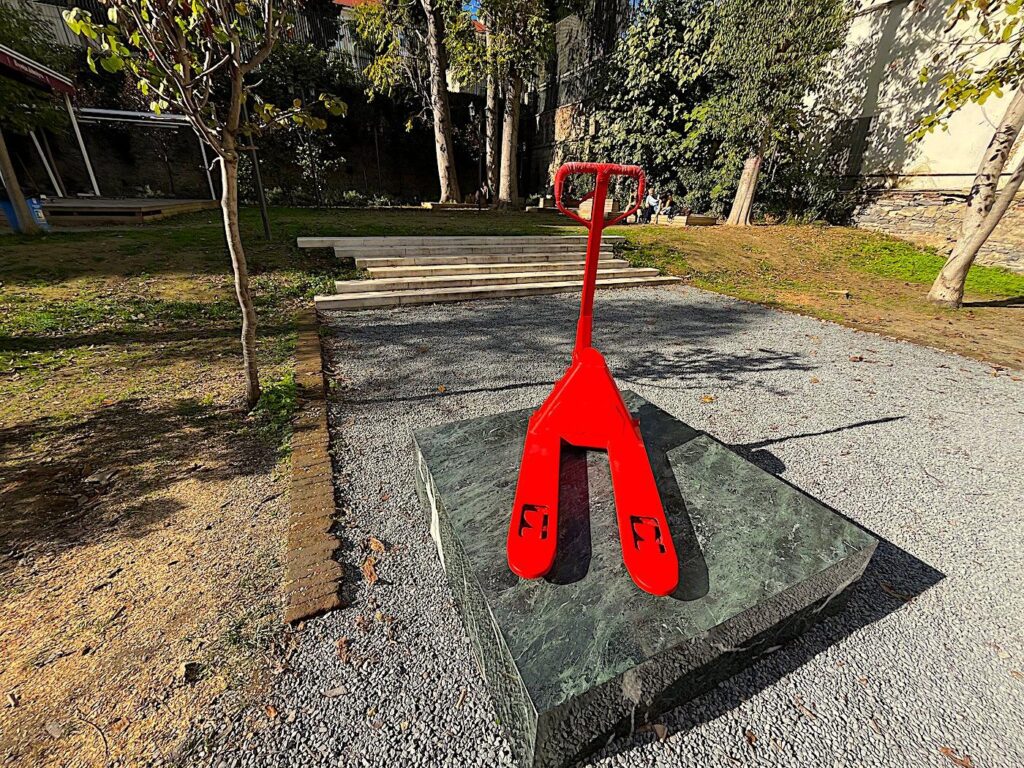
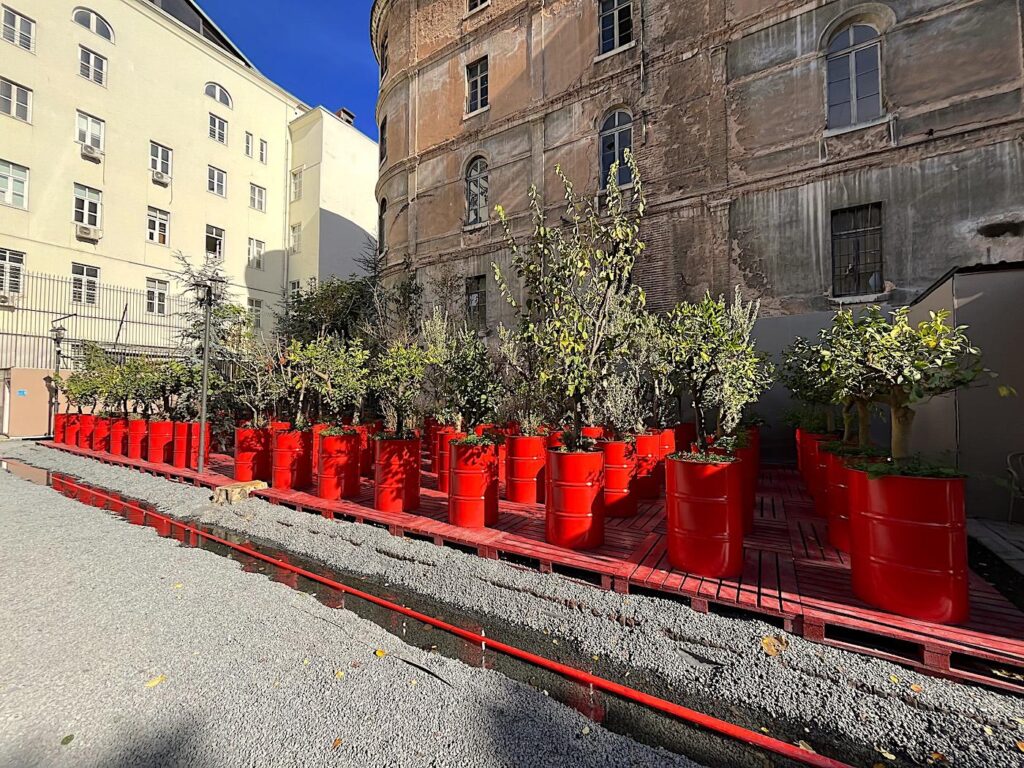
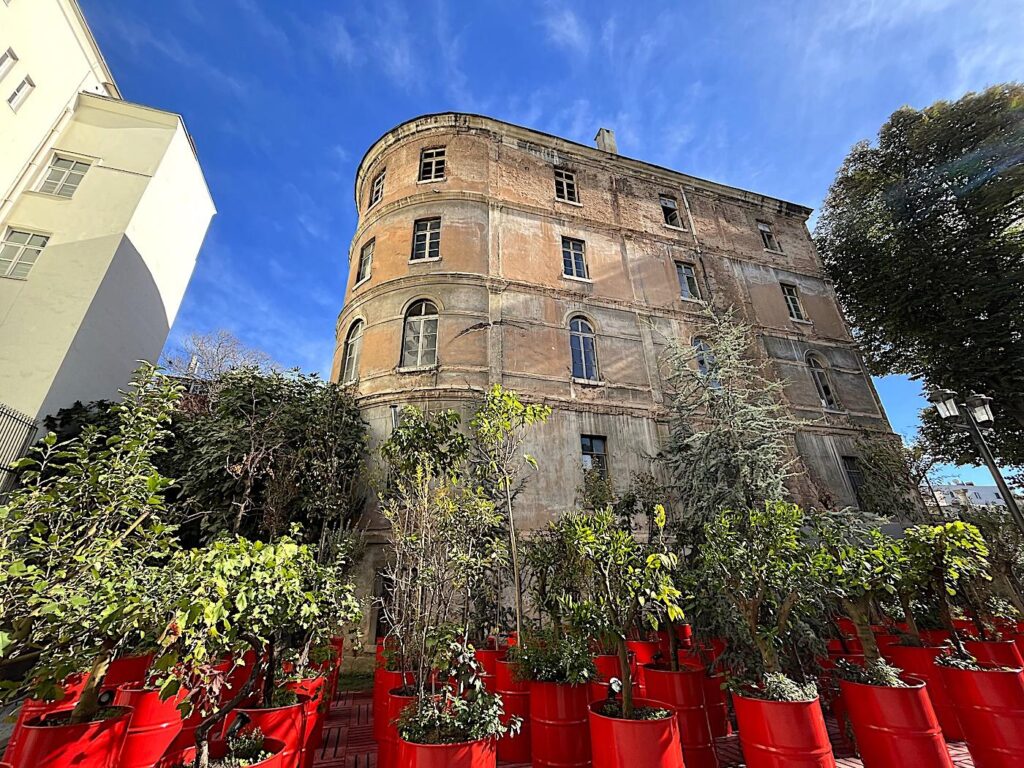
Khalil Rabah’s “Red Navigapparate” (2025) transforms the grounds into a conceptual landscape that probes themes of land, displacement, labour and the contested histories embedded in place. A narrow water channel is crossed by a rigid red metal pipe, simultaneously recalling the garden’s lost water source and invoking the infrastructures of extraction, borders and pressured water systems. On one bank, a red manual transpalette mounted on a green marble pedestal becomes a symbol of constrained mobility. A gridded arrangement of more than 100 red barrels, each holding an olive, citrus, or nut tree, forms a temporary nursery.
Elhamra Han
Location: Asmalı Mescit Mah., İstiklal Avenue 130, Beyoğlu
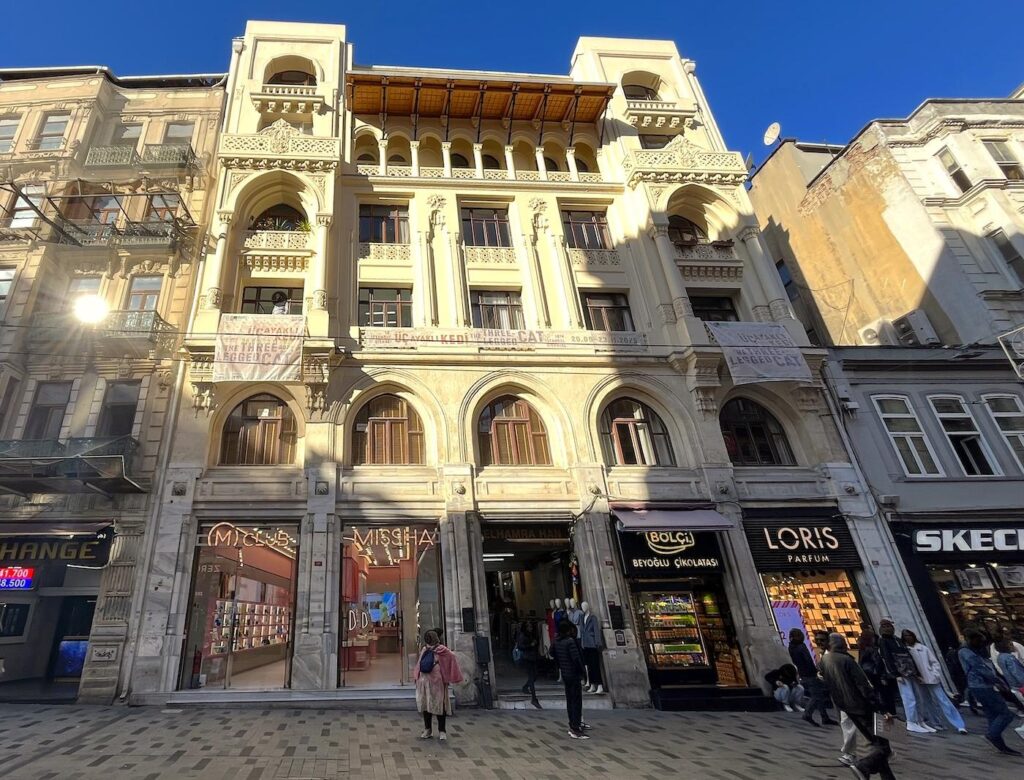
Overlooking the crowds of İstiklal Avenue, this iconic six-storey structure dates back to 1827, when it was built as one of Istanbul’s earliest theatre halls. Over nearly two centuries, it evolved with the city: from its glamorous era as the Palais de Cristal, known for its striking glass entrance, to decades as a vibrant venue for music, theatre and cinema. A devastating fire in 1999 ended this long cultural chapter, and today the ground floor is occupied by retail while the upper stories function primarily as private offices. For the 18th Istanbul Biennial, two second-floor residential units were reactivated as exhibition spaces, reviving the building’s historical ties to performance and creativity through intimate, room-scale installations.
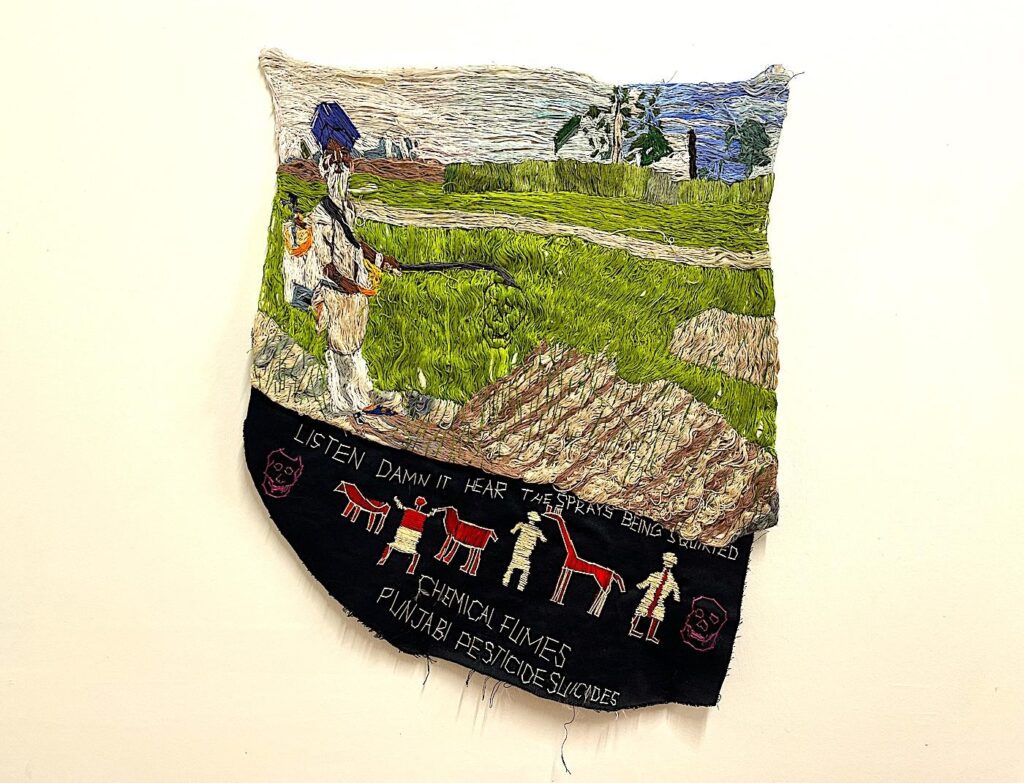
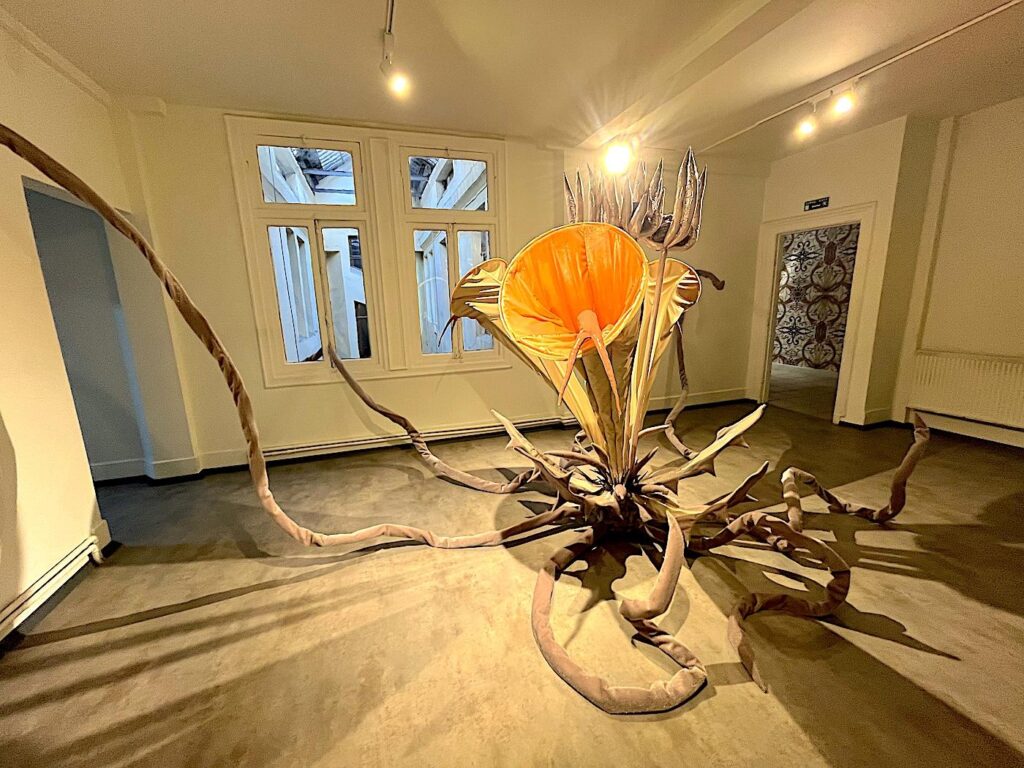
The exhibition features artists whose practices explore myth, ecology, history and the porous boundaries of identity. Şafak Şule Kemancı presented a monumental soft sculpture that merges plant and animal characteristics, sprawling through windows and doorways to form a queer, feral ecosystem challenging distinctions between human and non-human life. Jagdeep Raina exhibited embroidered tapestries inspired by Kashmiri weaving traditions and the craft histories of Punjab and Kashmir, alongside works from Beautiful Zameen, which address the ecological and political legacies of the Green Revolution and resonate with contemporary agricultural crises.
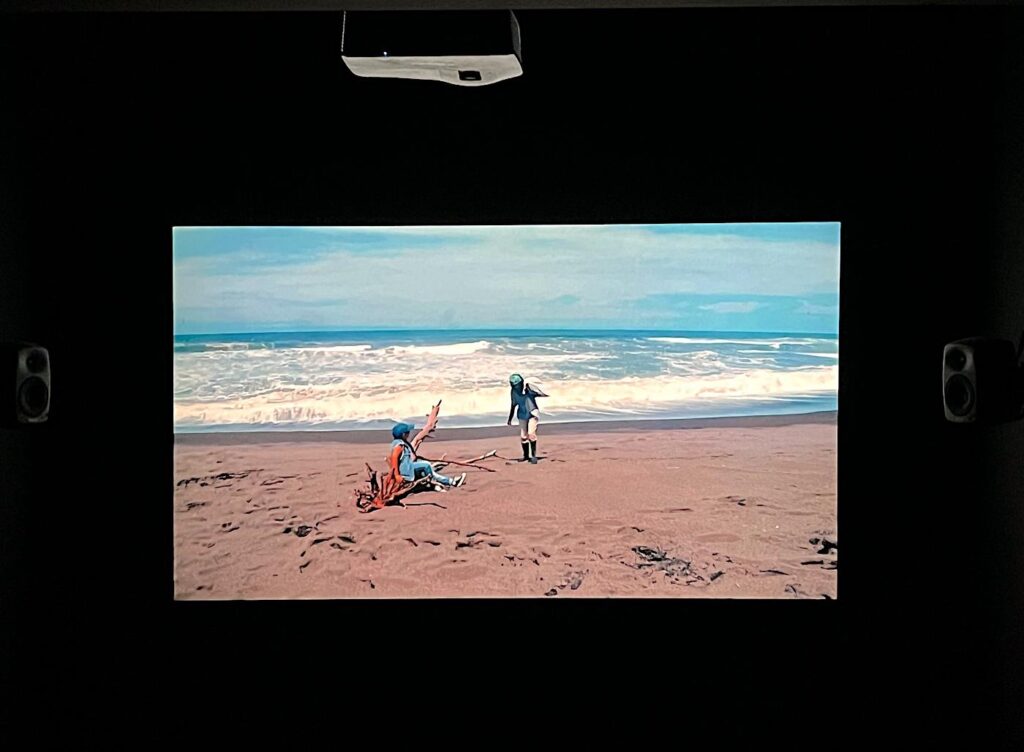
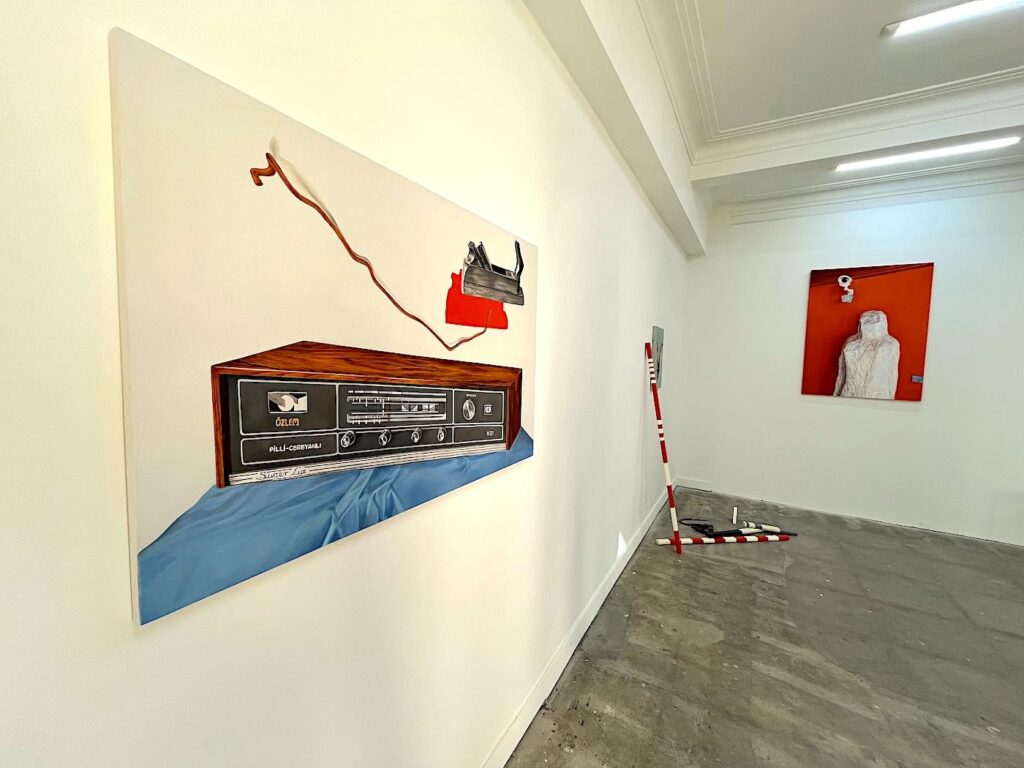
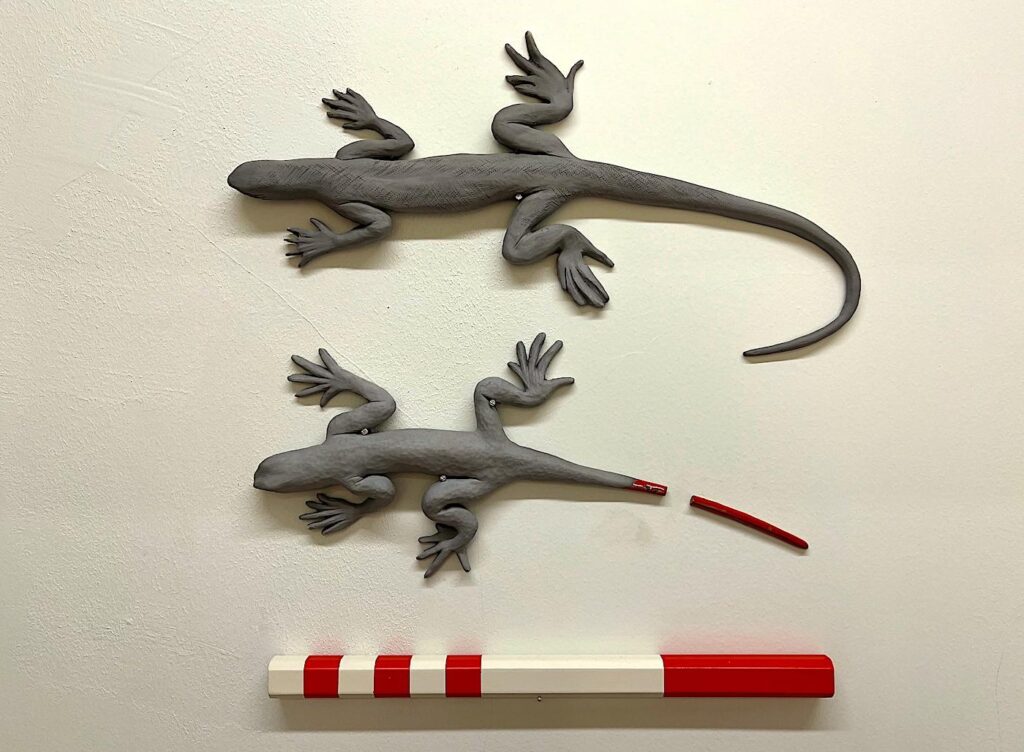
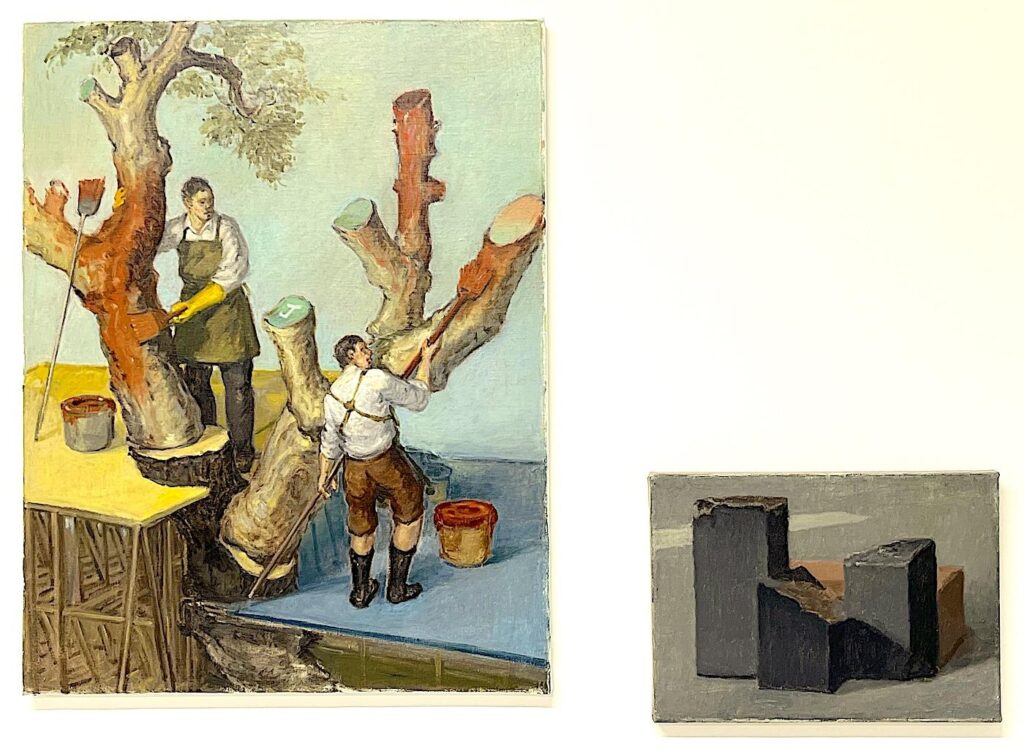
Riar Rizaldi’s film “Becquerel” (2021), the third in his Tech-terra trilogy, blended speculative fiction and ecological critique, following a philosopher-child across an alternate Indonesia shaped by nuclear-generated sunlight and extractive Thorium mining. Sevil Tunaboylu’s “Remainder” (2024) draws on her family’s migration from Skopje to Istanbul, combining paintings, archival fragments, carpentry tools, and lizard sculptures to weave a layered narrative of displacement, construction, memory, and renewal.
See also: Istanbul Top 10 Art Galleries