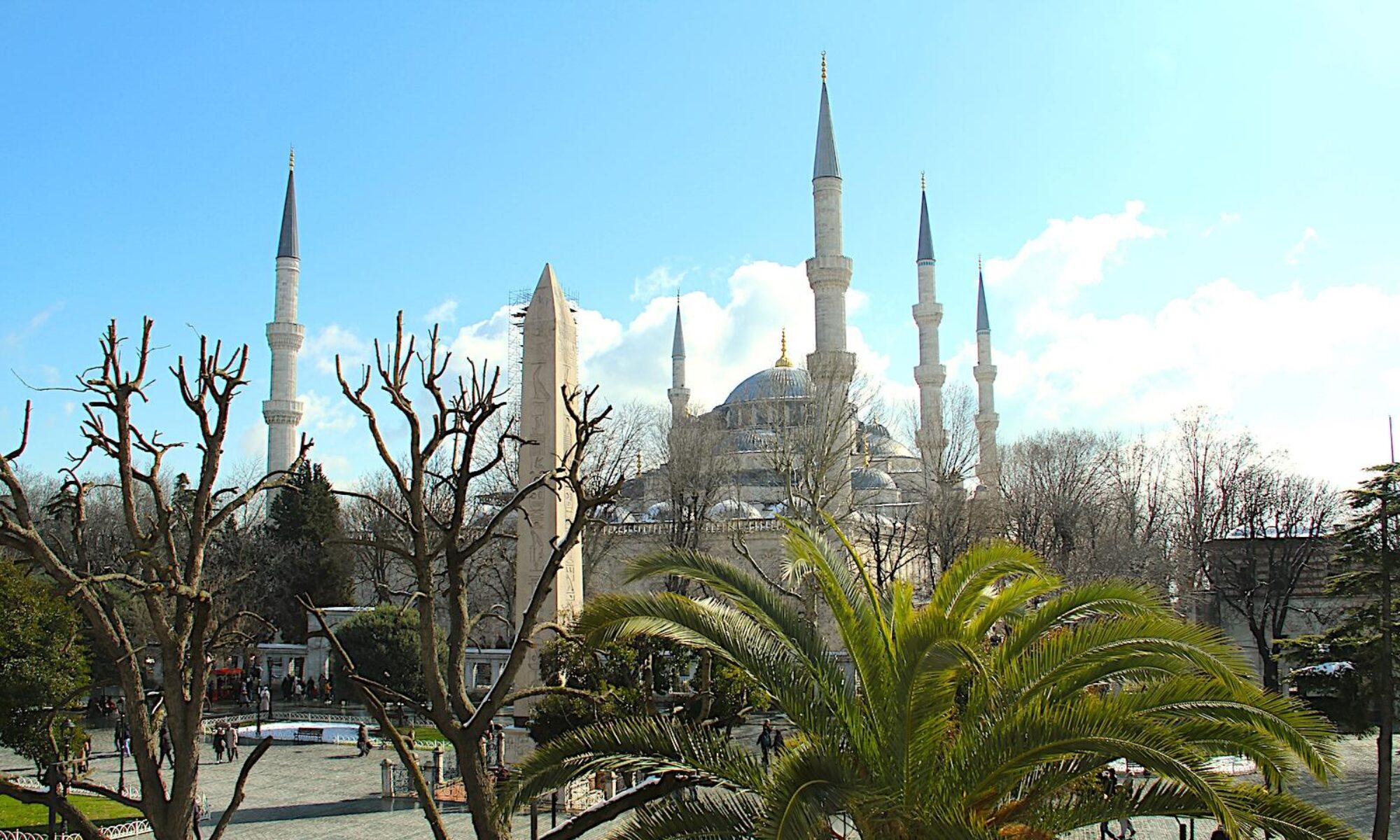
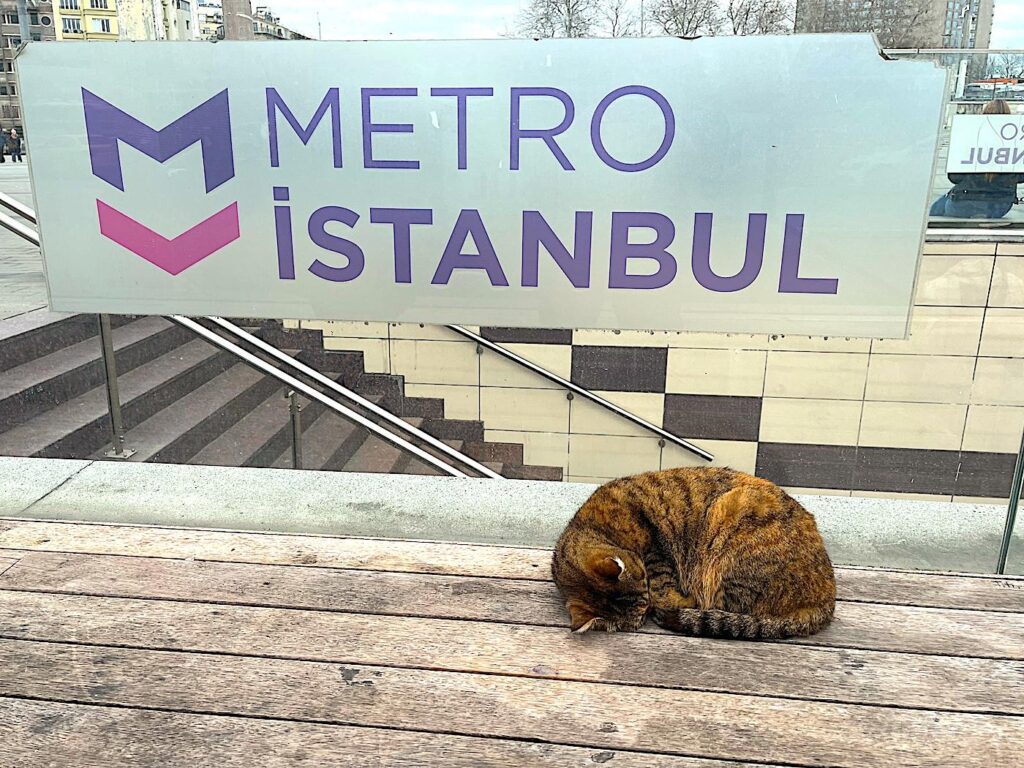
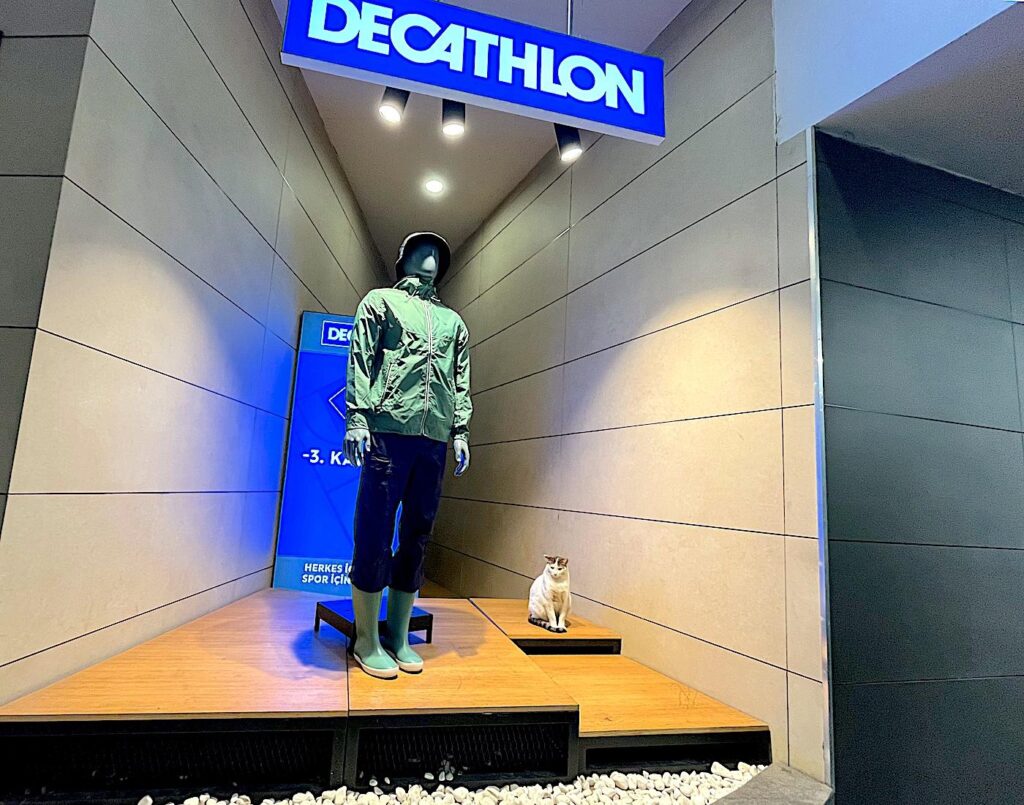
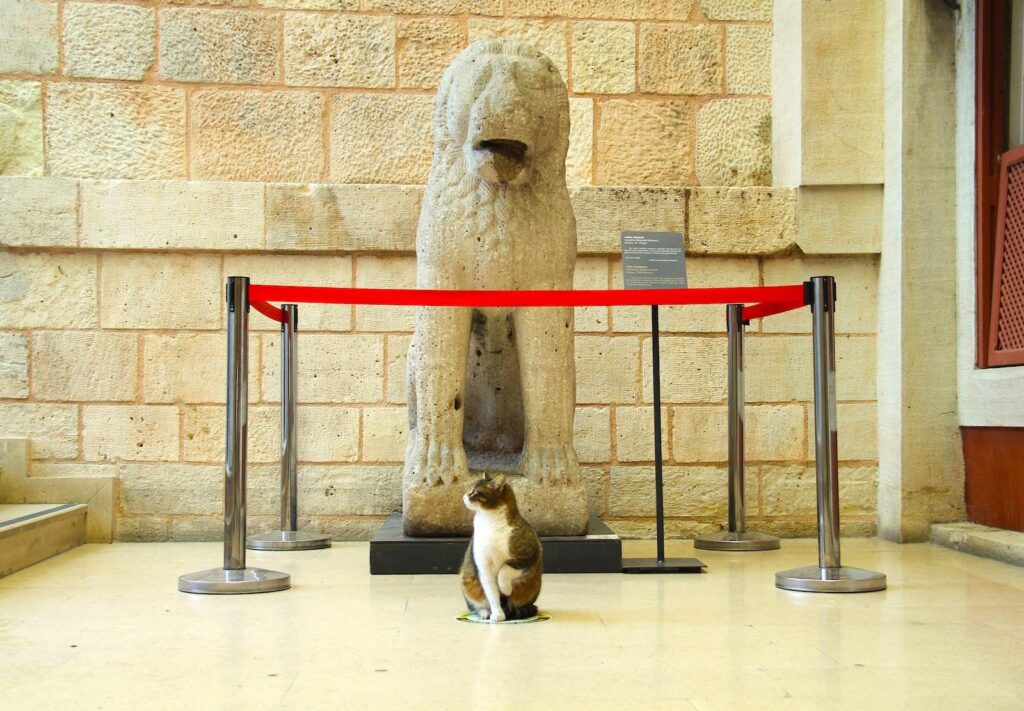
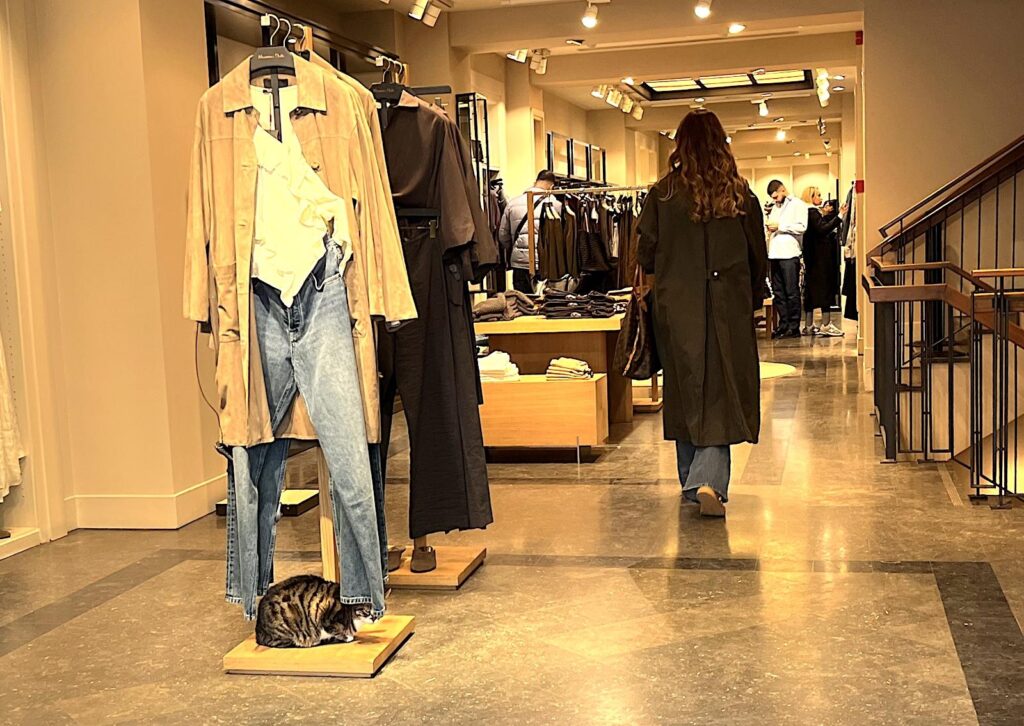
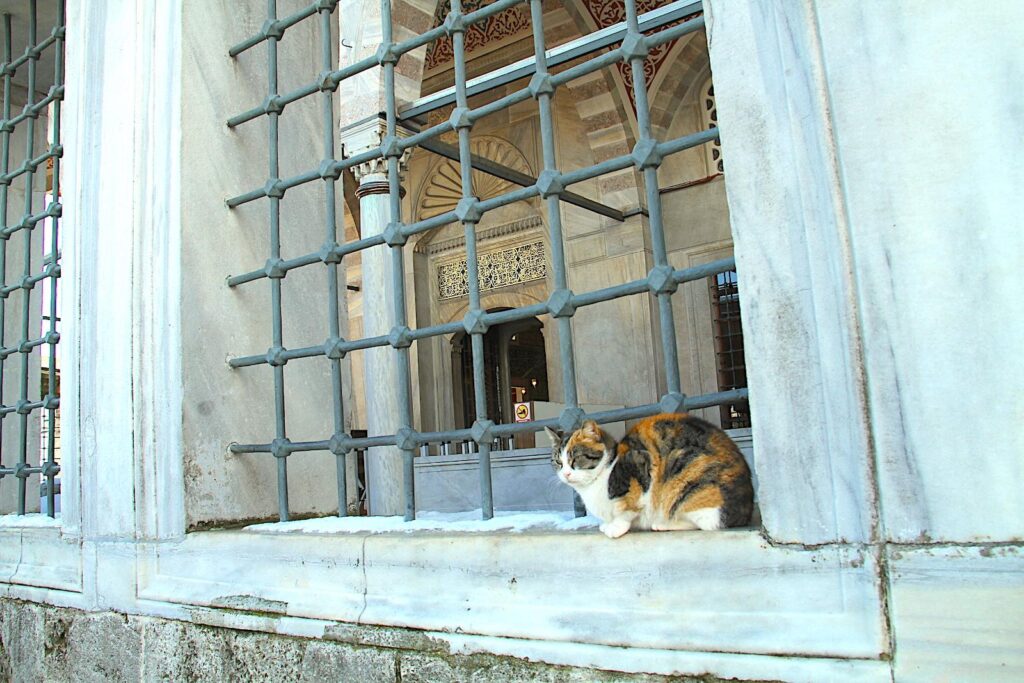
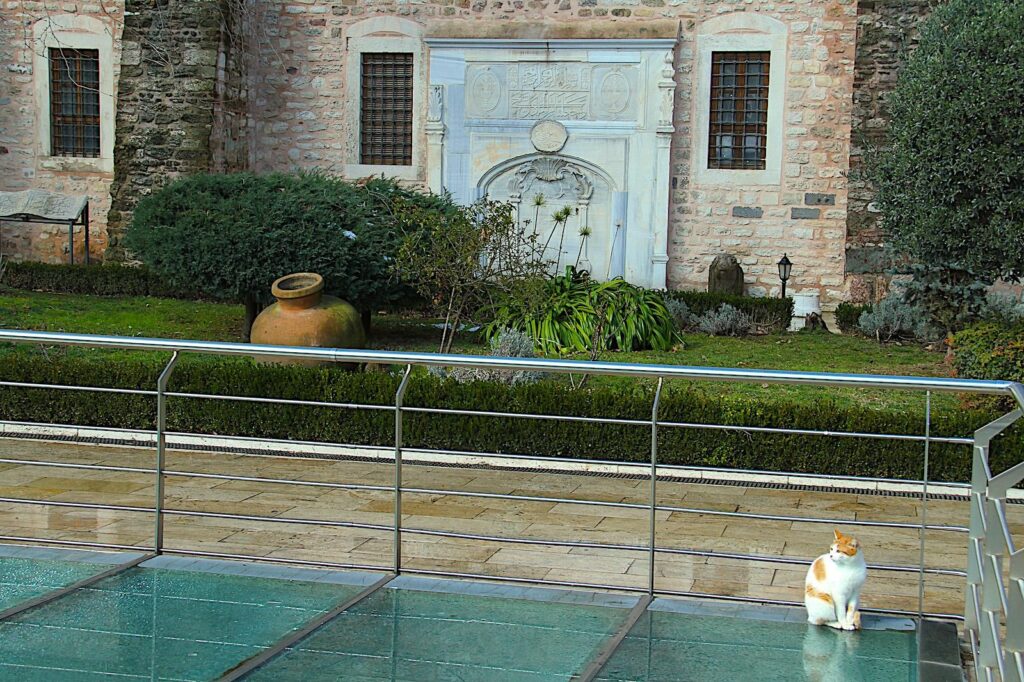
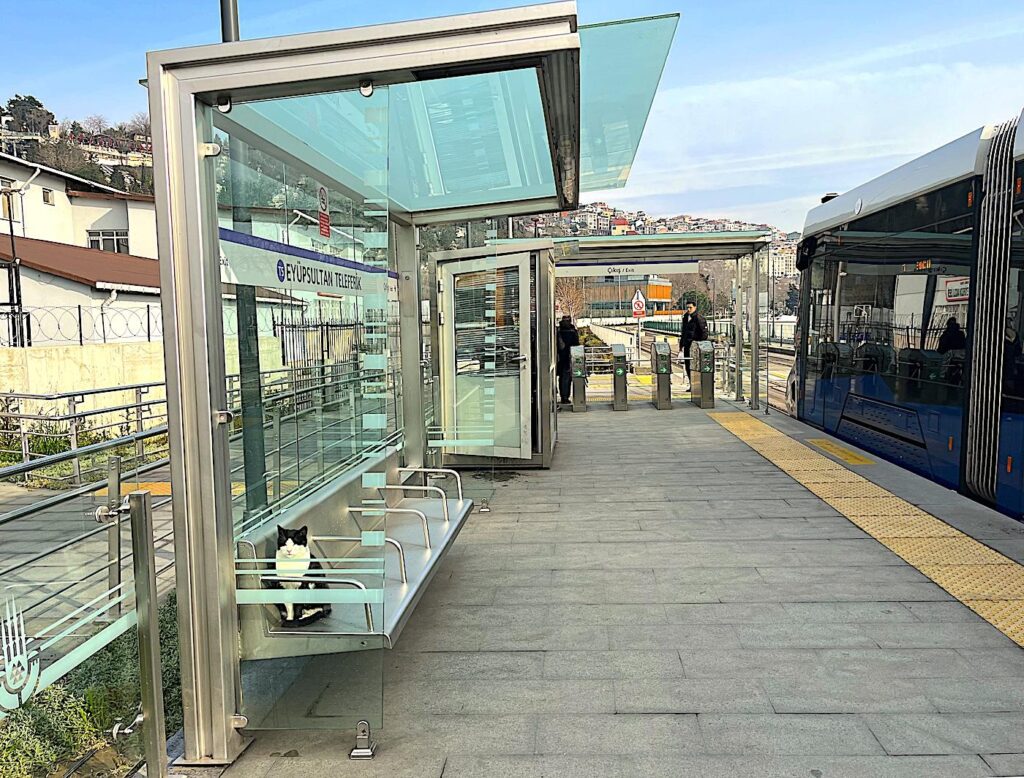
Istanbul cats and dogs are not just street animals — they are part of the city’s identity. They are woven into the daily rhythm of urban life with quiet dignity. Istanbul cats lounge confidently on mosque walls, café chairs, or inside bookstore and fashion shop window displays, treated like tiny Sultans by the people around them.
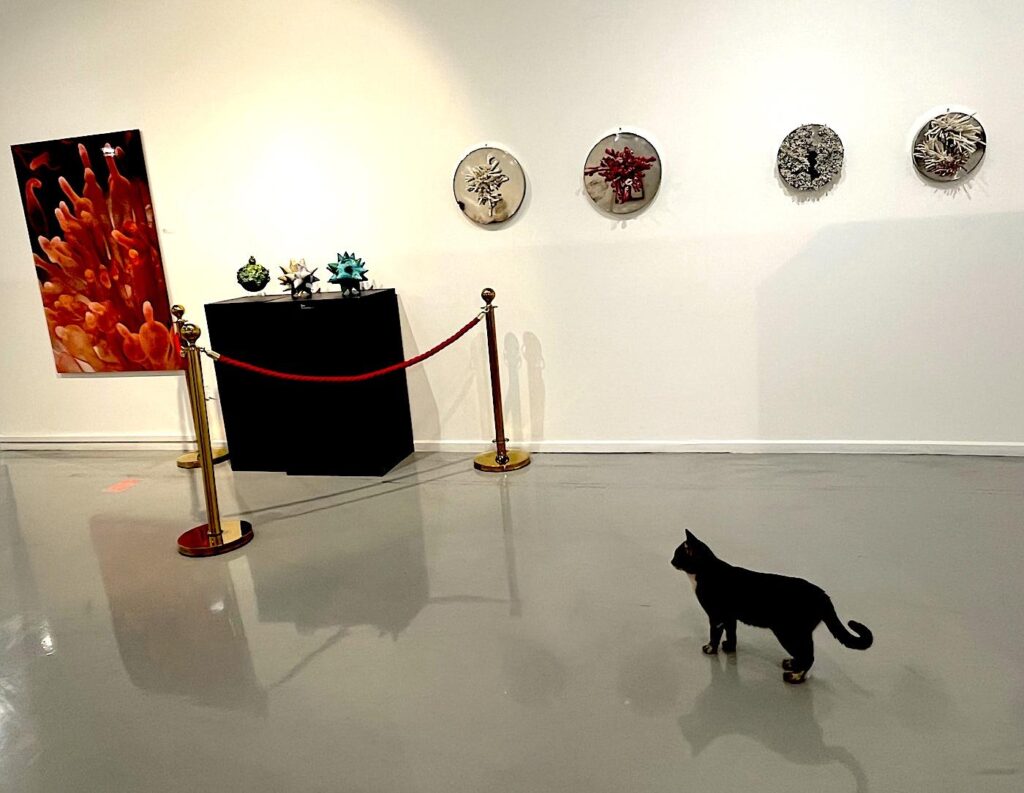
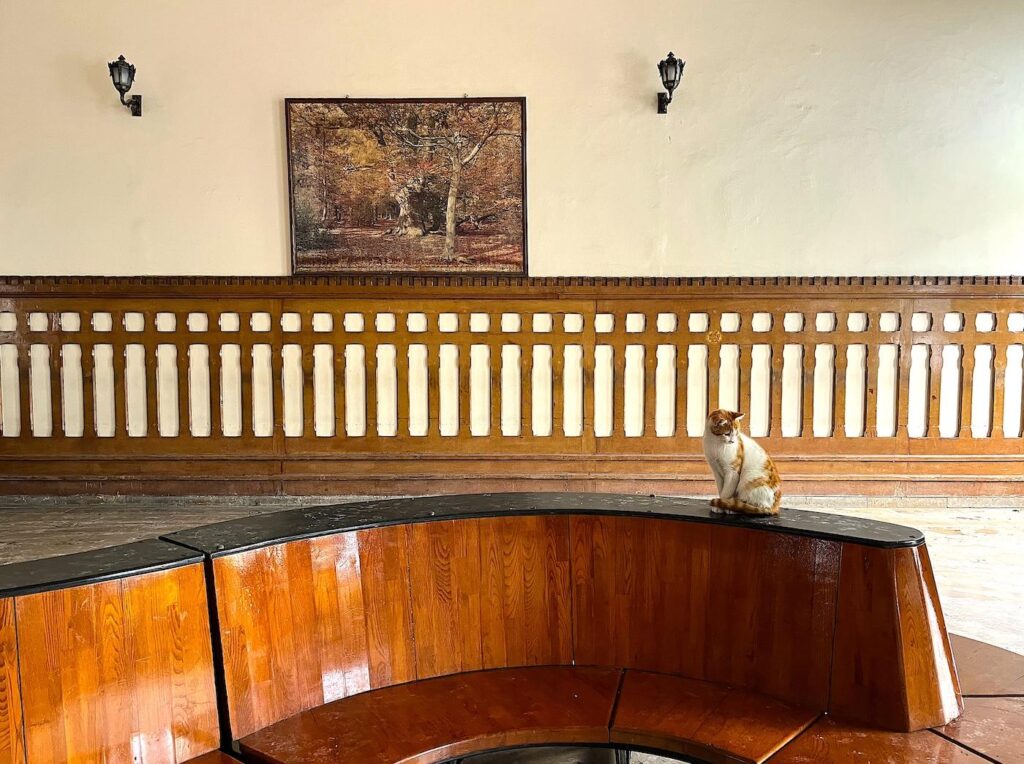
Residents and shopkeepers often care for these cats as communal pets, providing food, water, and makeshift shelters. This affection stems from cultural and historical roots; cats have long been revered in Islamic tradition and earned their place as beloved citizens in Istanbul. Their presence is so natural and accepted that a cat may saunter through a high-end boutique or nap in a sunbeam inside a government building without raising eyebrows.
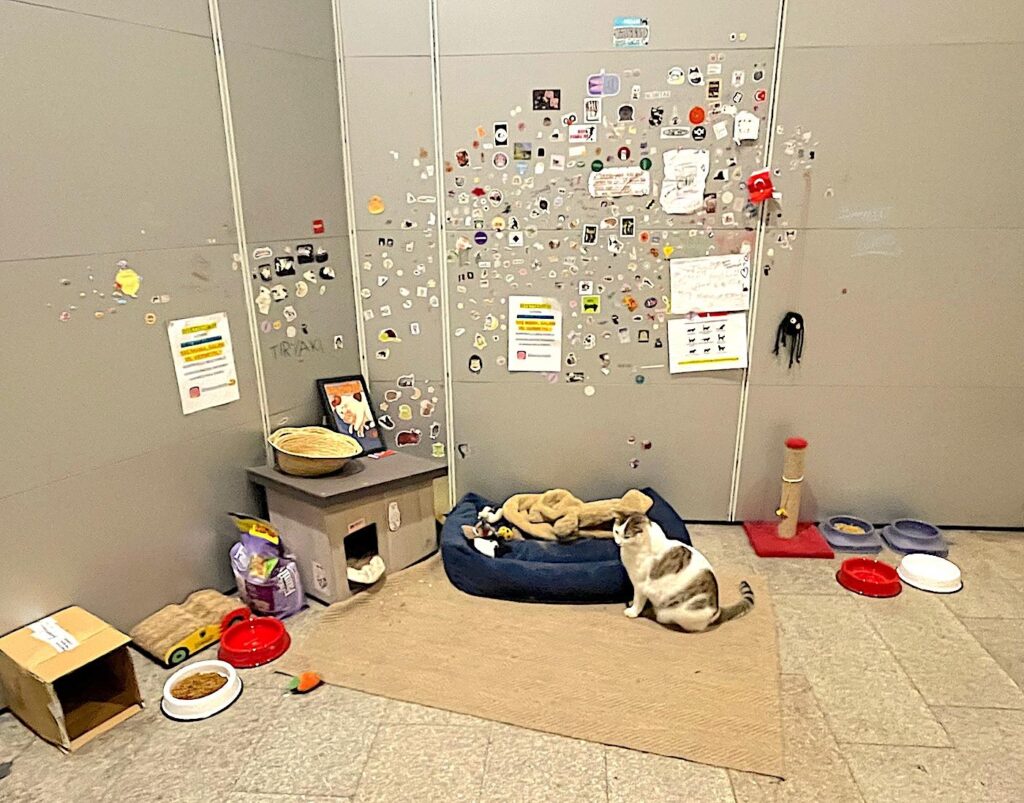
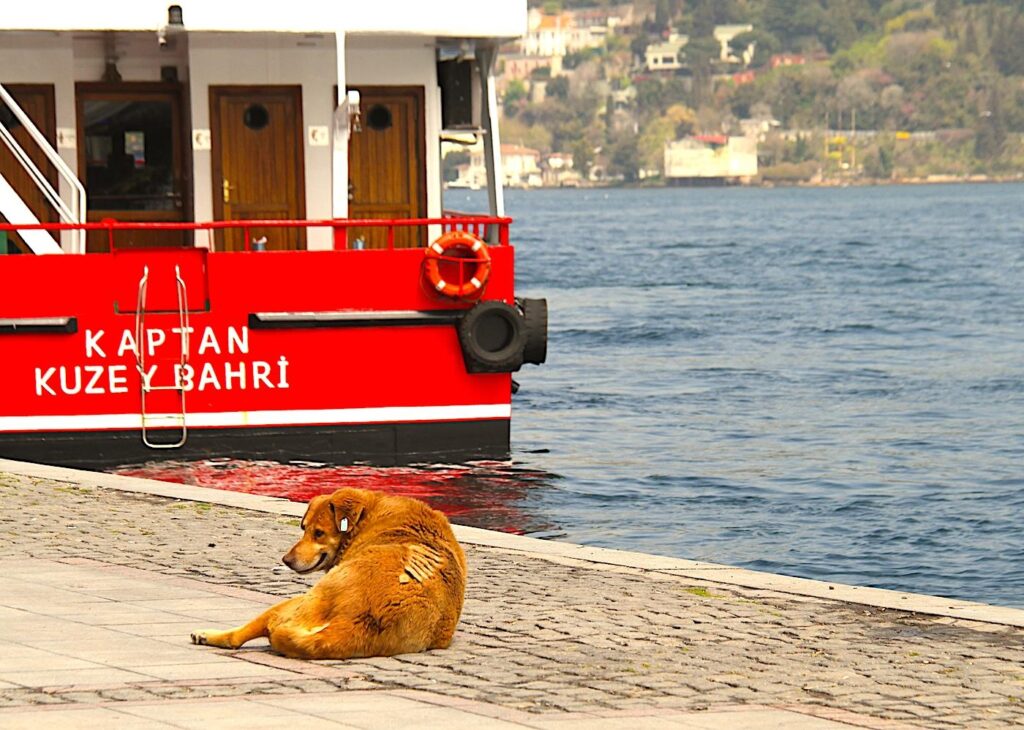
The city’s larger and more visibly resilient street dogs command their unique respect. Unlike in many big cities outside Türkiye, they are not shooed away or feared; they wear tags in their ears, indicating they’ve been vaccinated and neutered under municipal care programs. These dogs are calm, even noble in demeanour, and can be found resting in parks, following trams, or watching over a neighbourhood as guardians.
“People should be free like cats; they should neither own nor be owned.”
“Kediler gibi özgür olmalı insan; ne sahiplenmeli, ne sahiplenilmeli.”
— Can Yücel, Turkish poet (1926-1999)
Istanbulites tend to form bonds with the local dogs in their area, naming and looking after them. While they live outside, these animals are rarely seen as strays in the traditional sense; instead, they are seen as cohabitants of the city, a wild, warm-hearted reminder of Istanbul’s distinctive blend of chaos and compassion.
Istanbul Cats and Dogs – Table of Contents
Are Istanbul’s Street Dogs Safe?
Visitors to Istanbul are often surprised by the calm presence of street dogs throughout the city. Unlike in many large metropolitan areas, Istanbul’s dogs are not feral in the traditional sense. Most are part of a long-standing municipal care programme operated by the Istanbul Metropolitan Municipality (İBB). You will often notice small ear tags, a discreet sign that the dog has been vaccinated, sterilised, and registered before being returned to its neighbourhood.
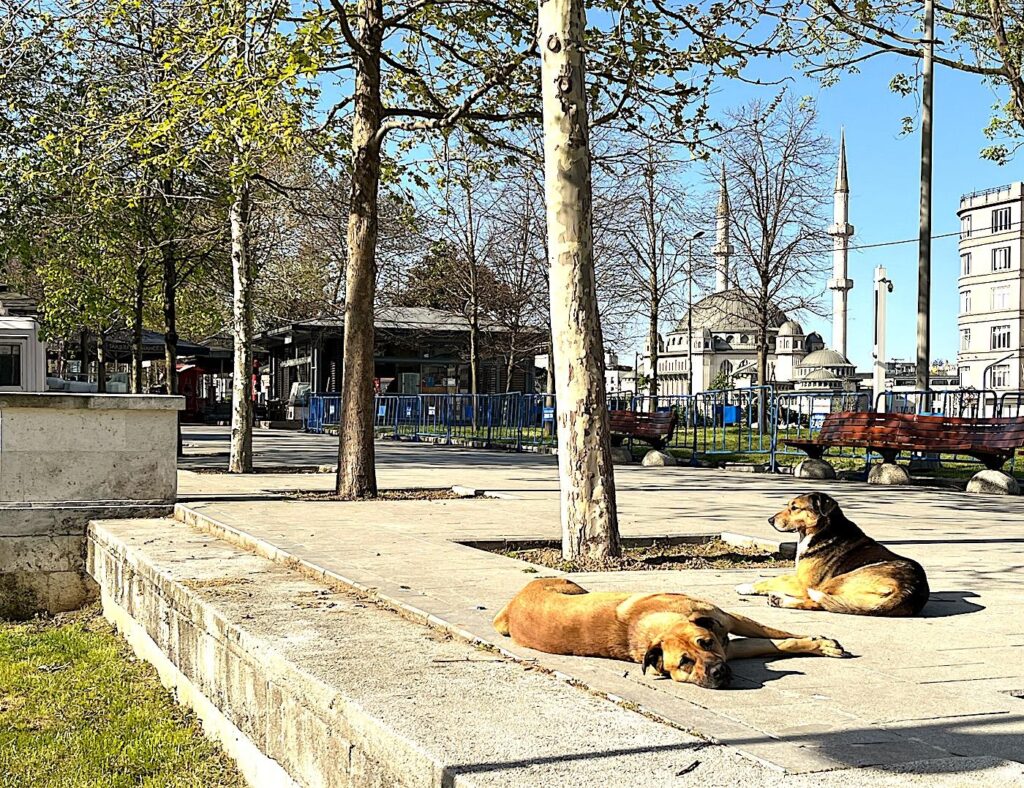
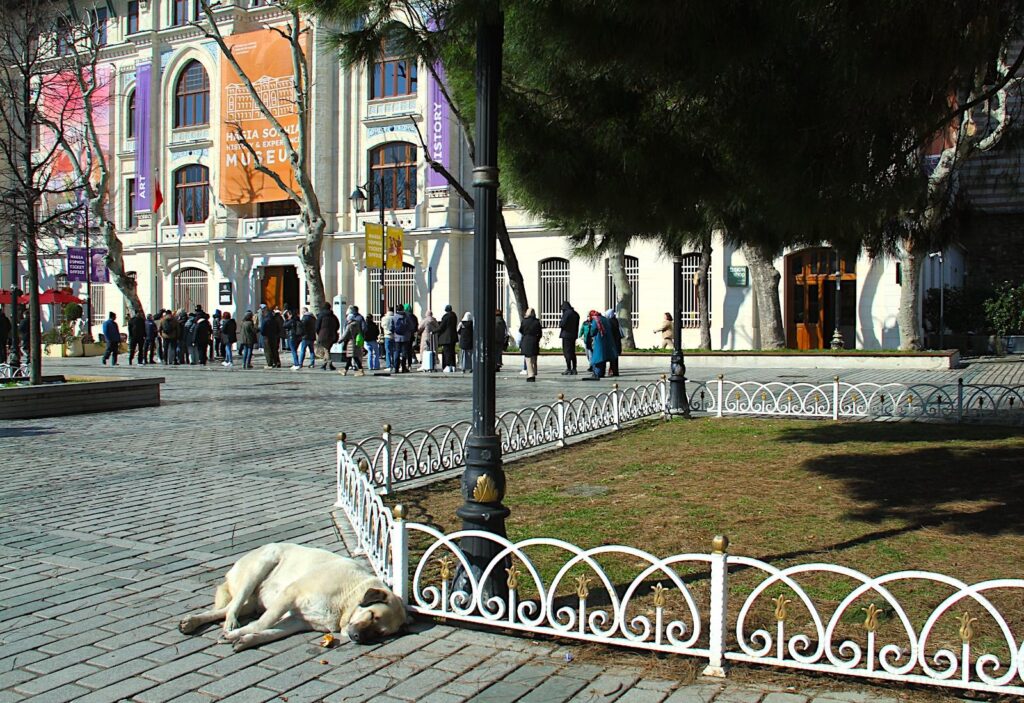
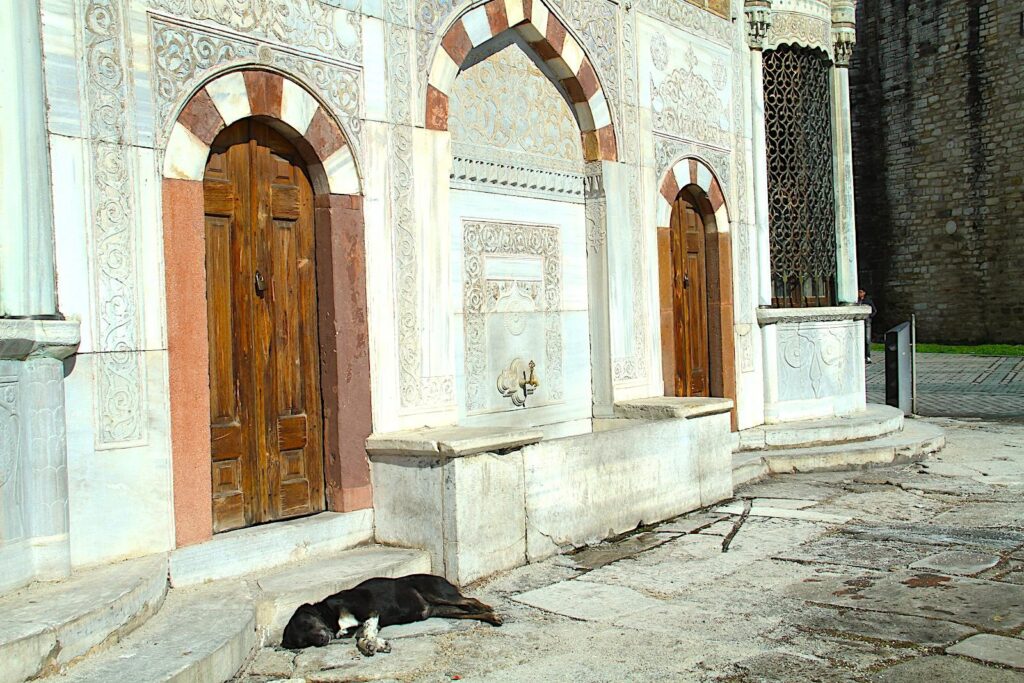
In general, these dogs are accustomed to urban life and human movement. They rest in parks, sleep near shop entrances, or quietly observe passers-by from a shaded corner. While they are independent animals and should always be approached with respect, incidents involving aggression toward visitors are rare. Their presence reflects a system based on coexistence rather than removal, one that has shaped the character of Istanbul’s streets for decades.
Why Are There So Many Cats in Istanbul?
The abundance of cats in Istanbul is not accidental; it is rooted in history, geography, and belief. As a historic port city built on trade, grain storage, and maritime routes, Istanbul relied on cats for centuries to control rodent populations in warehouses, ships, and markets. Their usefulness ensured their protection, and over time that practical relationship evolved into cultural affection. In Ottoman times, charitable foundations were even established to feed street animals, embedding care into the social fabric of the city.

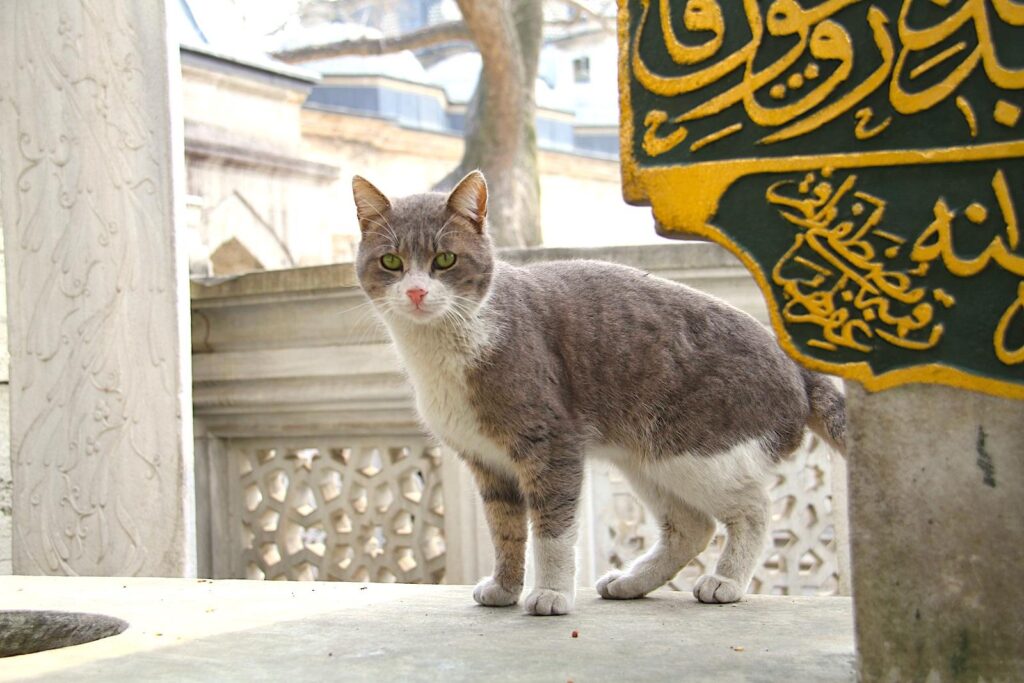
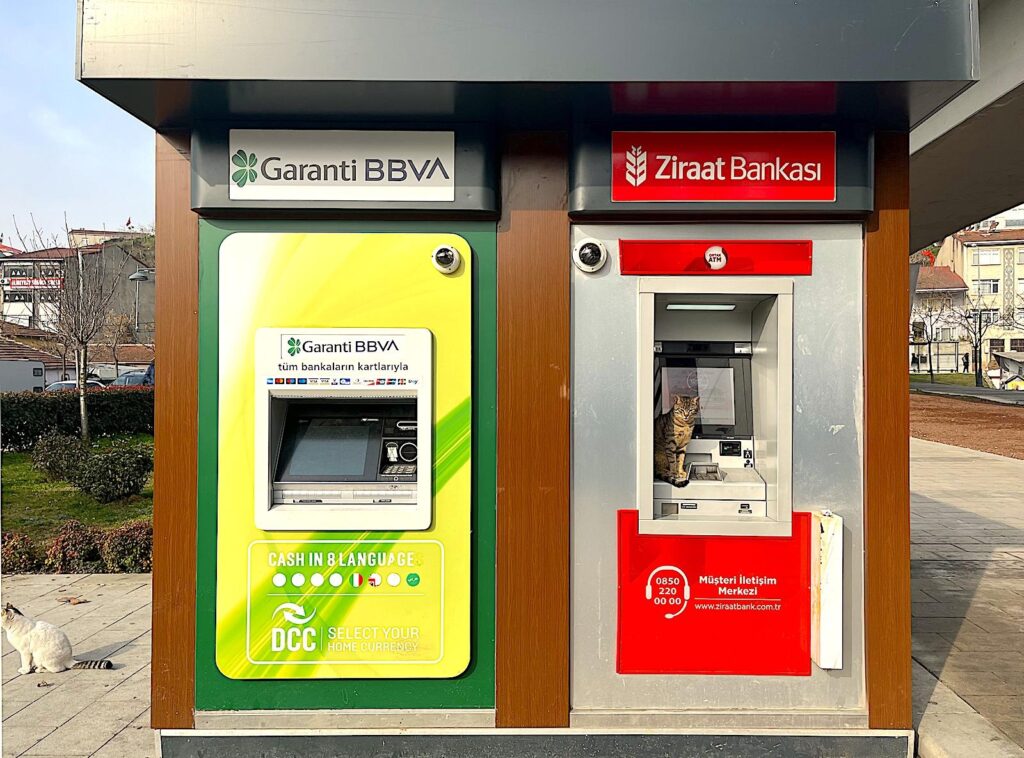
There is also a spiritual dimension. In Islamic tradition, cats are regarded with particular gentleness, often associated with cleanliness and compassion. This reverence helped shape an environment where cats were tolerated, then welcomed, and eventually embraced as quiet citizens of the streets. Today, they move freely through mosques, bookshops, ferry terminals, and cafés, not as strays in exile, but as small, confident inhabitants of the urban landscape.
Kedi: The Documentary That Captured Istanbul’s Cats
The 2016 documentary Kedi (Turkish for “cat”) is one of the most beloved films about Istanbul’s street animals and a major cultural touchstone for anyone interested in the city’s feline life. Directed by Turkish filmmaker Ceyda Torun, the 79-minute documentary follows the daily lives of seven street cats, including Sari, Duman, Bengü, Aslan Parçası, Gamsız, Psikopat, and Deniz as they weave through neighbourhoods, markets, cafés and homes across Istanbul. Using innovative camera work often close to ground level, Kedi immerses viewers in the city from the cats’ perspective, blending vivid portraits of these charismatic animals with intimate interviews of local residents who feed, care for and interact with them.
What made Kedi so widely accepted, both in Tūrkey and around the world, was its ability to transform what many see as simple street scenes into a poetic reflection on coexistence, identity and urban life. Rather than just a cute cat video, the film celebrates the mutual bonds between humans and animals in a modern metropolis, showing how these cats have become interwoven with the rhythms, memories, and everyday social fabric of Istanbul. Premiering at the !f Istanbul Independent Film Festival in early 2016 and later gaining a North American release, Kedi grossed millions at the box office, was listed among Time magazine’s top ten films of 2017, and earned critical acclaim for its gentle storytelling and emotional resonance.
The Care of Istanbul Cats and Dogs by Istanbul Metropolitan Municipality (İBB)
The Istanbul Metropolitan Municipality (İBB) has long been recognised for its compassionate approach to managing the city’s substantial population of stray cats and dogs. Through its Veterinary Services Directorate, İBB operates multiple animal health centres and mobile clinics that provide essential services such as vaccination, sterilisation, microchipping, and medical treatment. These animals are typically returned to their original neighbourhoods after care, fostering a harmonious coexistence between residents and street animals. This proactive strategy has significantly contributed to public health, with no reported rabies cases in Istanbul since 2016.
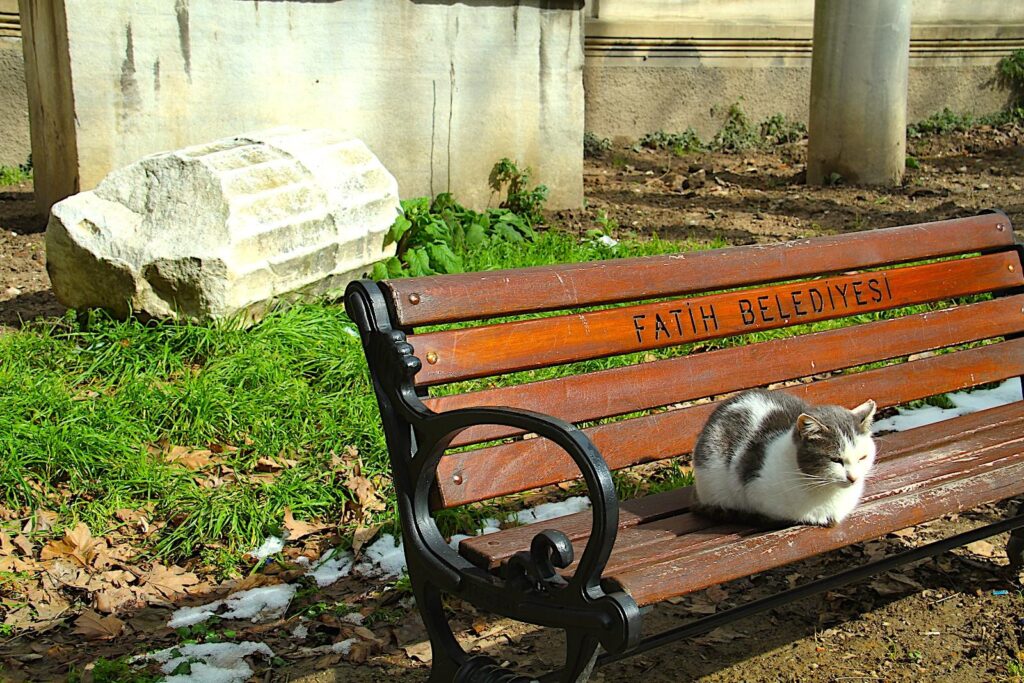
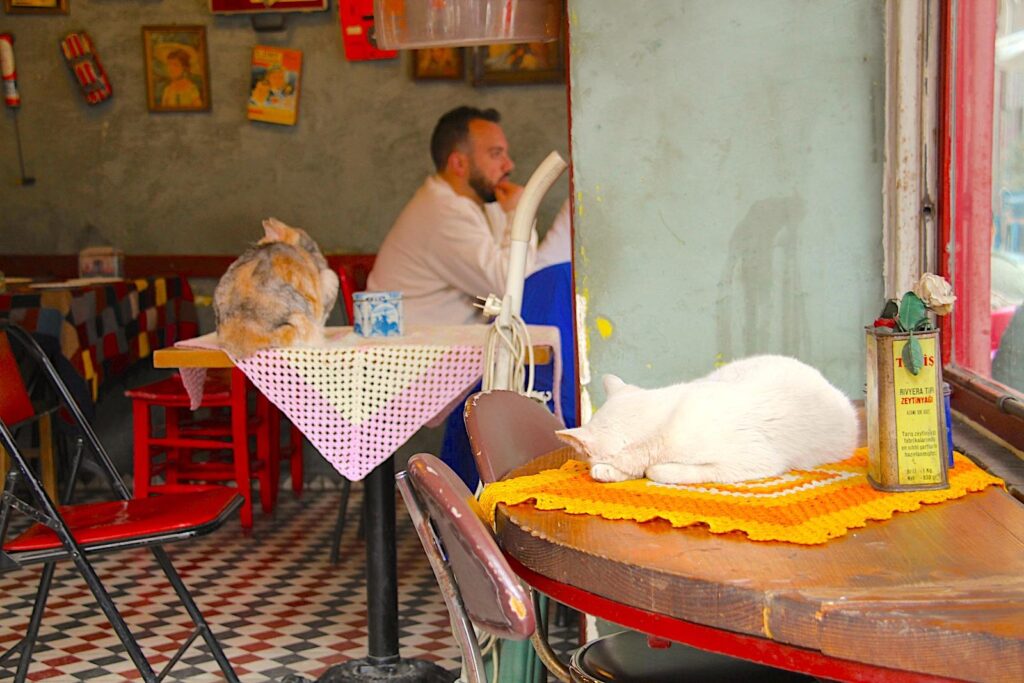
However, recent developments have introduced challenges to this model. In July 2024, the Turkish parliament enacted legislation mandating municipalities to remove stray dogs from the streets, house them in shelters, and, if deemed aggressive or ill, euthanise them. This law, intended to address public safety concerns, has faced substantial opposition from animal welfare advocates and segments of the public who fear it may lead to mass euthanasia and overcrowded shelters. Despite the national directive, Istanbul’s local authorities have shown resistance, emphasising their commitment to humane and community-integrated solutions for managing stray animals. This tension underscores the debate between centralised policy measures and localised, compassionate animal welfare practices.
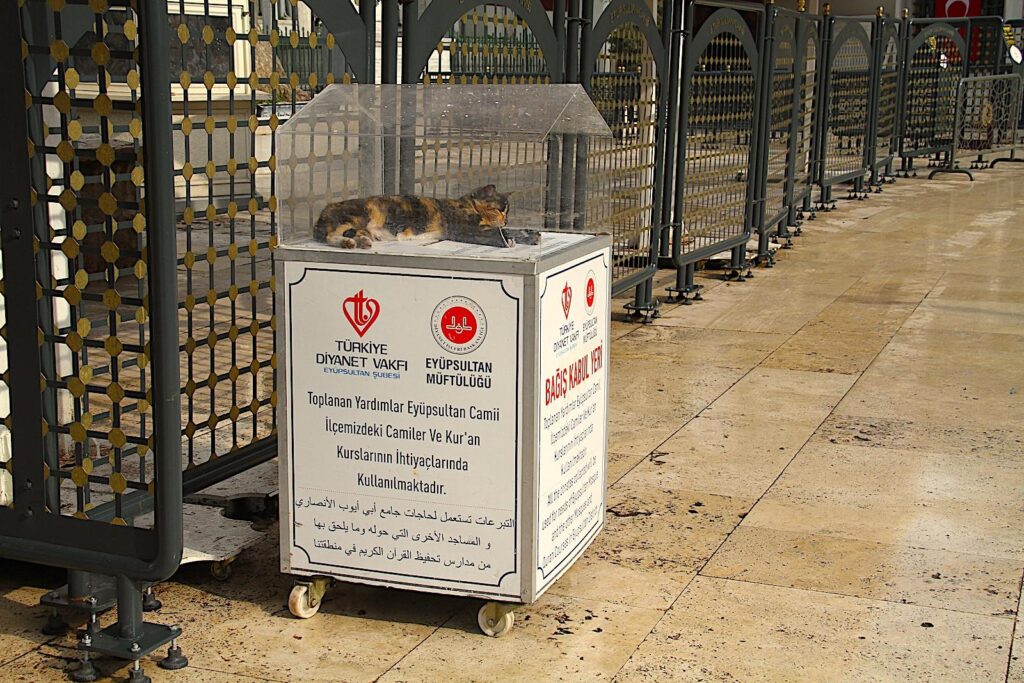
Maçka Sanat Park – The Park of Cats
Maçka Sanat Parkı, nestled in Istanbul’s Şişli district, has long been affectionately known as “Kedili Park” (“The Park of Cats”) due to its vibrant community of stray cats. These feline residents were a beloved part of the park’s atmosphere, often seen lounging on benches, weaving through the greenery, or approaching visitors with gentle curiosity. Locals and volunteers take pride in caring for them, providing food and water, and even constructing small shelters to ensure their comfort.
It is usual to see a student reading a book or a businessman on a mobile with cats sleeping nestled on their laps. If you are looking to befriend a cat for a little while, then the Park Sanat Café Bistro in the park is an ideal place to share a lunch or get close and personal with a cat over a coffee or beer. The park’s design and tranquil environment made it a perfect haven for cats and cat lovers, fostering a unique bond between the animals and the community.
“The loyalty of a dog is a reflection of the loyalty sought by man.”
“Köpeğin sadakati, insanın aradığı sadakatin yansımasıdır.”
— Yaşar Kemal, Turkish novelist (1923-2015)
Adoption of Stray Istanbul Cats and Dogs
Several dedicated organisations work tirelessly in Istanbul to rescue and rehome stray cats and dogs. Groups like Göktürk Animal Lovers Association, Animal Friends of Turkey (AFOT), a UK-based charity, and Kurtaran Ev (Rescue House) operate shelters and coordinate adoption efforts locally and internationally. These organisations often rely on volunteers and donations to provide medical care, food, and animal shelter. They also collaborate with international partners to facilitate overseas adoptions, ensuring rescued animals find loving homes abroad.
Adopting a stray animal from Istanbul to another country involves a detailed process to meet international regulations. The animal must be vaccinated, microchipped, and undergo a rabies titer test to confirm immunity. After the test, there is usually a waiting period, often around three months, before the animal can travel. The process can take up to four months and may cost over €1,000, covering veterinary care, documentation, and transportation. Despite the time and expense, many individuals and organisations are committed to this process, especially in light of recent laws in Türkiye that mandate the impounding of stray dogs, prompting increased efforts to find them homes abroad.
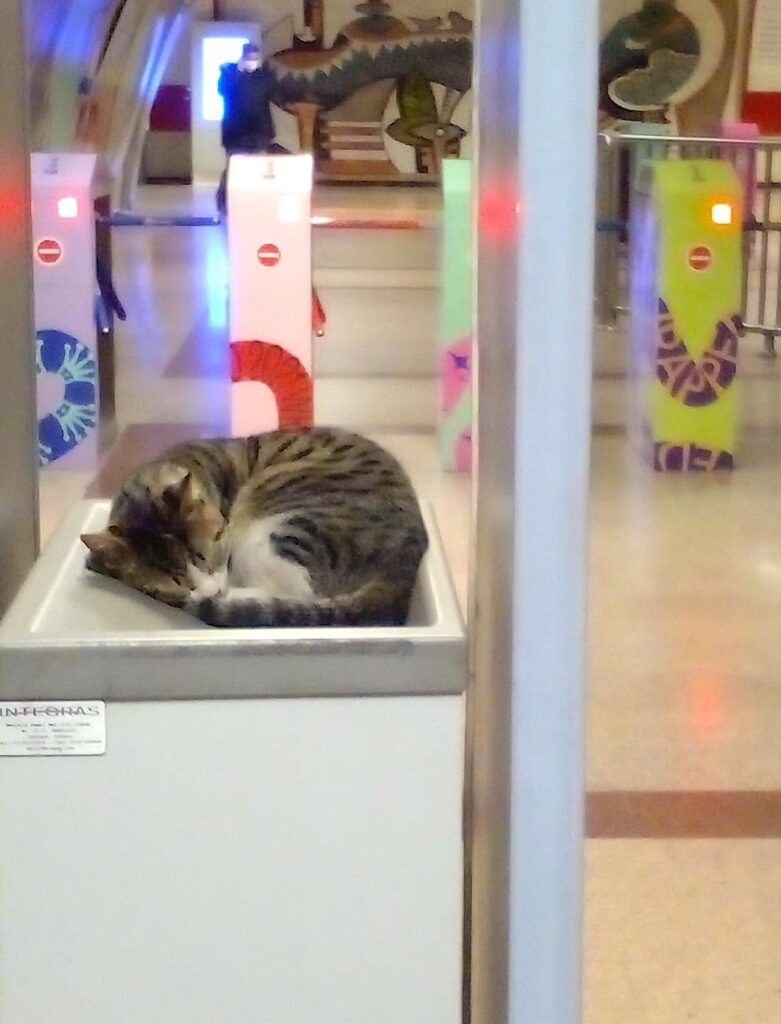
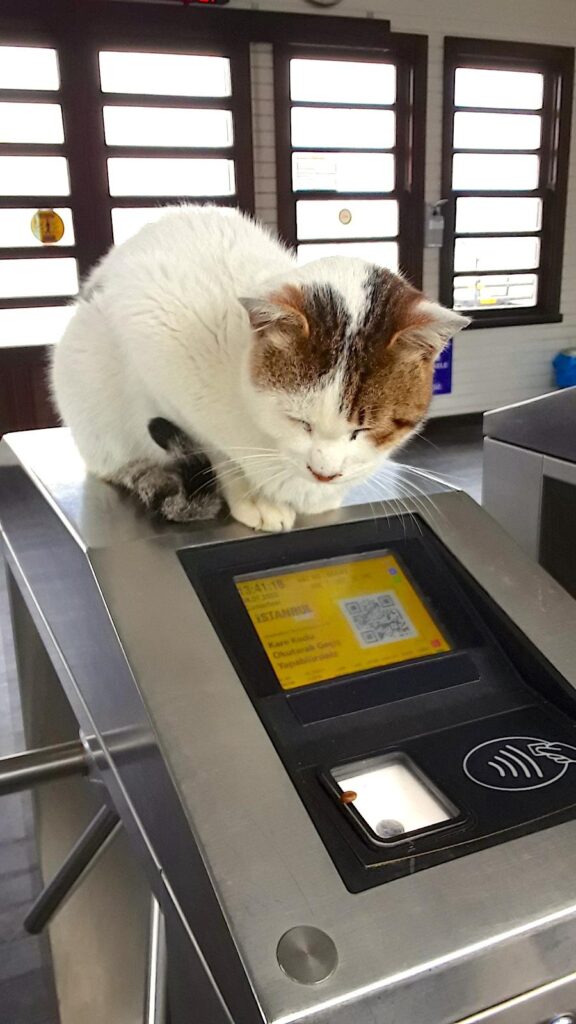
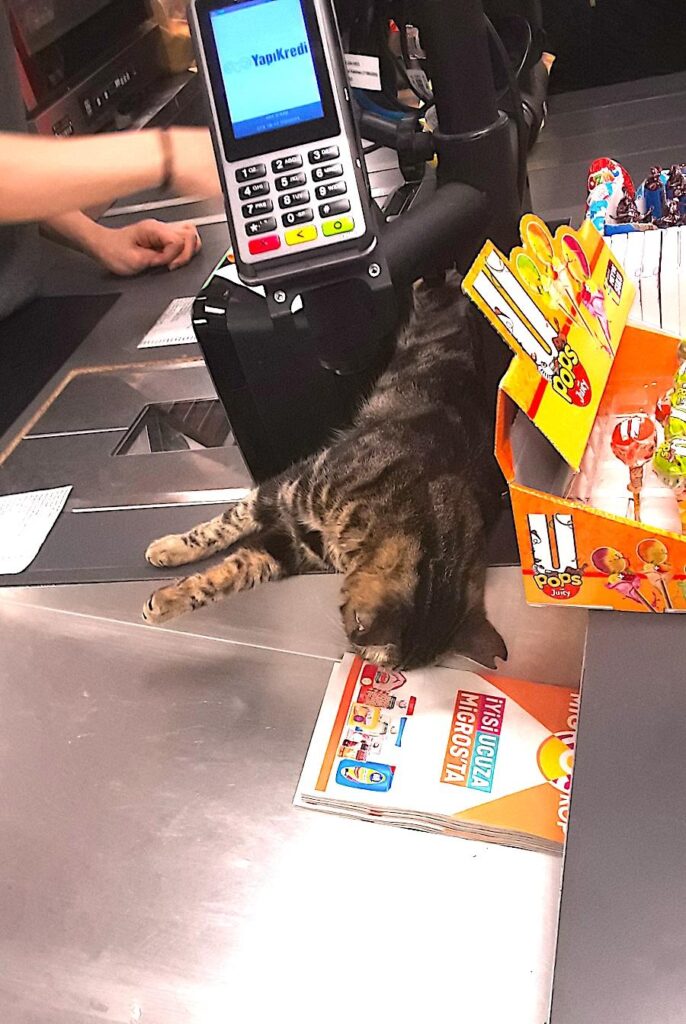
Istanbul Cats at Work
Istanbul Metropolitan Municipality Veterinary Services Directorate
The İBB Veteriner Hizmetleri Müdürlüğü (Istanbul Metropolitan Municipality Veterinary Services Directorate) is the official municipal body responsible for animal health and welfare in Istanbul. Operating under the Health and Social Services Department, it plays a central role in managing the city’s large population of stray animals, particularly cats and dogs. The Directorate provides essential services such as vaccination, sterilisation, microchipping, and medical treatment. These services are often delivered through animal health centres and mobile clinics, ensuring that animals receive care and are returned to their neighbourhoods, fostering a harmonious coexistence between residents and street animals.
Beyond medical care, the Directorate promotes animal welfare through public education initiatives. For instance, it conducts programs like the “Animal Love and Health Education” for primary school students, aiming to instil compassion and responsibility towards animals from a young age. Additionally, the Directorate operates mobile veterinary units, such as the “Vetbus,” which provide on-site medical assistance to needy animals across various neighbourhoods. Through these comprehensive efforts, the İBB Veteriner Hizmetleri Müdürlüğü demonstrates a commitment to humane and sustainable animal welfare practices in Istanbul.

FAQ – Istanbul Cats and Dogs
What do the ear tags on Istanbul dogs mean?
The small ear tags visible on many street dogs indicate that the animal has been vaccinated, sterilised, and registered through municipal veterinary services. After treatment, dogs are typically returned to their original neighbourhoods under Türkiye’s established “treat, neuter, return” system, allowing them to remain part of the community while reducing uncontrolled population growth.
Is it safe to pet street cats in Istanbul?
Many street cats in Istanbul are accustomed to human interaction and are regularly fed by residents and shopkeepers. However, they remain independent animals. Visitors should approach calmly, avoid disturbing animals that are eating or sleeping, and wash their hands afterwards as a simple precaution.
Can tourists adopt a stray cat or dog from Istanbul?
Yes, international adoption is possible but involves a regulated process. The animal must be microchipped, vaccinated, and undergo a rabies titre test to confirm immunity. There is typically a waiting period before travel is permitted. The process can take several months and may involve significant expense depending on the destination country.
Are there animal shelters in Istanbul?
Yes, Istanbul has municipal animal care centres operated by the Istanbul Metropolitan Municipality, as well as independent rescue organisations and volunteer networks. Municipal facilities focus on vaccination, sterilisation and medical treatment, while charities often coordinate rehabilitation and both local and international adoption efforts.
What should visitors do if they see an injured street animal in Istanbul?
If you encounter an injured or sick street cat or dog in Istanbul, you can call Alo 153, the Istanbul Metropolitan Municipality (İBB) service line, which will direct your request to the appropriate veterinary response team or mobile clinic. The operators generally speak Turkish, so if you do not speak Turkish, it is advisable to ask a local resident, hotel receptionist, or shopkeeper to assist you with the call. In non-urgent situations, local volunteer groups or nearby businesses often know how to contact municipal veterinary services directly. For emergencies involving immediate danger, standard emergency services can also be contacted.
Why are Istanbul’s street animals considered part of the city’s culture?
In Istanbul, cats and dogs are widely viewed not as strays but as long-standing cohabitants of the urban environment. Historical practice, religious tradition, and neighbourhood-level care have shaped a culture of coexistence. Their visible presence in parks, ferry terminals, cafés and courtyards has become one of the city’s most distinctive and photographed characteristics.
See also: LikeCesme.com – Çeşme Cats & Dogs
See also: LikeTurkiye.com – Istanbul Transport