
Taxis are a familiar sight across Istanbul and remain a meaningful way to move around the city, particularly late at night or when public transport is less convenient. However, for visitors unfamiliar with local systems, taxis can sometimes feel unpredictable. This guide explains how taxis work in Istanbul, what to expect, how to avoid common problems, and when alternatives may be a better option.
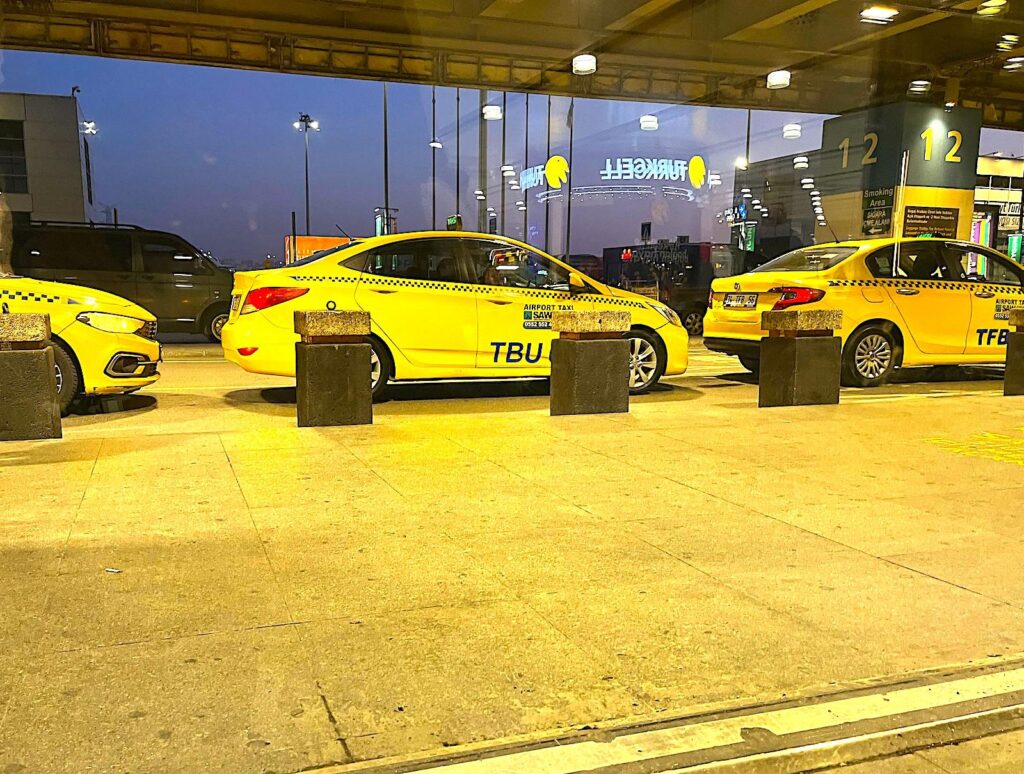
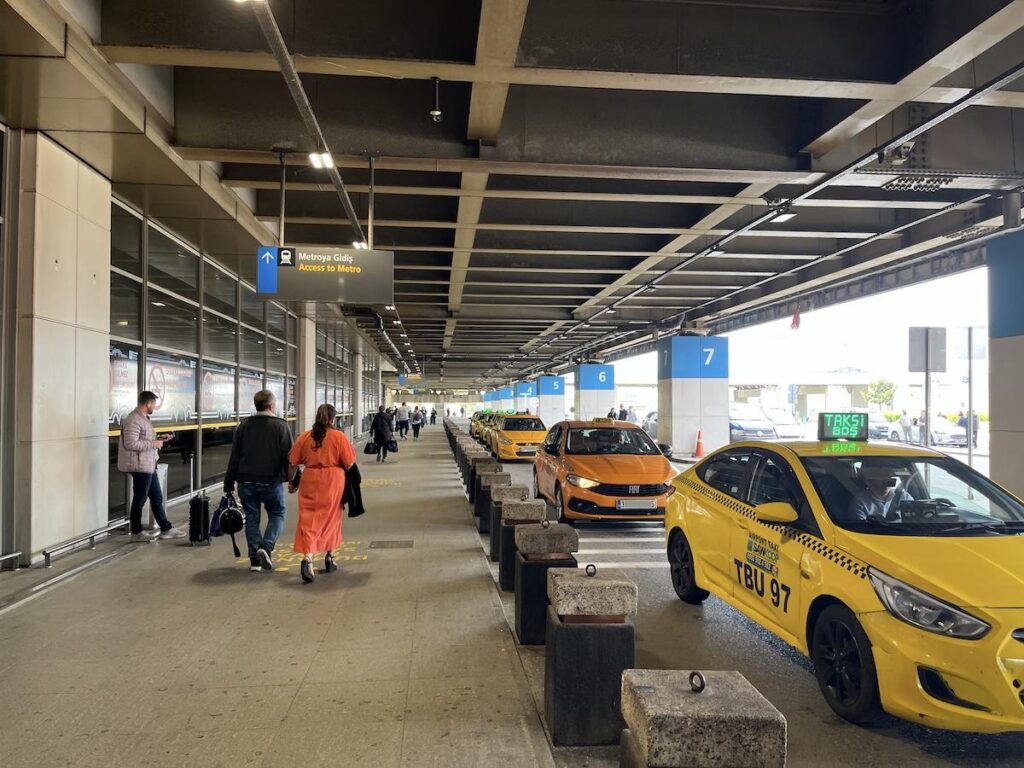
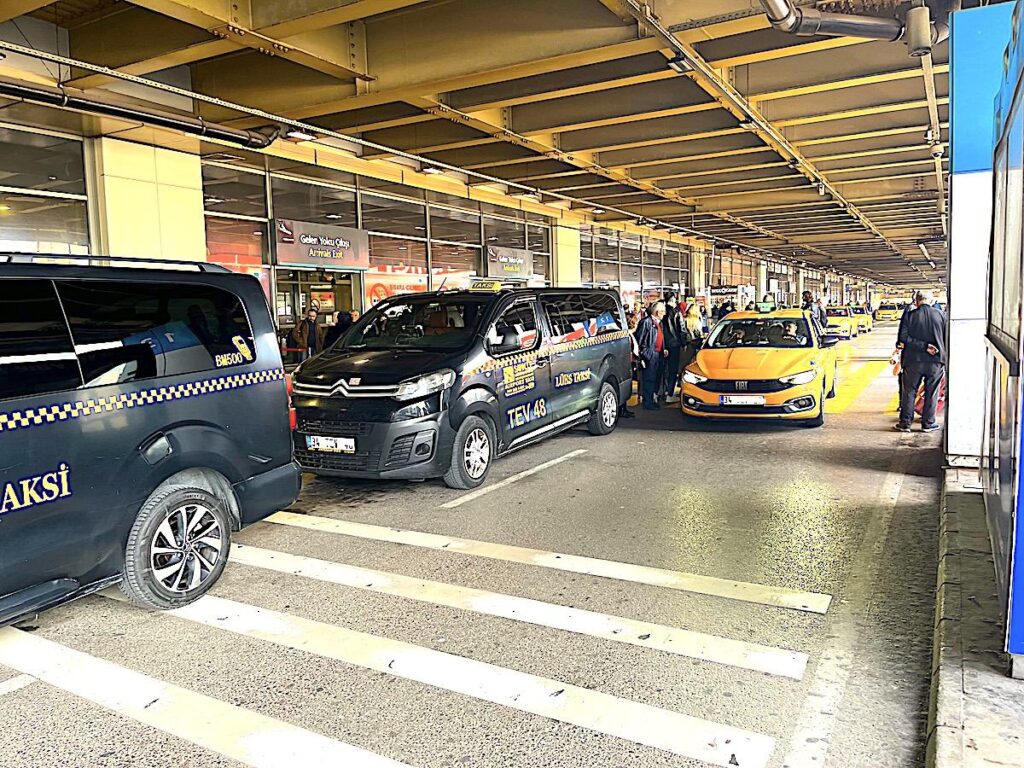
How Taxis Work in Istanbul (Metered Taxi System)
All licensed taxis in Istanbul operate using an official taximeter regulated by the Istanbul Metropolitan Municipality. Fares are calculated automatically based on a starting fee, distance travelled, and time spent stationary in traffic. Drivers are not permitted to negotiate fixed prices for everyday city journeys; the meter must be used. There is a minimum fare for very short trips, meaning even brief journeys will not fall below a set amount. Traffic congestion can significantly affect journey times and final fares, as waiting time is included in the meter.
Official Istanbul Taxi Fares, Prices and Extra Costs
Taxi prices are set centrally and apply citywide. While exact tariffs may change periodically, the structure is always the same: (i) a meter start fee, (ii) a per-kilometre charge, and (iii) a waiting-time component. The waiting time component is activated (and replaces the per-km fee when the taxi speed is less than 12.5 kmph.
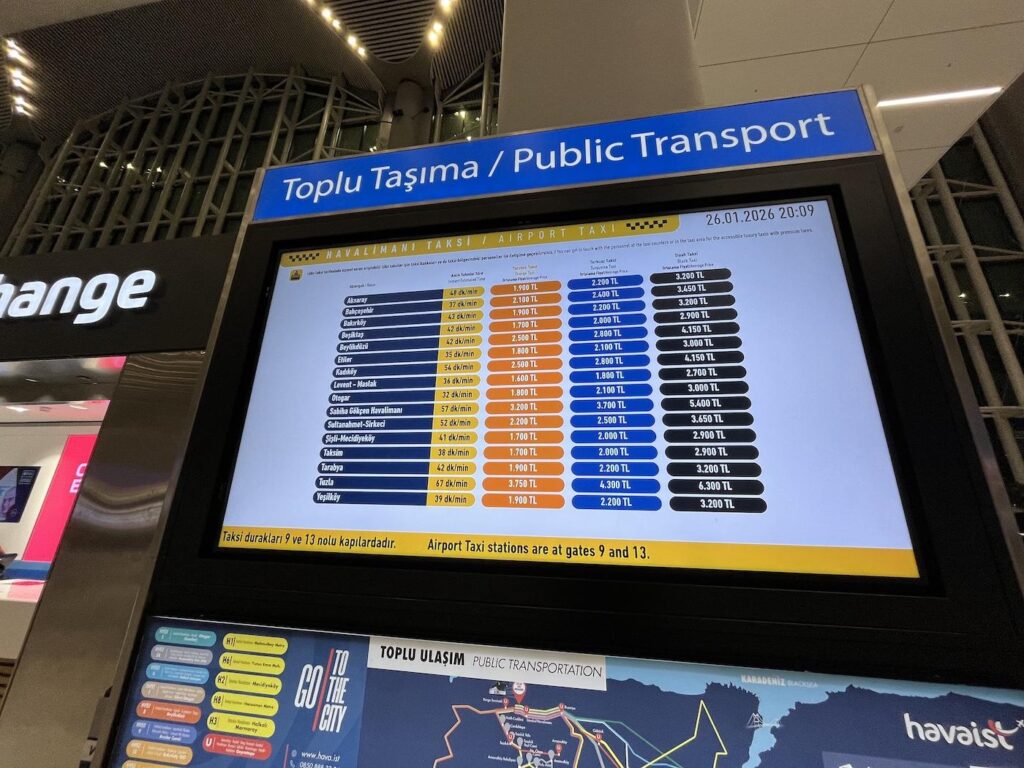
Additional costs may apply in certain situations. If your journey crosses a Bosphorus bridge or paid tunnel, the toll is added to the fare and paid by the passenger. There is no universal, city-mandated airport boarding surcharge. Still, small cooperative “airport exit/pickup fees” may appear on the airport fare board and are often collected, so check it when you get in. In any case, these charges should be minimal. There is no official luggage fee, and drivers should not charge extra for standard suitcases.
Standard Yellow Istanbul Taxi Fare Charges (December 2025)
| Toll | Charge in TL1 | Approx. EUR Cost2 |
|---|---|---|
| Meter Start (flag-down) | TL 54.50 | €1.10 |
| Per Kilometer | TL 36.30 | €0.75 |
| Waiting/Traffic Time3 | TL 7.56 / minute | €0.15 |
| Minimum Fare | TL 175.00 | €3.50 |
| Tolls | ||
| Bridge Tolls (1 & 2) | TL 47.00 | €0.95 |
| Yavuz Sultan Selim Bridge Toll | TL 80.00 | €1.60 |
| Eurasia Tunnel Toll | TL 225.00 | €4.50 |
Note 2 – Based on the official TL/EUR exchange rate as of 28 December 2025.
Note 3 – Waiting time is generally stated as hourly wait time, but is charged by minute blocks.
Types of Taxis in Istanbul (Yellow, Turquoise & Black)
Istanbul has three official taxi categories, all licensed and regulated.
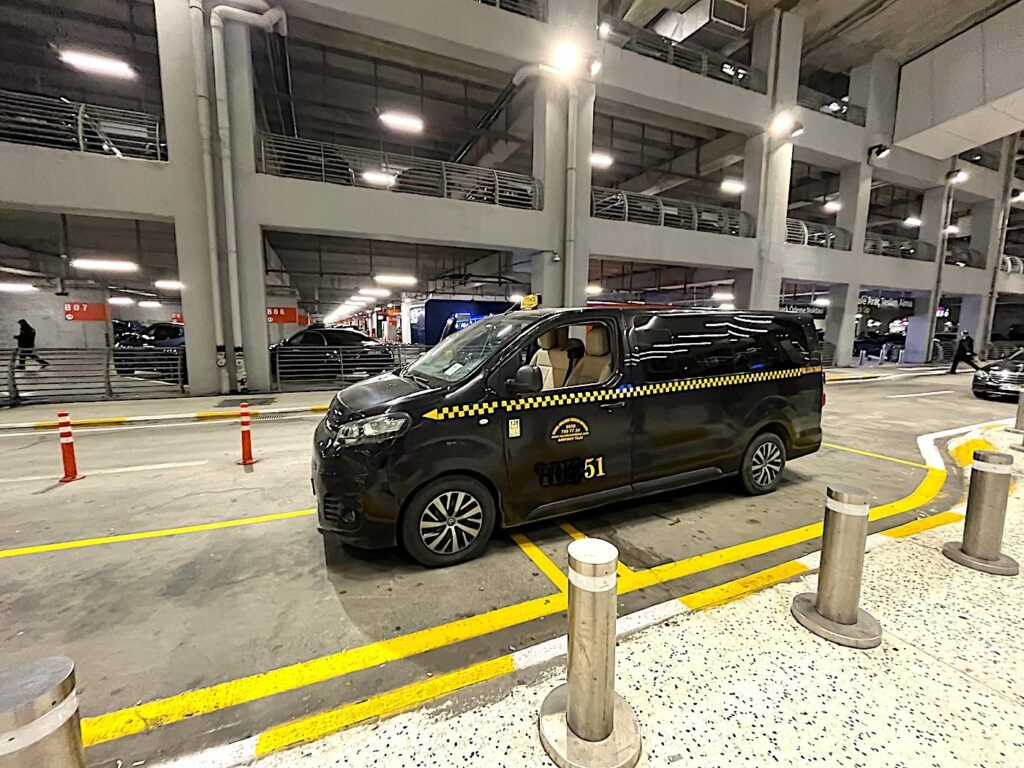
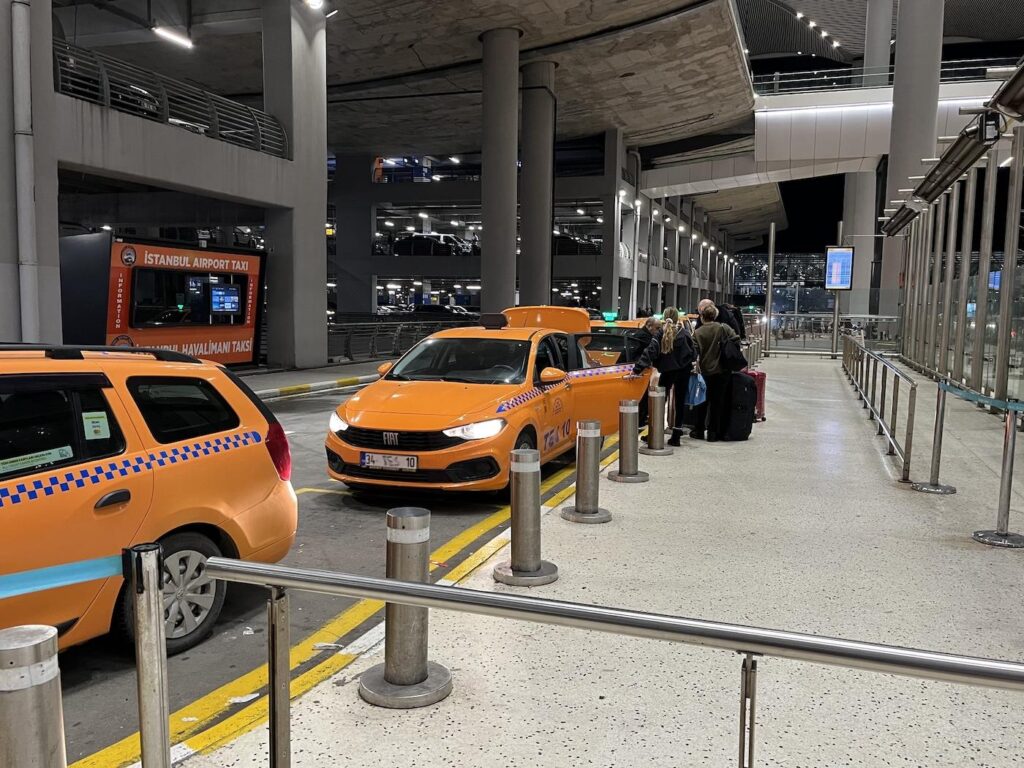
Standard yellow (or maroon) taxis are the most common and what most visitors will use. Turquoise taxis are a premium option, typically around 15% more expensive. Black taxis are luxury vehicles and significantly more expensive, generally used for executive or VIP travel. All types must use the meter, but each has its own tariff level.
How to Find a Taxi in Istanbul (Taxi Ranks & Street Hailing)
Taxis can be flagged down on the street or taken from official taxi ranks, known as taksi durağı, which are found near hotels, ferry terminals, metro stations, and major squares.
An available taxi displays a lit “TAKSİ” or “BOŞ TAKSİ” (vacant taxi) sign on the roof. If the sign is off, the taxi is occupied.
Hotels, restaurants, and cafés will often help call a taxi for you, which can be one of the easiest and most reliable methods, especially late at night.
Why it is Hard to Find an Istanbul Taxi
Visitors are often surprised by how difficult it is to find a taxi. This is not due to poor organisation, but rather a combination of structural factors. The number of taxi licences in Istanbul is strictly capped, while the city’s population and visitor numbers continue to grow. Demand often exceeds supply, especially during rush hours, weekends, bad weather, and late at night. On some occasions, it may be impossible to find a taxi in Istanbul, and you might be stranded for in excess of an hour.
Heavy traffic also reduces taxi availability, as drivers complete fewer trips per shift. In addition, some drivers prefer longer or more profitable journeys and may refuse short trips or refuse to enter heavily congested areas. Taxi apps have further increased competition for the same limited number of vehicles.
Taxi Apps in Istanbul: BiTaksi and Uber + KiwiTaxi
Taxi apps can make getting around Istanbul easier, particularly if you don’t speak Turkish or want a record of your journey.
BiTaksi in Istanbul
BiTaksi is the most widely used local taxi app. It connects passengers with licensed taxis, lets you enter your destination in advance, tracks the route, shows driver details, and lets you pay digitally.
Uber in Istanbul
Uber also operates in Istanbul, but instead of private ride-hail cars, it typically connects users with licensed local taxis. The experience is similar to BiTaksi and can be reassuring for visitors already familiar with Uber’s interface.
KiwiTaxi for Airport Transfers in Istanbul
KiwiTaxi is an international online transfer booking platform that lets you reserve private taxis or chauffeur-driven rides at fixed prices in advance (often for airport-to-city transfers) rather than hailing on-the-spot or through an app’s live marketplace like BiTaksi or Uber—making it especially useful in Istanbul if you want guaranteed pickup, price and comfort for planned journeys.
Note: BiTaksi or Uber availability can still be limited during peak times, but apps often reduce misunderstandings and payment issues.
Using the Meter and Avoiding Problems
The taximeter must be activated at the start of every journey. If it is not turned on, politely ask the driver to start it. If the driver refuses or insists on an inflated fixed price, it is best to exit the taxi and find another. The meter should be visible. If it is hidden or covered, ask for it to be made visible. Keeping your destination visible on your phone map can also help ensure the correct route is followed.
Paying for Taxis in Istanbul: Cash and Card Rules
Licensed taxis are required to accept credit and debit cards, but card machines sometimes do not work, or drivers may claim they are unavailable. It is strongly recommended to carry some Turkish Lira in cash and to ask at the start of the journey whether card payments are available. Drivers are not allowed to add extra fees for card payments.
Istanbul Taxi Safety and Etiquette Tips
Seatbelts should be worn, and smoking is not permitted in taxis. Tipping is optional, and rounding up the fare is typical but not expected. If you feel uncomfortable at any point, you can ask the driver to stop and exit the vehicle in a safe location.
Making Sure You Reach the Right Address
Istanbul is a vast city, and many street names are repeated in different districts. Taxi drivers may not recognise hotel names or foreign pronunciations. To avoid confusion, always have the exact address written in Turkish, ideally displayed on your phone. Including the district name or a nearby landmark is extremely helpful. Showing the address visually is often more effective than trying to pronounce it.
Useful Turkish Phrases for Taxis
A few simple phrases can make taxi journeys much easier:
- Merhaba – Hello
- Lütfen taksimetreyi açar mısınız? – Please turn on the meter
- Kartla ödeyebilir miyim? – Can I pay by card?
- Nakit ödeyeceğim. – I will pay cash
- Bu adrese gidebilir miyiz? – Can we go to this address?
- Burada durabilir misiniz? – Can you stop here?
Alternatives to Taxis in Istanbul (Metro, Ferry, Transfers)
In many situations, taxis are not the best or fastest way to travel in Istanbul.
The metro, tram, and funicular lines are modern, reliable, and often far quicker than road transport, especially during peak hours. Trams serve many historic areas, making them ideal for sightseeing. Ferries across the Bosphorus and Golden Horn are efficient, scenic, and often faster than taxis when crossing between Europe and Asia. The Marmaray rail line runs beneath the Bosphorus and is excellent for longer cross-city journeys.
For airport trips or late-night arrivals, pre-booked Istanbul VIP Private Transfers offer fixed pricing and peace of mind.

Book VIP Transfer on TripAdvisor: Click the link or scan the QR code to check availability and prices for Istanbul VIP Private Transfer.
Walking is often the best option for short distances in central districts, while buses and the Metrobus serve areas not covered by rail — though they can be crowded.
Final Advice
Taxis in Istanbul are a useful tool, but they work best when combined with public transport and a little planning. Use official taxis, insist on the meter, carry cash as a backup, and always prepare your destination clearly. With the right expectations, taxis can be a practical part of getting around one of the world’s most fascinating cities.